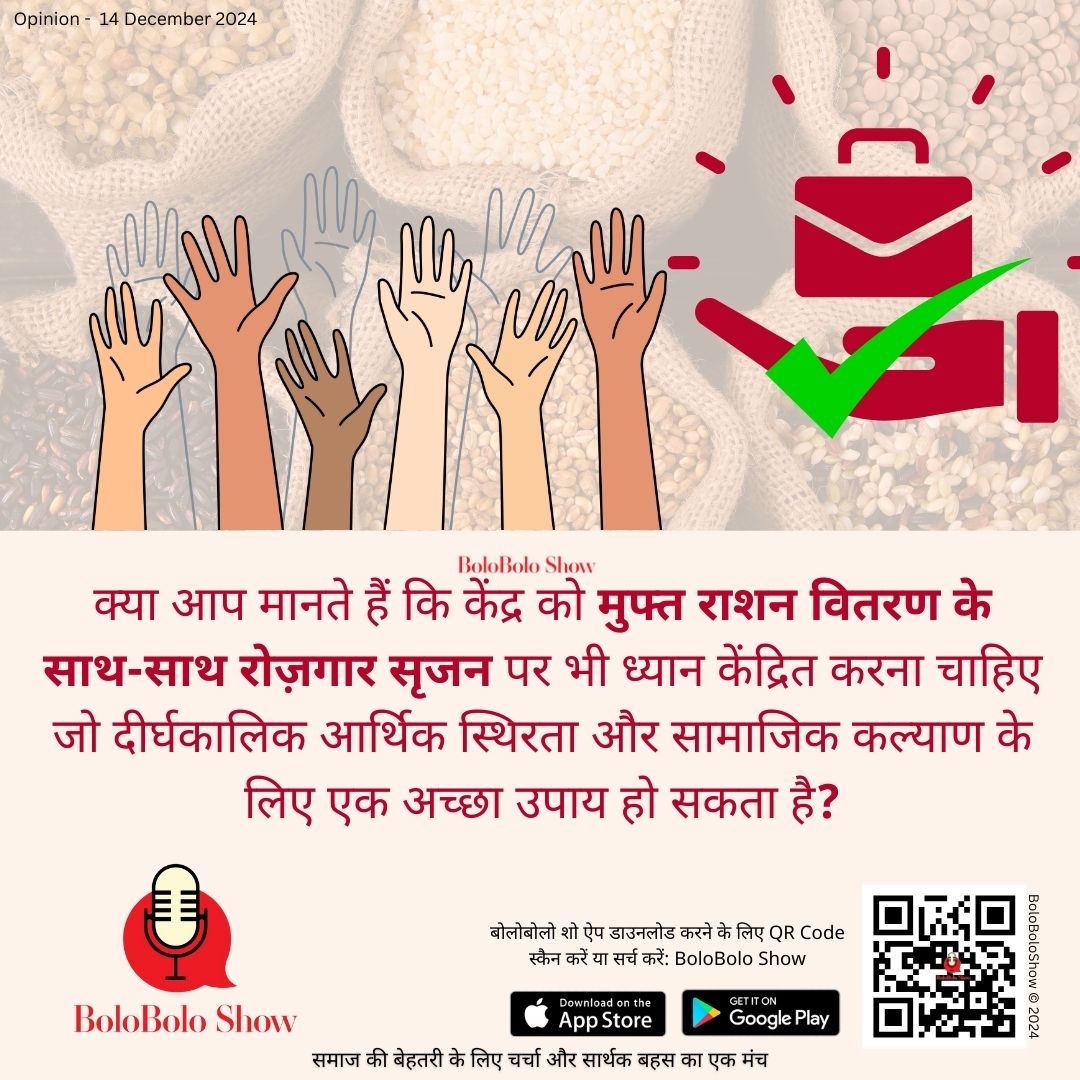
क्या आप मानते हैं कि केंद्र को मुफ्त राशन वितरण के साथ-साथ रोज़गार सृजन पर भी ध्यान केंद्रित करना चाहिए जो दीर्घकालिक आर्थिक स्थिरता और सामाजिक कल्याण के लिए एक अच्छा उपाय हो सकता है?
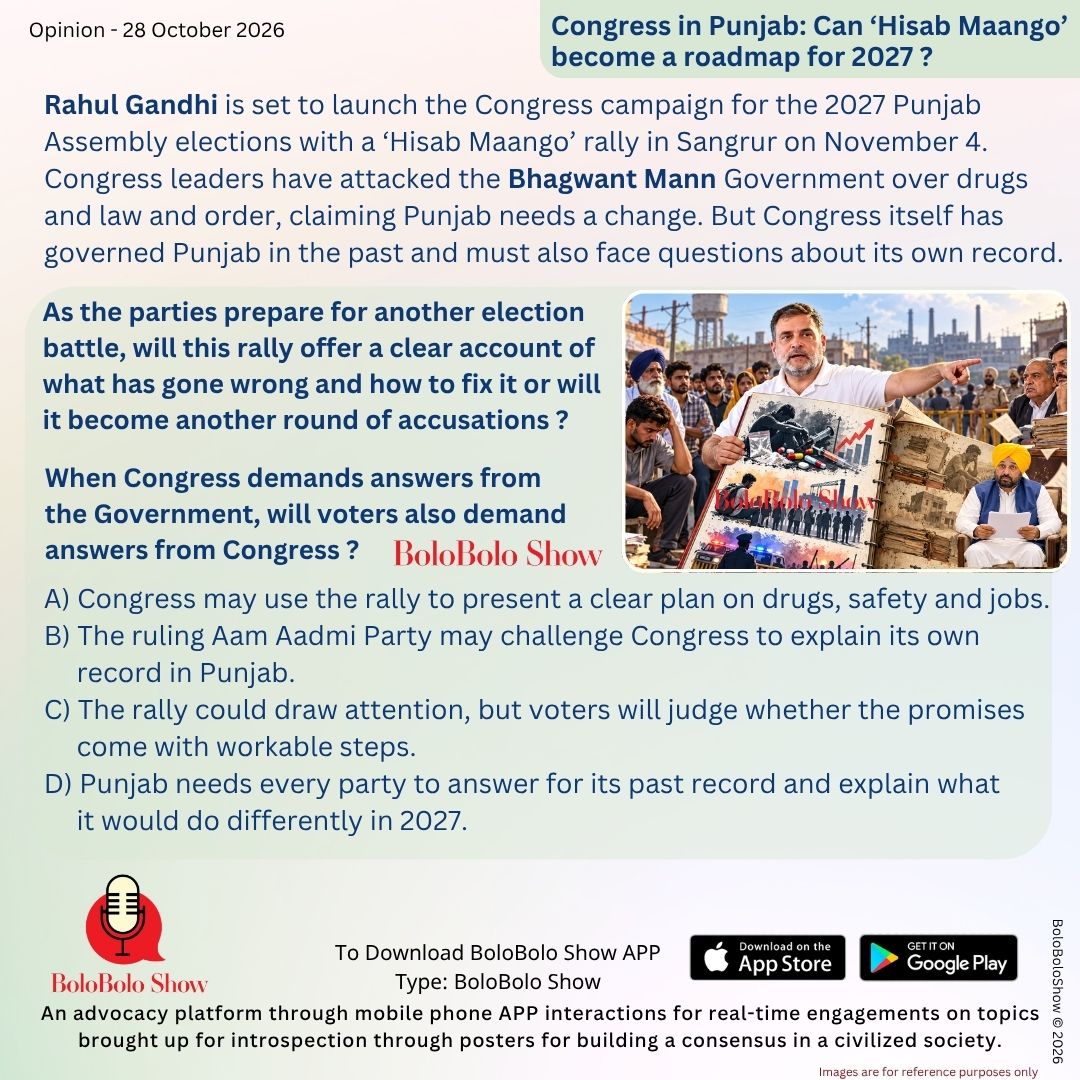
Rahul Gandhi is set to launch the Congress campaign for the 2027 Punjab Assembly elections with a ‘Hisab Maango’ rally in Sangrur on November 4. Congress leaders have attacked the Bhagwant Mann Government over drugs and law and order, claiming Punjab needs a change. But Congress itself has governed Punjab in the past and must also face questions about its own record. As the parties prepare for another election battle, will this rally offer a clear account of what has gone wrong and how to fix it or will it become another round of accusations ? When Congress demands answers from the Government, will voters also demand answers from Congress ?
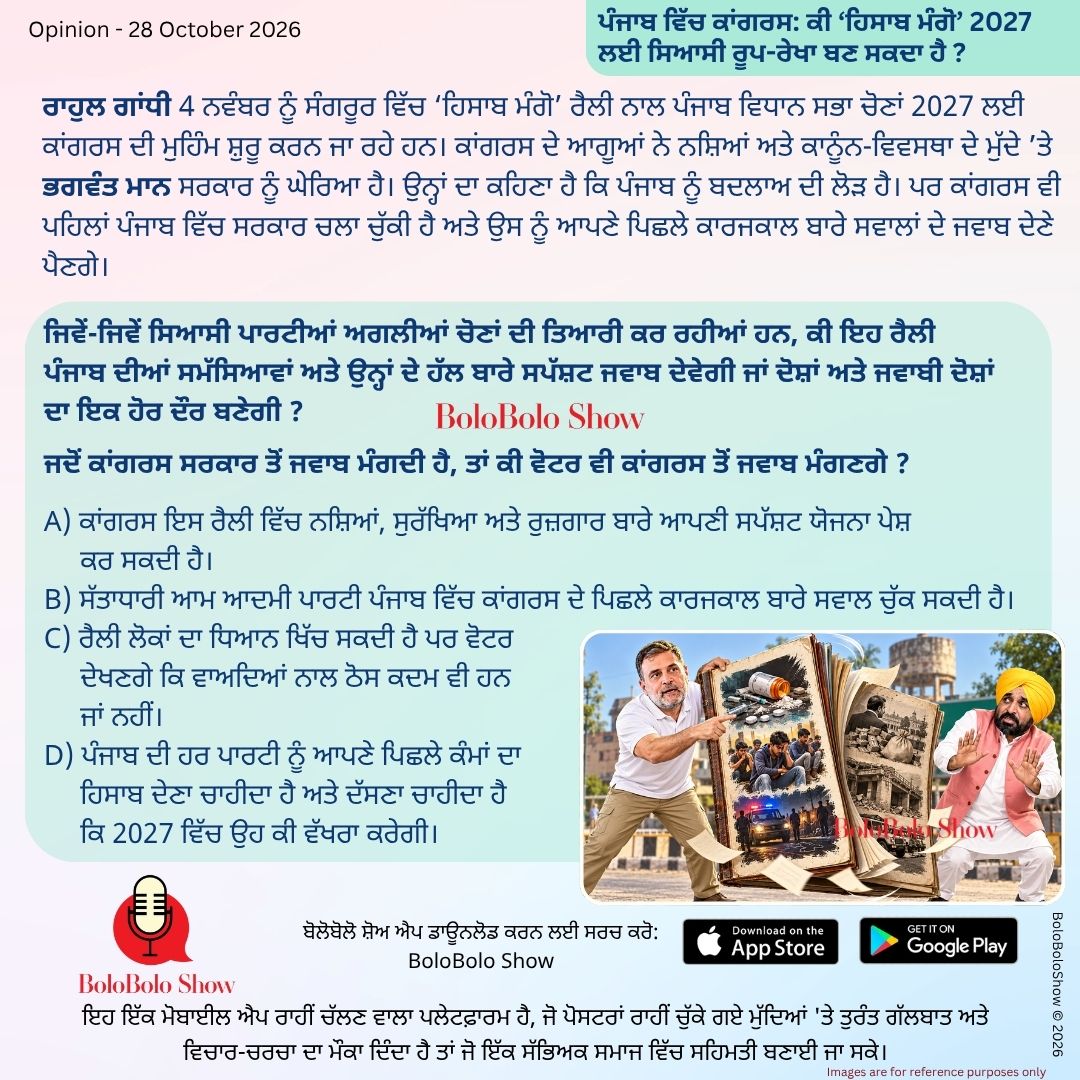
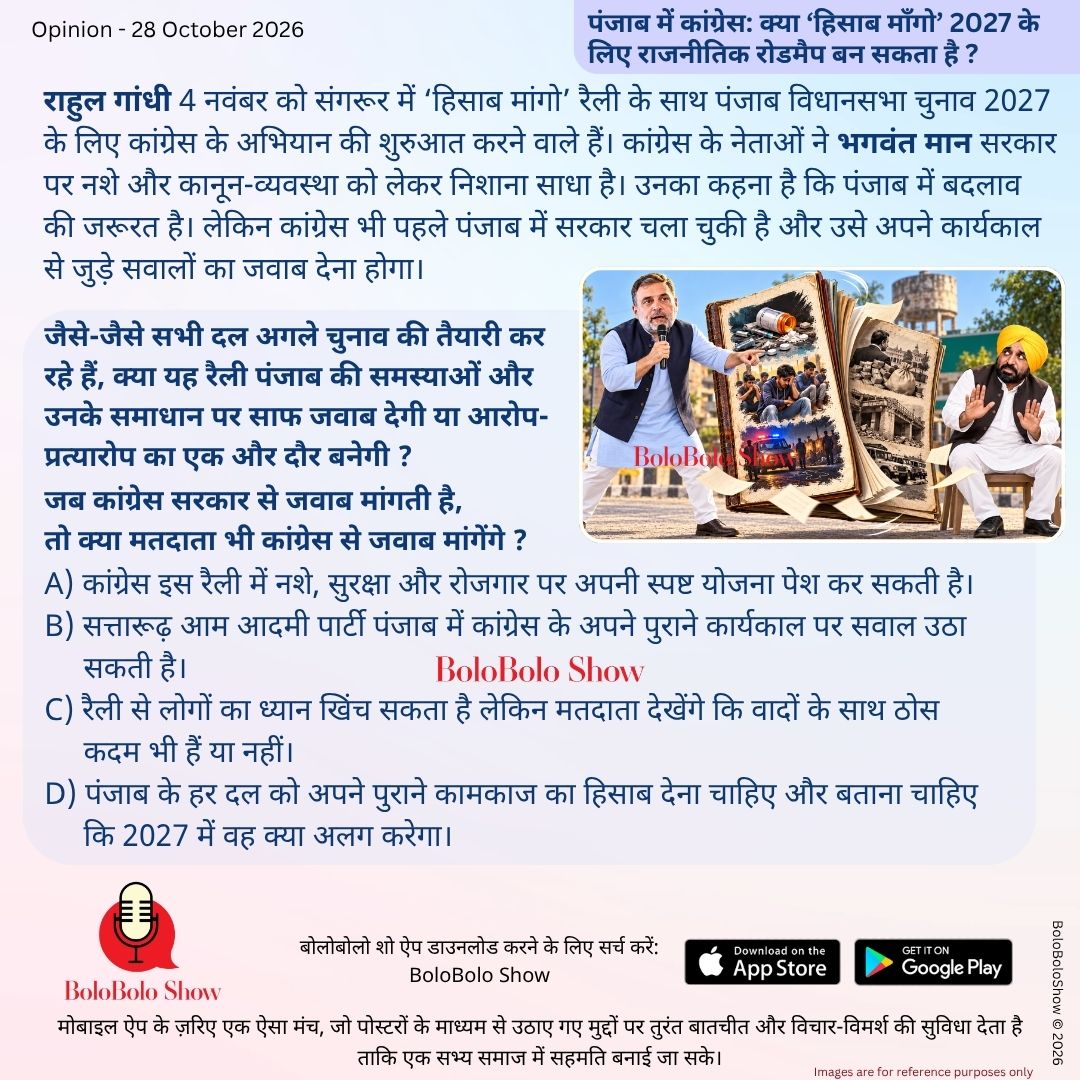
राहुल गांधी 4 नवंबर को संगरूर में ‘हिसाब मांगो’ रैली के साथ पंजाब विधानसभा चुनाव 2027 के लिए कांग्रेस के अभियान की शुरुआत करने वाले हैं। कांग्रेस के नेताओं ने भगवंत मान सरकार पर नशे और कानून-व्यवस्था को लेकर निशाना साधा है। उनका कहना है कि पंजाब में बदलाव की जरूरत है। लेकिन कांग्रेस भी पहले पंजाब में सरकार चला चुकी है और उसे अपने कार्यकाल से जुड़े सवालों का जवाब देना होगा। जैसे-जैसे सभी दल अगले चुनाव की तैयारी कर रहे हैं, क्या यह रैली पंजाब की समस्याओं और उनके समाधान पर साफ जवाब देगी या आरोप-प्रत्यारोप का एक और दौर बनेगी ? जब कांग्रेस सरकार से जवाब मांगती है, तो क्या मतदाता भी कांग्रेस से जवाब मांगेंगे ?
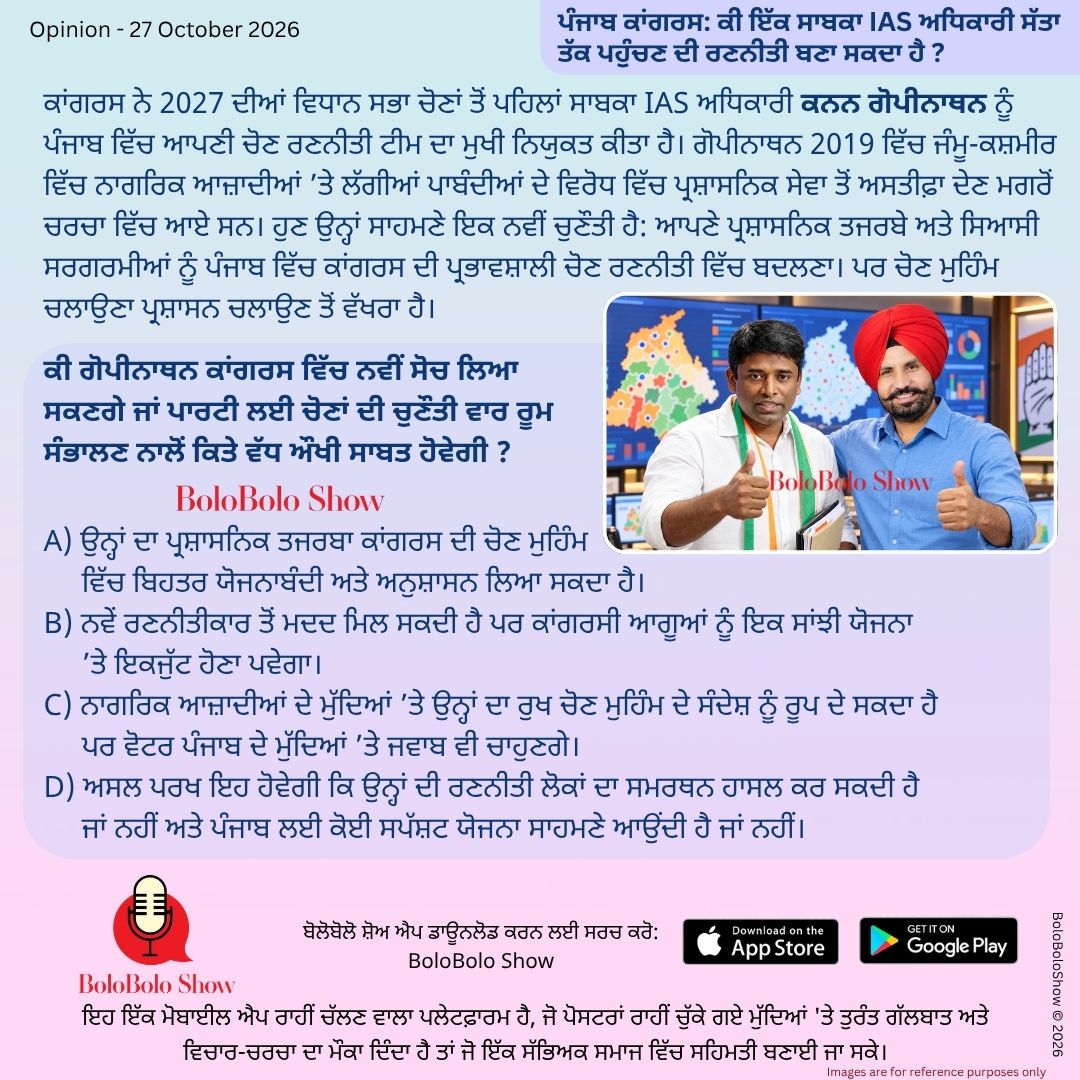
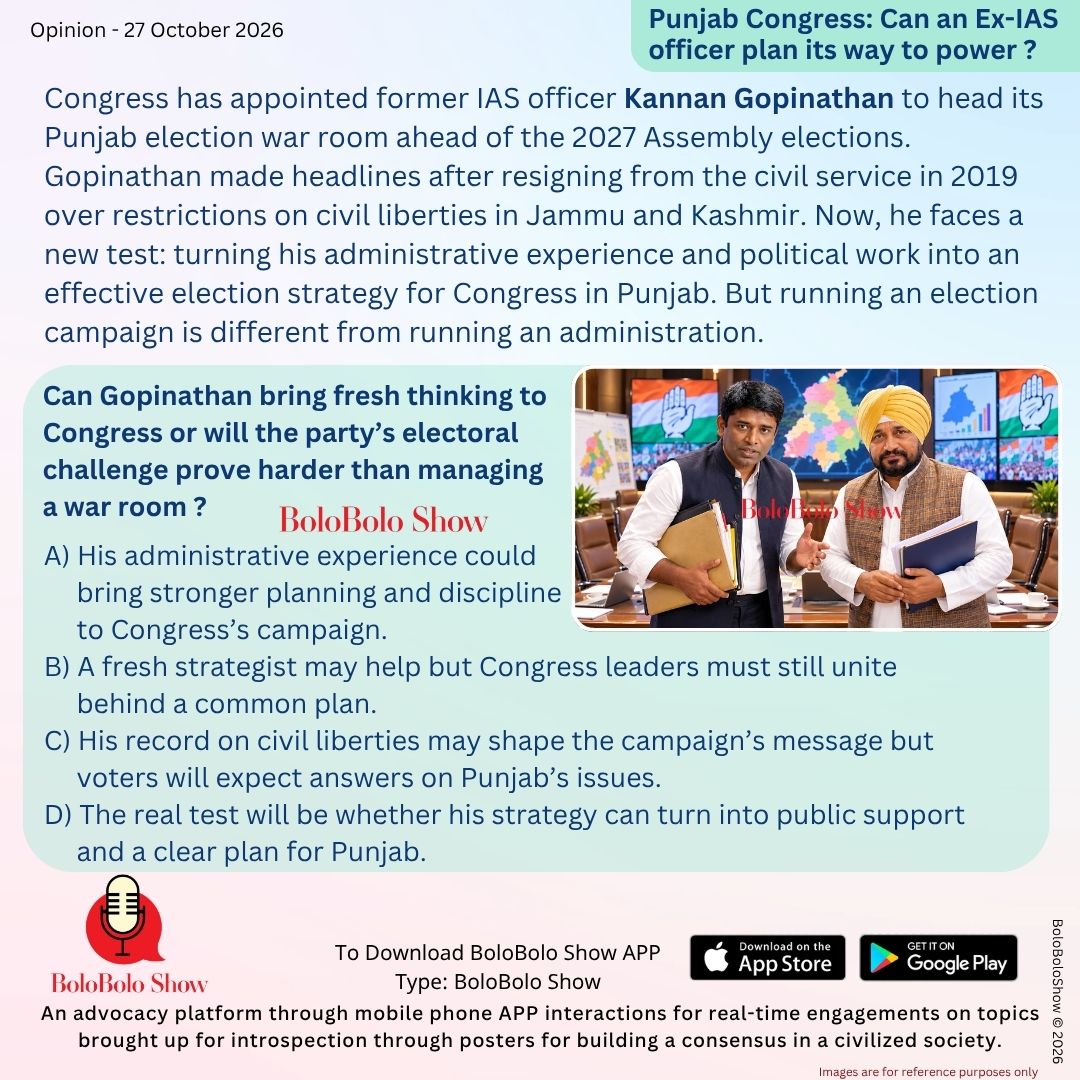
Congress has appointed former IAS officer Kannan Gopinathan to head its Punjab election war room ahead of the 2027 Assembly elections. Gopinathan made headlines after resigning from the civil service in 2019 over restrictions on civil liberties in Jammu and Kashmir. Now, he faces a new test: turning his administrative experience and political work into an effective election strategy for Congress in Punjab. But running an election campaign is different from running an administration. Can Gopinathan bring fresh thinking to Congress or will the party’s electoral challenge prove harder than managing a war room ?