The manner in which the intellectuals have been neglected in promoting the mother tongue in new research and have been completely ignored in future planning, has far-reaching consequences which will be disastrous in the future.
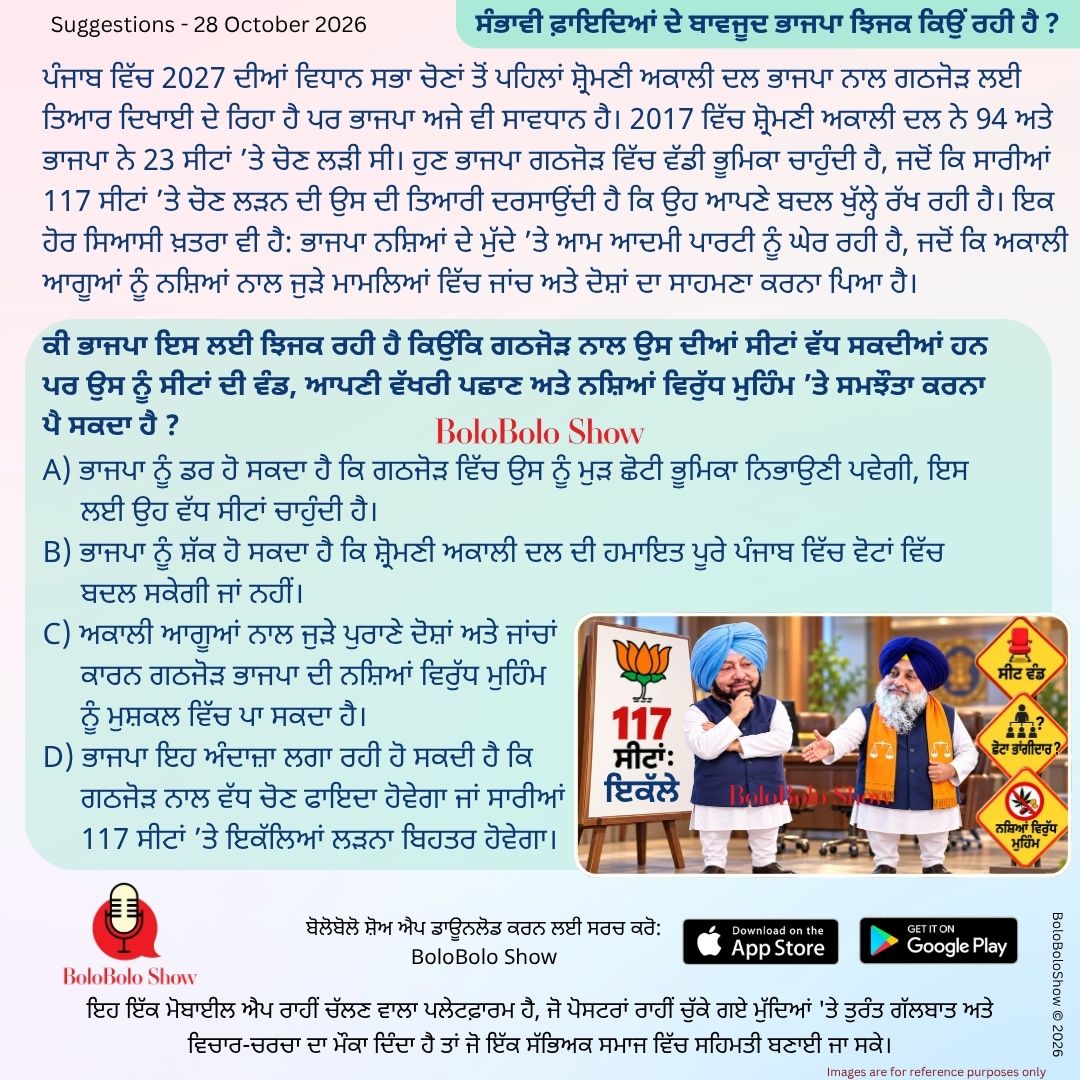
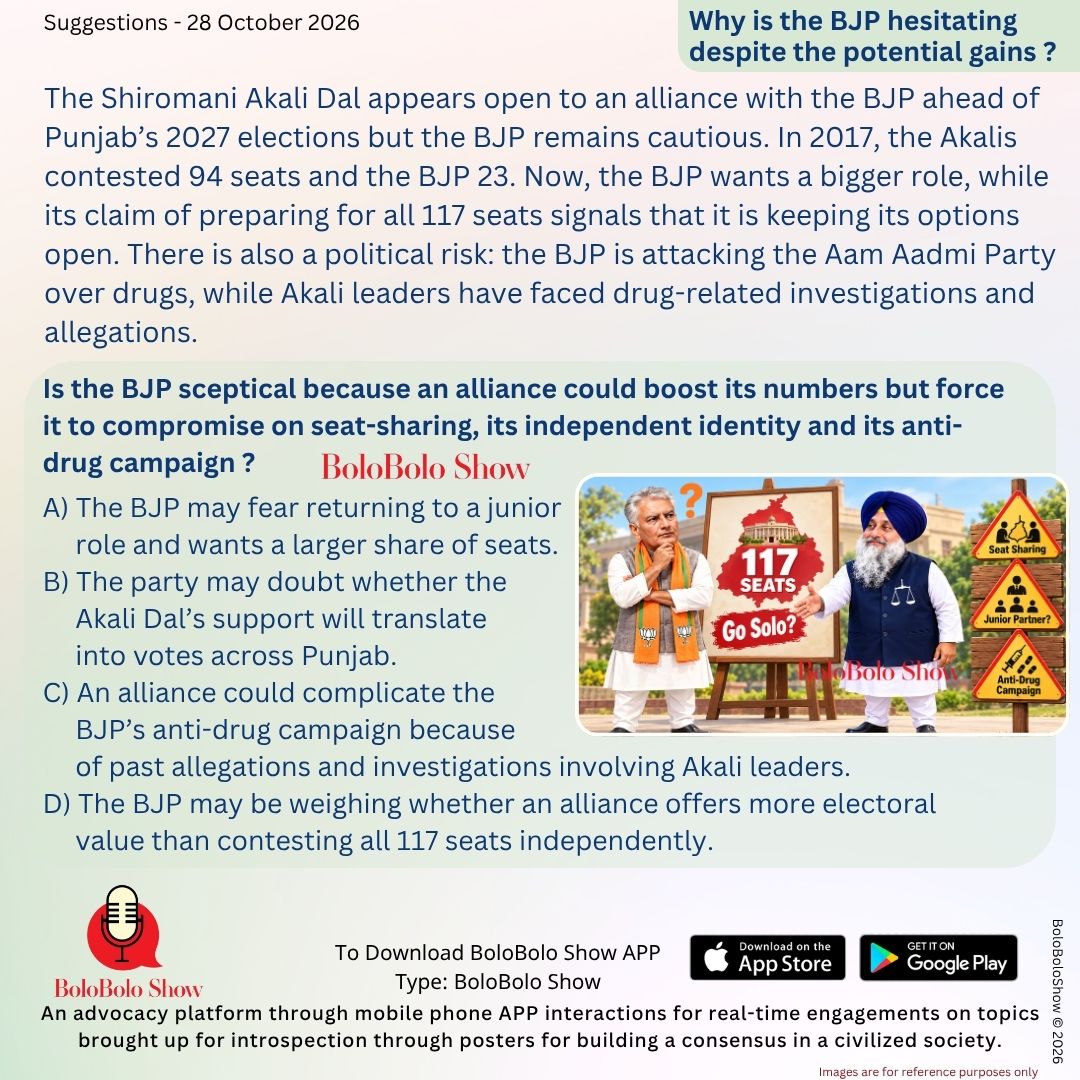
The Shiromani Akali Dal appears open to an alliance with the BJP ahead of Punjab’s 2027 elections but the BJP remains cautious. In 2017, the Akalis contested 94 seats and the BJP 23. Now, the BJP wants a bigger role, while its claim of preparing for all 117 seats signals that it is keeping its options open. There is also a political risk: the BJP is attacking the Aam Aadmi Party over drugs, while Akali leaders have faced drug-related investigations and allegations. Is the BJP sceptical because an alliance could boost its numbers but force it to compromise on seat-sharing, its independent identity and its anti-drug campaign ?
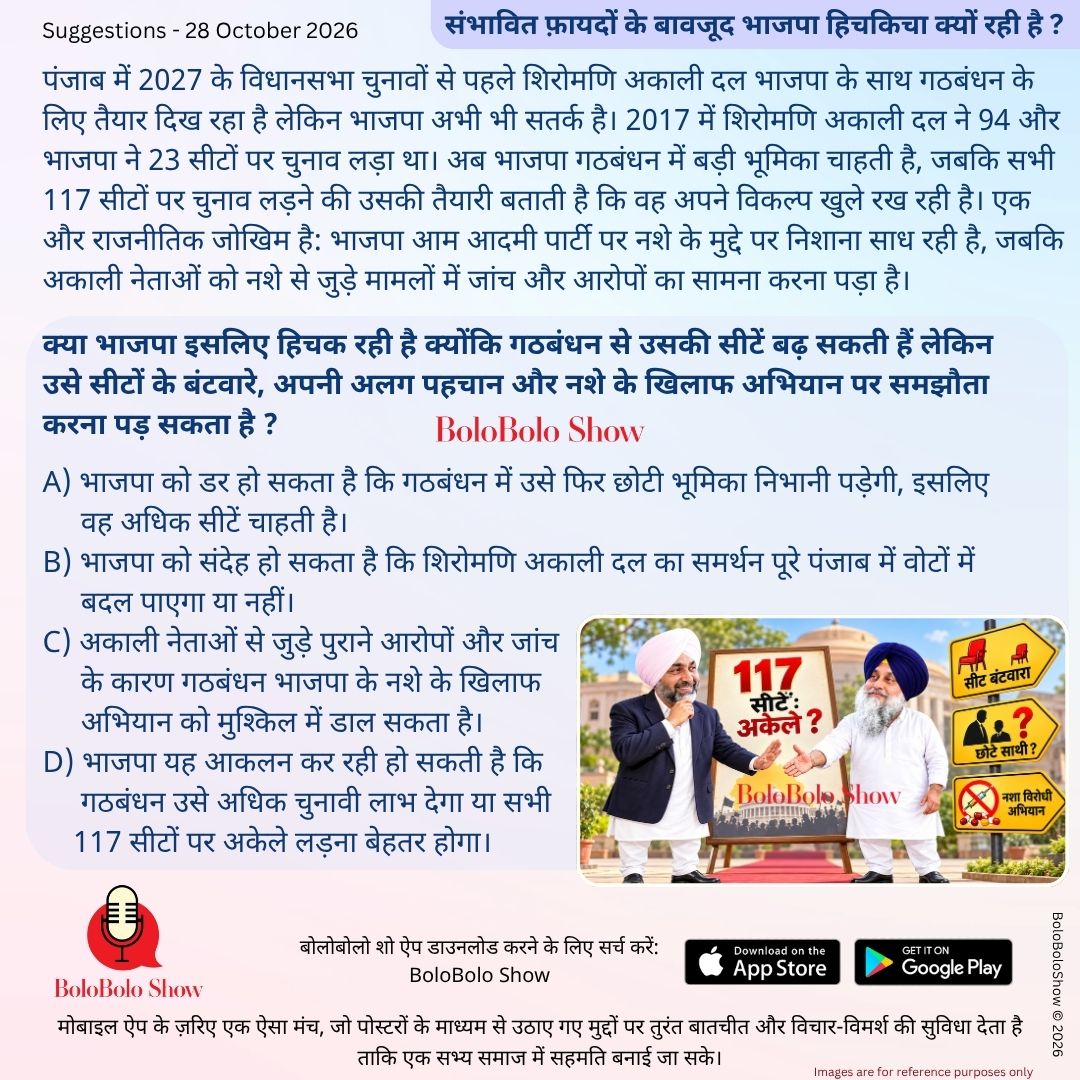
पंजाब में 2027 के विधानसभा चुनावों से पहले शिरोमणि अकाली दल भाजपा के साथ गठबंधन के लिए तैयार दिख रहा है लेकिन भाजपा अभी भी सतर्क है। 2017 में शिरोमणि अकाली दल ने 94 और भाजपा ने 23 सीटों पर चुनाव लड़ा था। अब भाजपा गठबंधन में बड़ी भूमिका चाहती है, जबकि सभी 117 सीटों पर चुनाव लड़ने की उसकी तैयारी बताती है कि वह अपने विकल्प खुले रख रही है। एक और राजनीतिक जोखिम है: भाजपा आम आदमी पार्टी पर नशे के मुद्दे पर निशाना साध रही है, जबकि अकाली नेताओं को नशे से जुड़े मामलों में जांच और आरोपों का सामना करना पड़ा है। क्या भाजपा इसलिए हिचक रही है क्योंकि गठबंधन से उसकी सीटें बढ़ सकती हैं लेकिन उसे सीटों के बंटवारे, अपनी अलग पहचान और नशे के खिलाफ अभियान पर समझौता करना पड़ सकता है ?
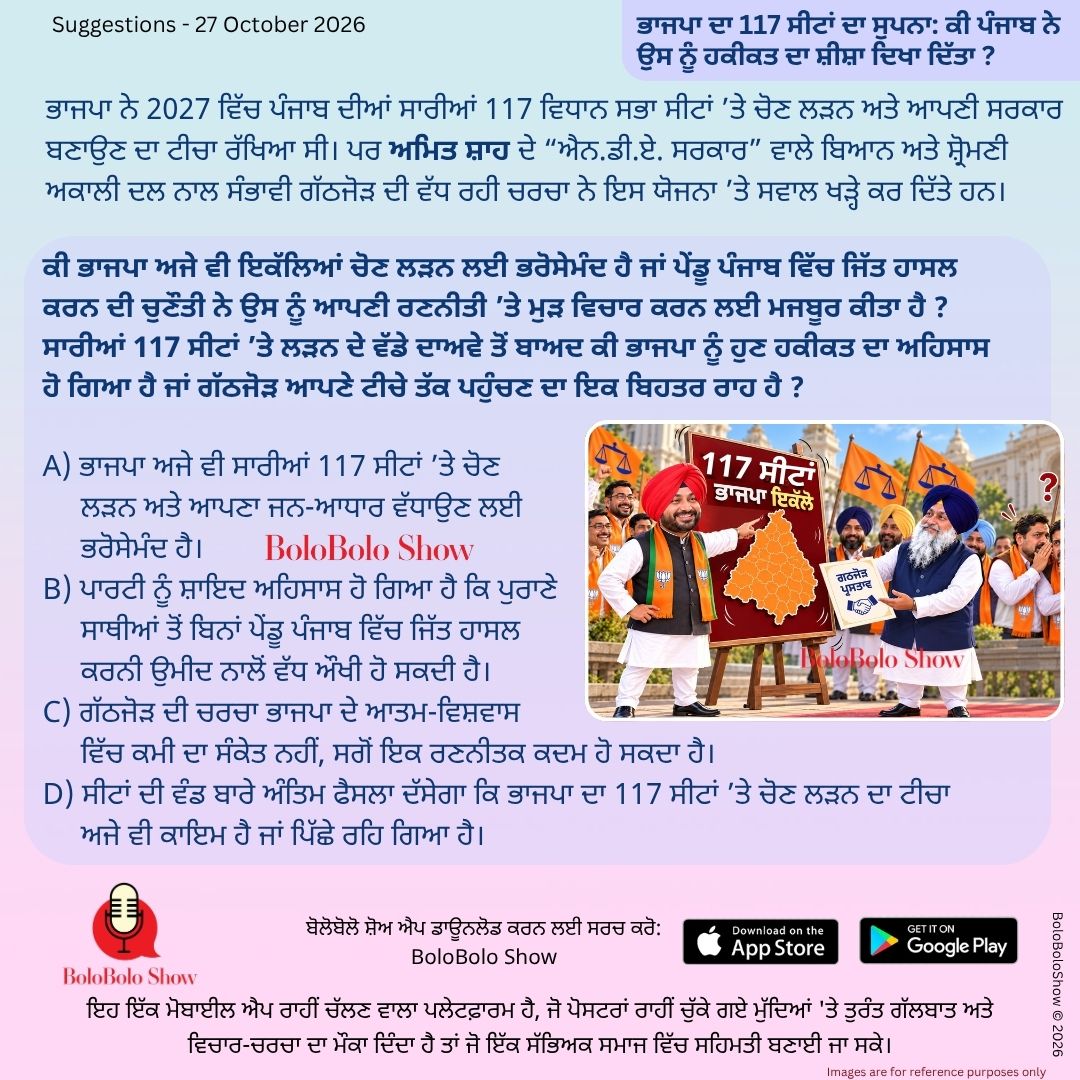
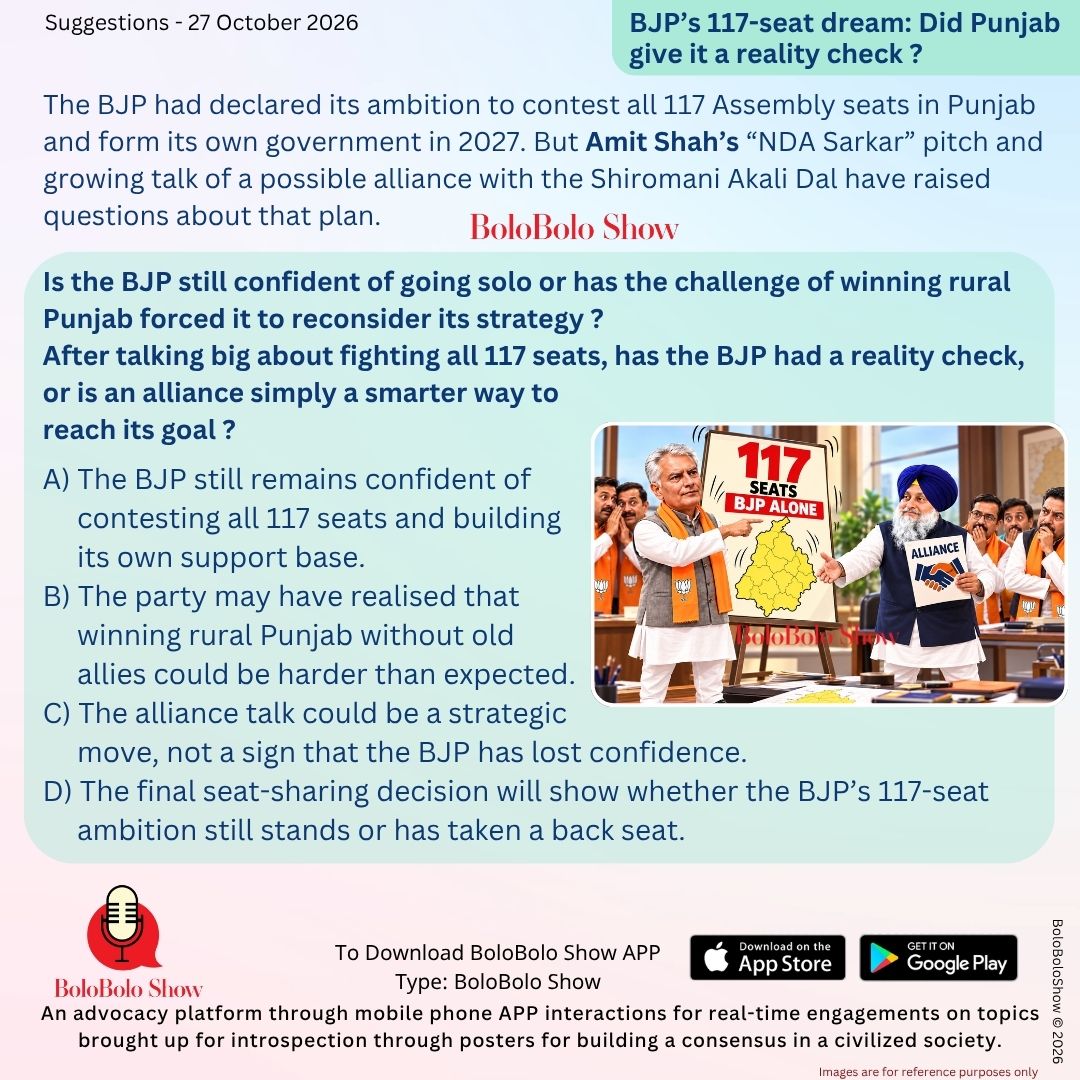
The BJP had declared its ambition to contest all 117 Assembly seats in Punjab and form its own government in 2027. But Amit Shah’s “NDA Sarkar” pitch and growing talk of a possible alliance with the Shiromani Akali Dal have raised questions about that plan. Is the BJP still confident of going solo or has the challenge of winning rural Punjab forced it to reconsider its strategy ? After talking big about fighting all 117 seats, has the BJP had a reality check, or is an alliance simply a smarter way to reach its goal ?