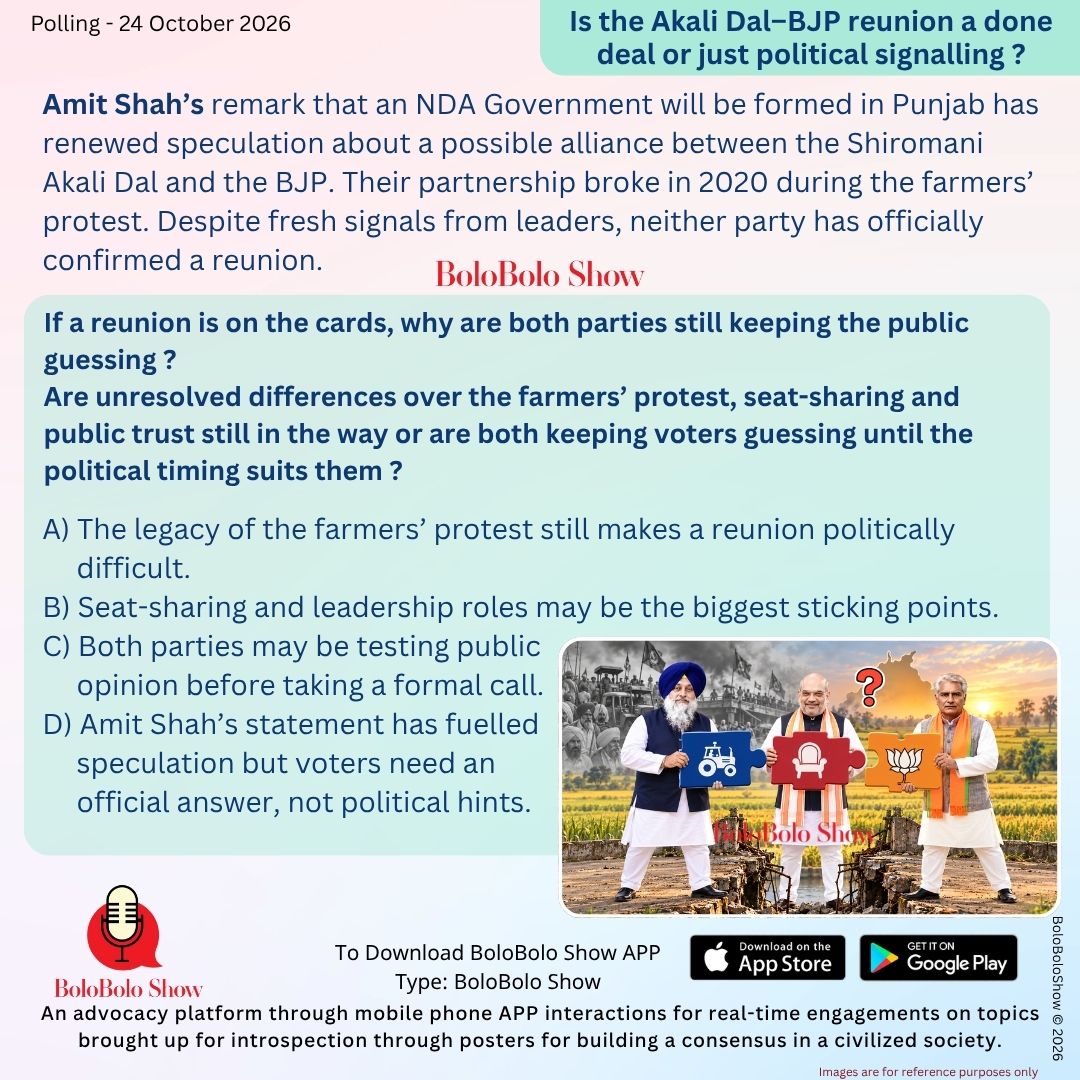
Amit Shah’s remark that an NDA Government will be formed in Punjab has renewed speculation about a possible alliance between the Shiromani Akali Dal and the BJP. Their partnership broke in 2020 during the farmers’ protest. Despite fresh signals from leaders, neither party has officially confirmed a reunion. If a reunion is on the cards, why are both parties still keeping the public guessing ? Are unresolved differences over the farmers’ protest, seat- sharing and public trust still in the way or are both keeping voters guessing until the political timing suits them ?
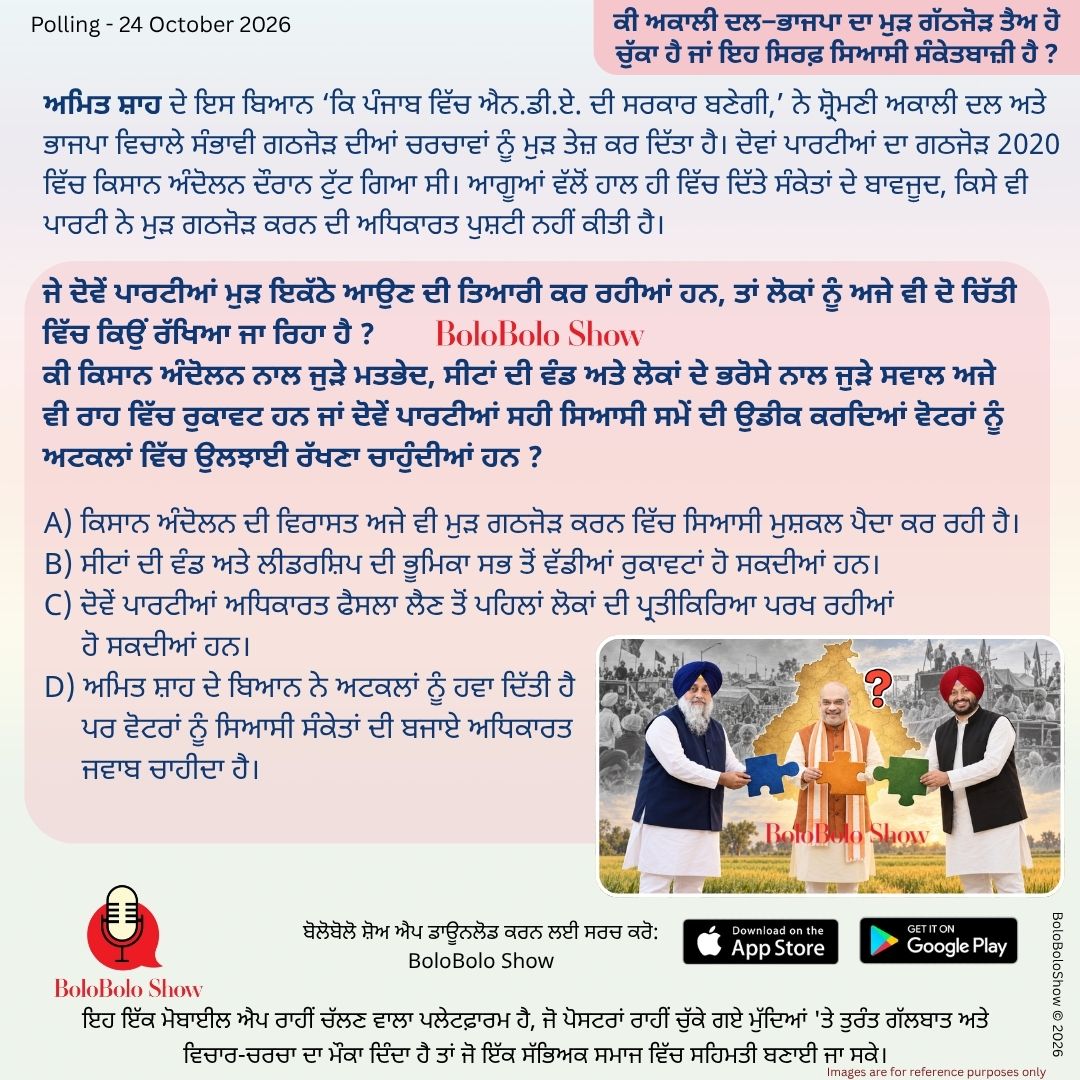
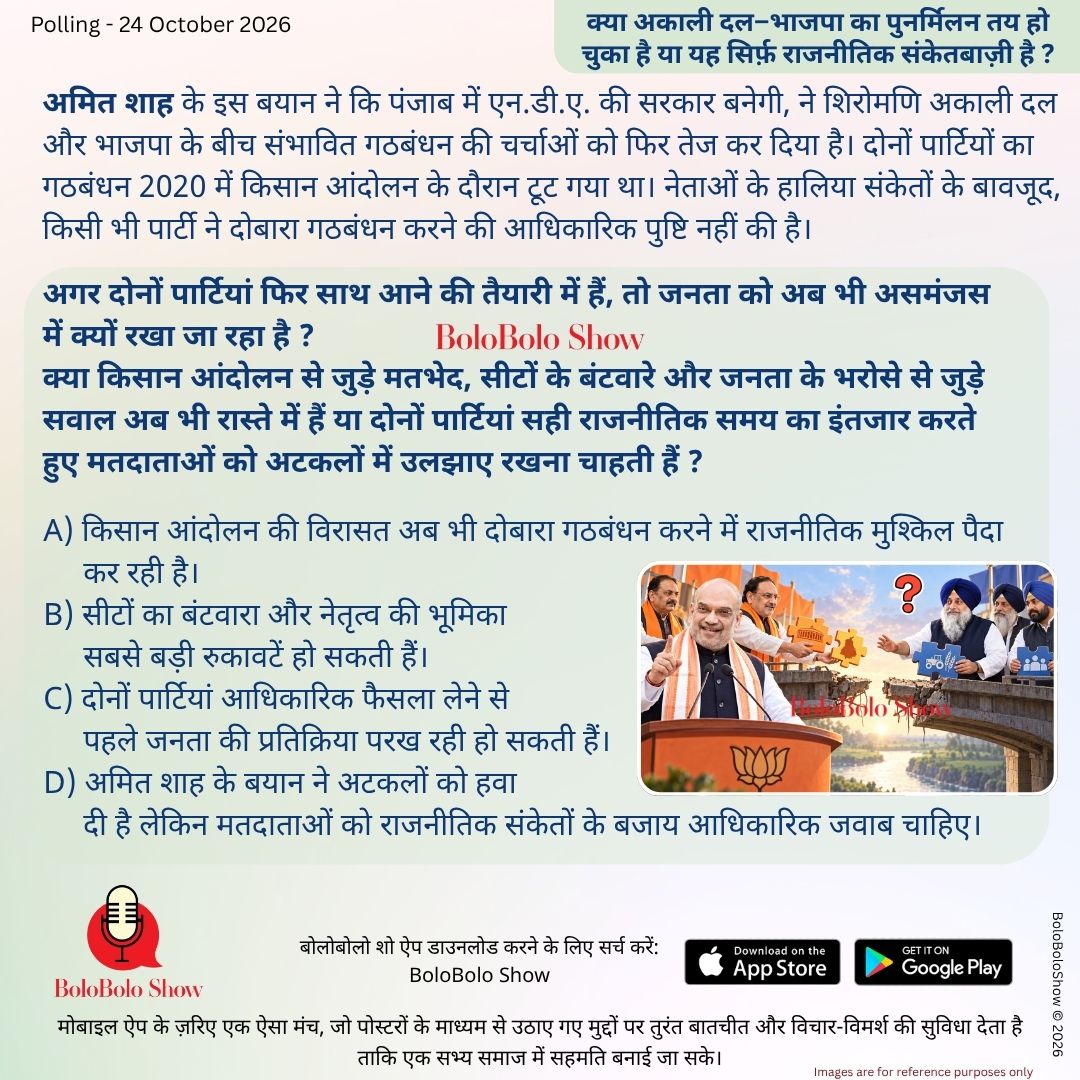
अमित शाह के इस बयान ने कि पंजाब में एन.डी.ए. की सरकार बनेगी, ने शिरोमणि अकाली दल और भाजपा के बीच संभावित गठबंधन की चर्चाओं को फिर तेज कर दिया है। दोनों पार्टियों का गठबंधन 2020 में किसान आंदोलन के दौरान टूट गया था। नेताओं के हालिया संकेतों के बावजूद, किसी भी पार्टी ने दोबारा गठबंधन करने की आधिकारिक पुष्टि नहीं की है। अगर दोनों पार्टियां फिर साथ आने की तैयारी में हैं, तो जनता को अब भी असमंजस में क्यों रखा जा रहा है ? क्या किसान आंदोलन से जुड़े मतभेद, सीटों के बंटवारे और जनता के भरोसे से जुड़े सवाल अब भी रास्ते में हैं या दोनों पार्टियां सही राजनीतिक समय का इंतजार करते हुए मतदाताओं को अटकलों में उलझाए रखना चाहती हैं ?
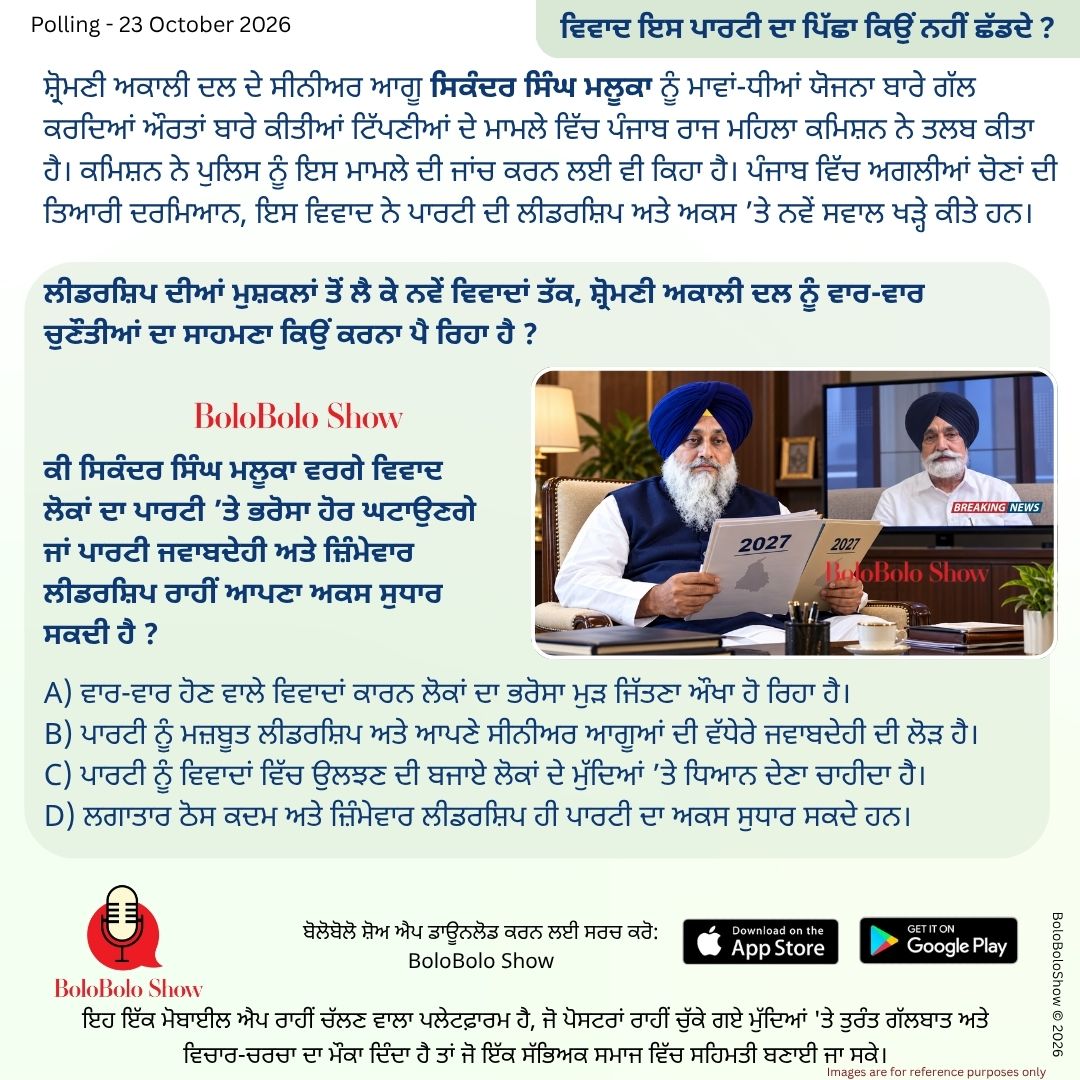
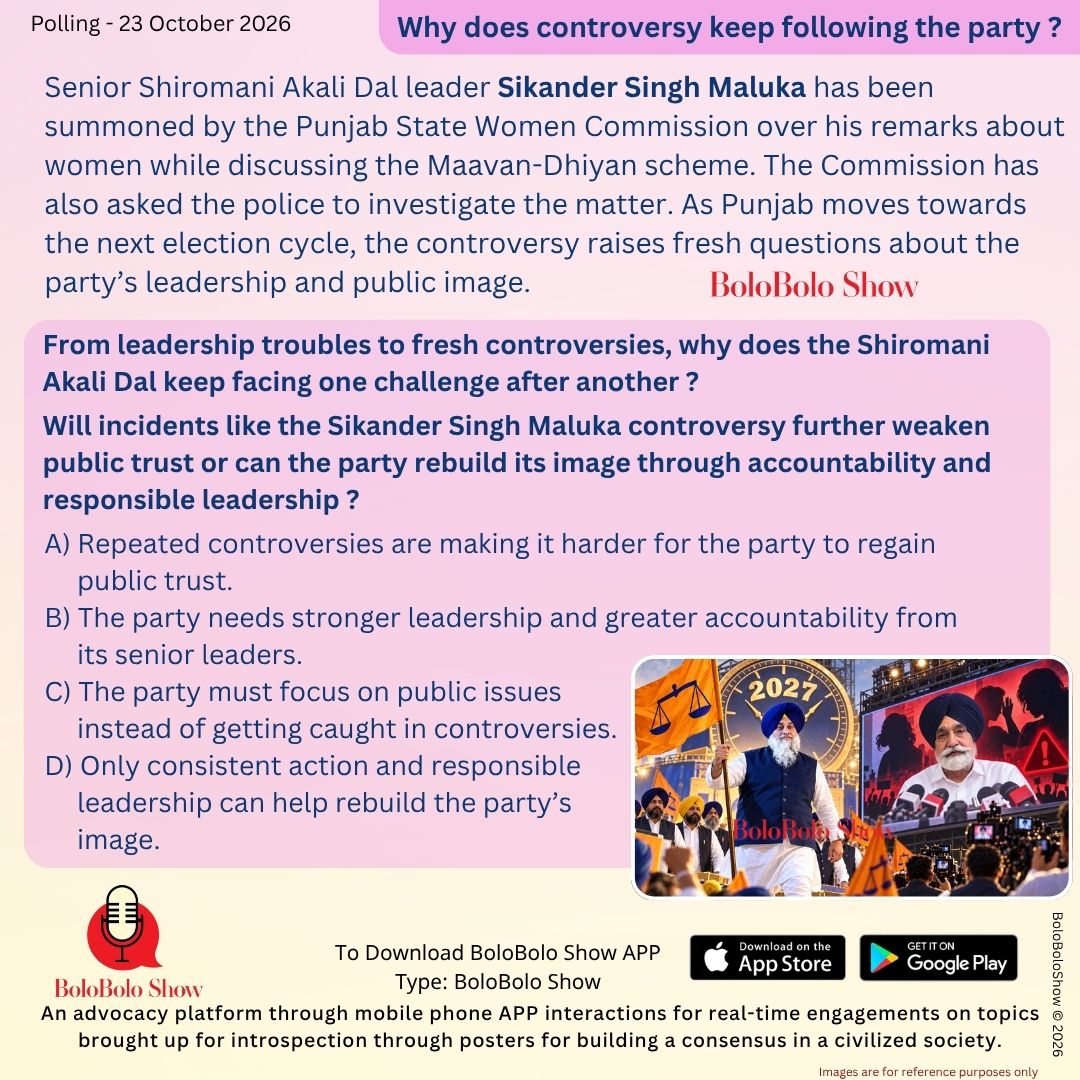
Senior Shiromani Akali Dal leader Sikander Singh Maluka has been summoned by the Punjab State Women Commission over his remarks about women while discussing the Maavan-Dhiyan scheme. The Commission has also asked the police to investigate the matter. As Punjab moves towards the next election cycle, the controversy raises fresh questions about the party’s leadership and public image. From leadership troubles to fresh controversies, why does the Shiromani Akali Dal keep facing one challenge after another ? Will incidents like the Sikander Singh Maluka controversy further weaken public trust or can the party rebuild its image through accountability and responsible leadership ?