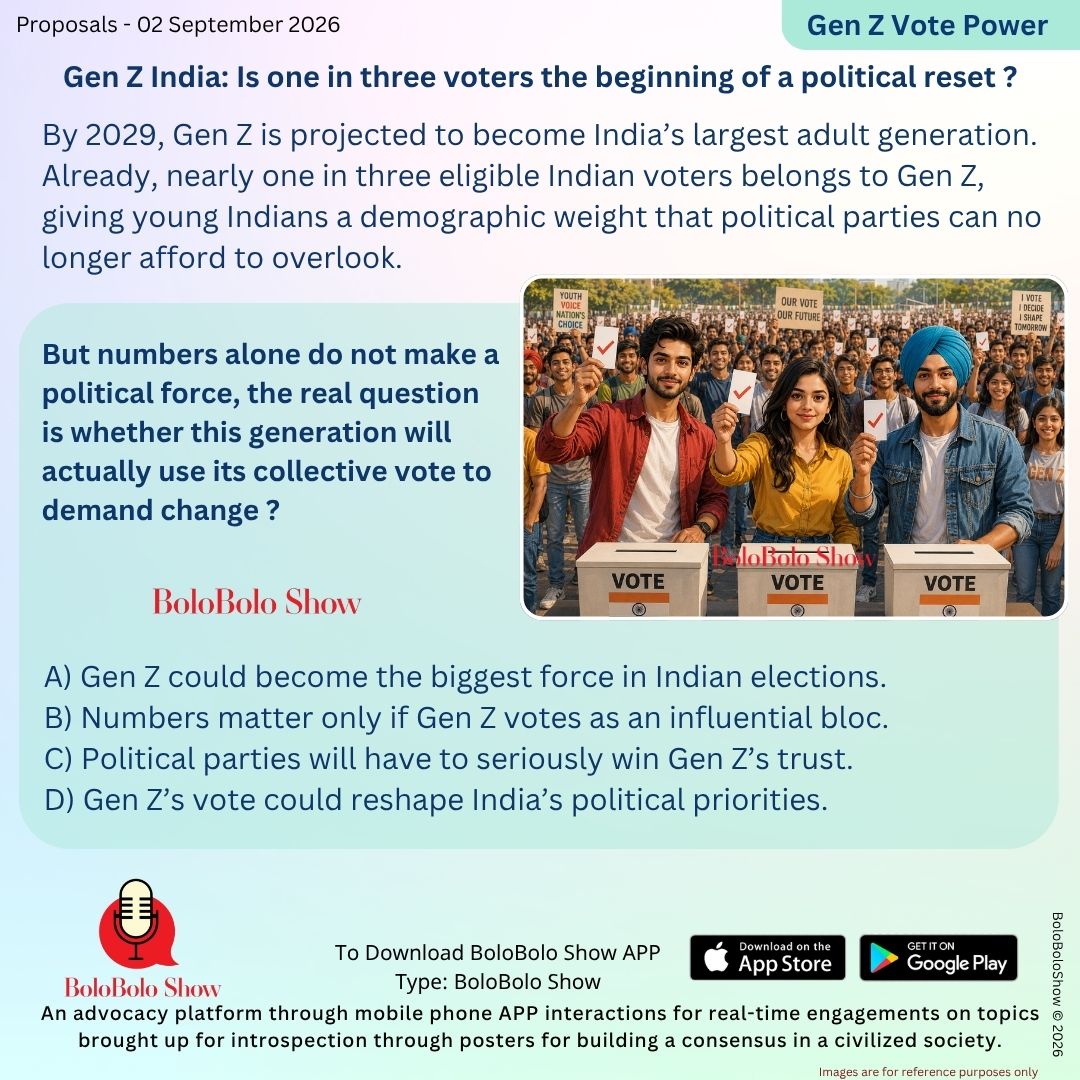
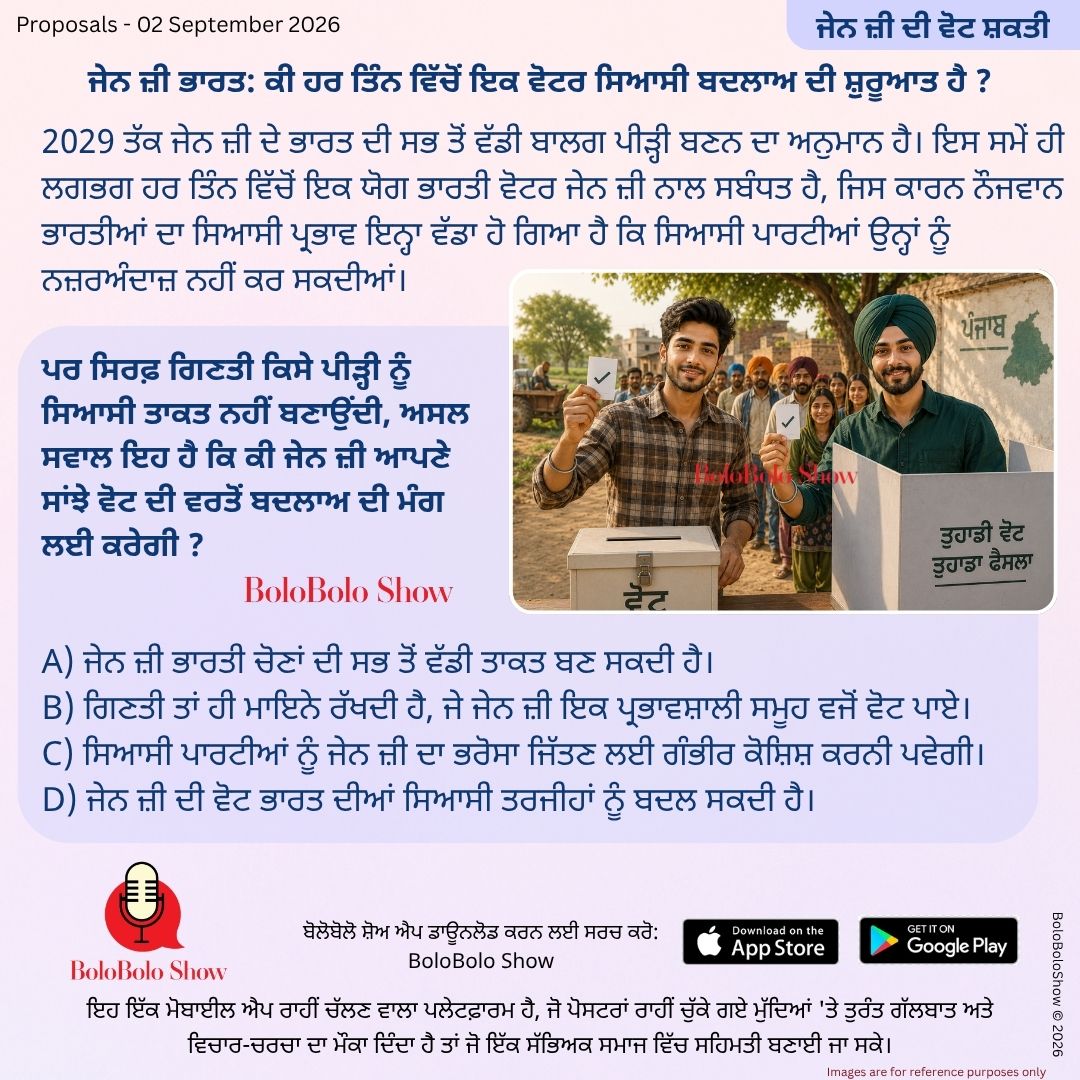
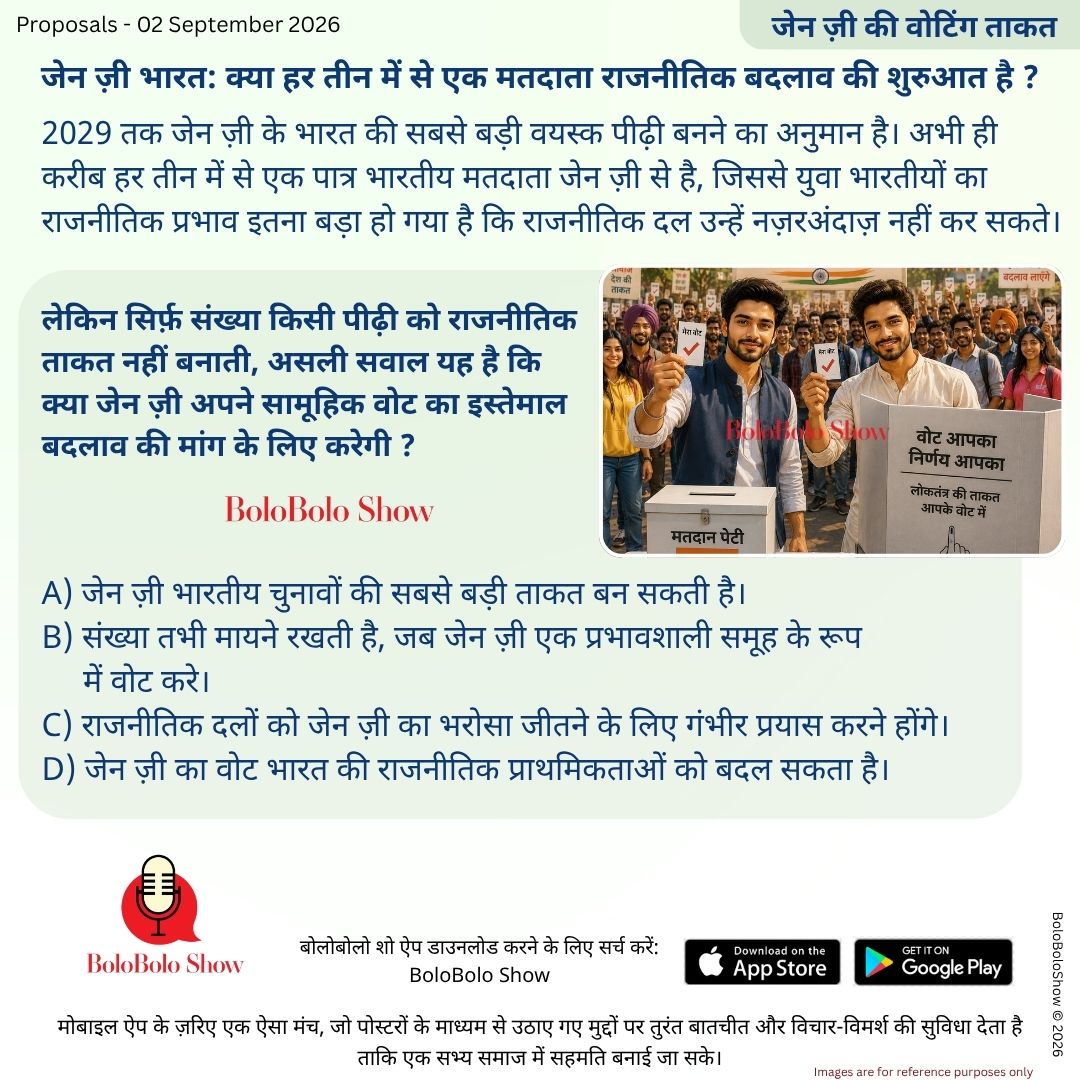
By 2029, Gen Z is projected to become India’s largest adult generation. Already, nearly one in three eligible Indian voters belongs to Gen Z, giving young Indians a demographic weight that political parties can no longer afford to overlook. But numbers alone do not make a political force, the real question is whether this generation will actually use its collective vote to demand change ?
Proposals - SUNLO
A) Gen Z could become the biggest force in Indian elections.
B) Numbers matter only if Gen Z votes as an influential bloc.
C) Political parties will have to seriously win Gen Z’s trust.
D) Gen Z’s vote could reshape India’s political priorities.
2029 तक जेन ज़ी के भारत की सबसे बड़ी वयस्क पीढ़ी बनने का अनुमान है। अभी ही करीब हर तीन में से एक पात्र भारतीय मतदाता जेन ज़ी से है, जिससे युवा भारतीयों का राजनीतिक प्रभाव इतना बड़ा हो गया है कि राजनीतिक दल उन्हें नज़रअंदाज़ नहीं कर सकते। लेकिन सिर्फ़ संख्या किसी पीढ़ी को राजनीतिक ताकत नहीं बनाती, असली सवाल यह है कि क्या जेन ज़ी अपने सामूहिक वोट का इस्तेमाल बदलाव की मांग के लिए करेगी ?
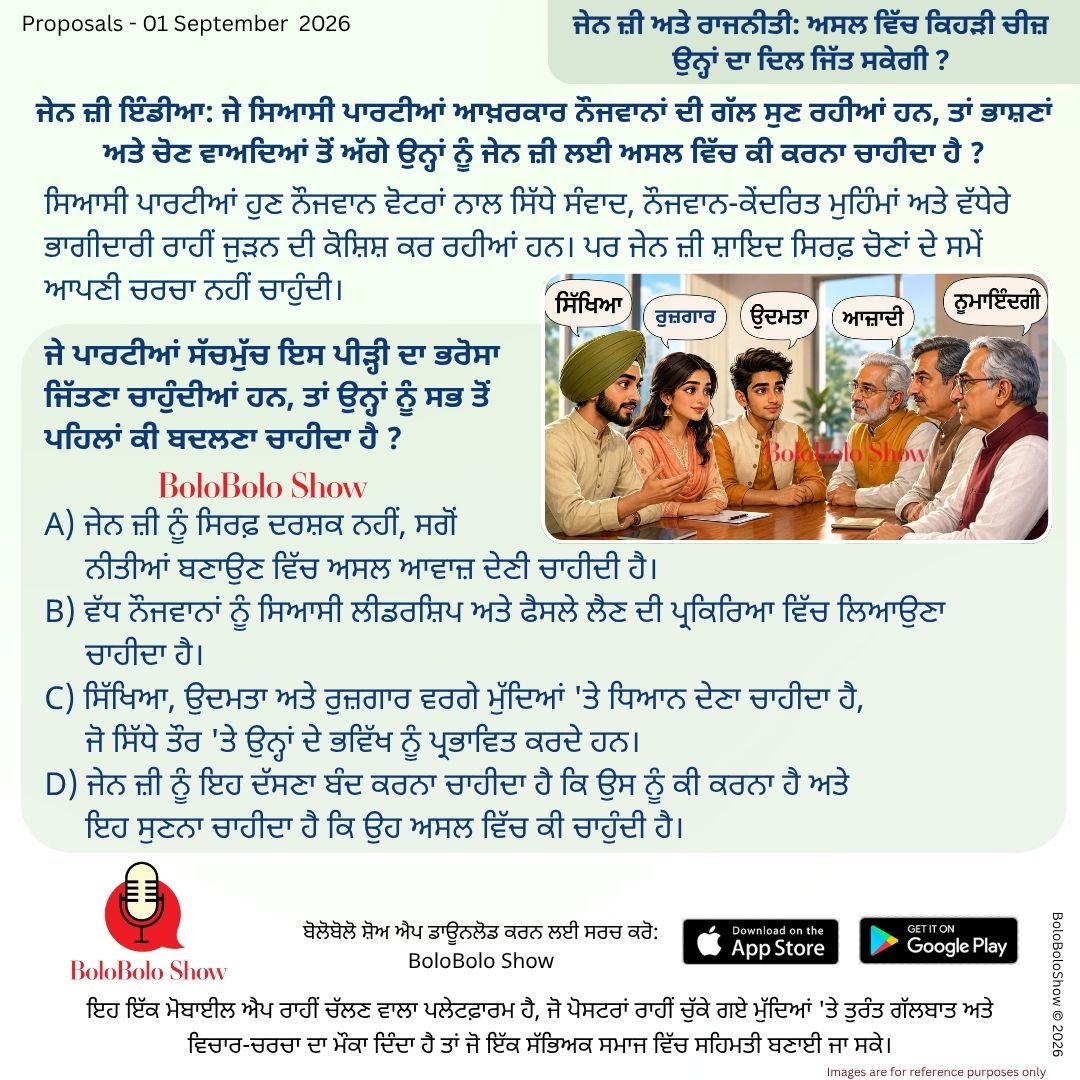
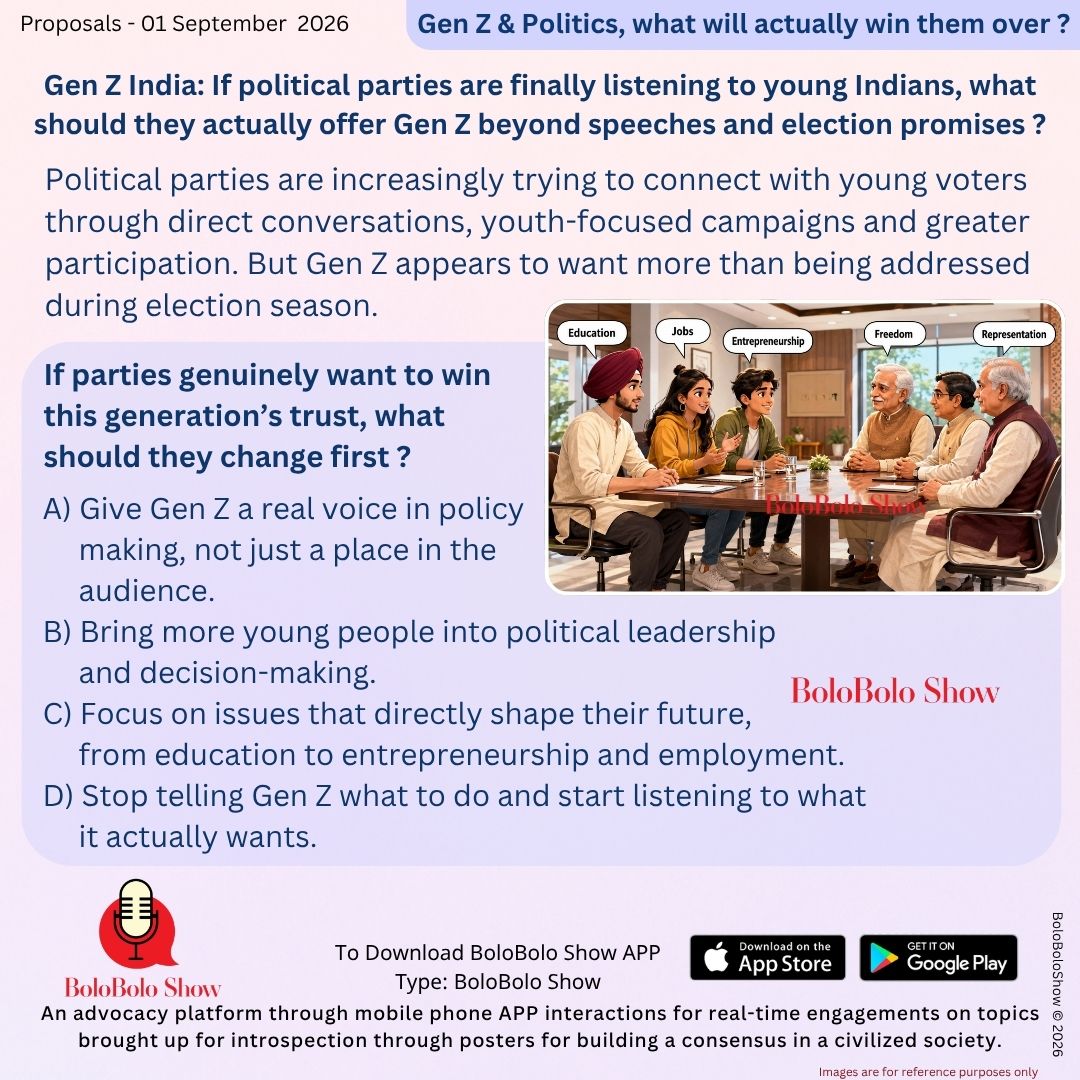
Political parties are increasingly trying to connect with young voters through direct conversations, youth-focused campaigns and greater participation. But Gen Z appears to want more than being addressed during election season. If parties genuinely want to win this generation’s trust, what should they change first ?
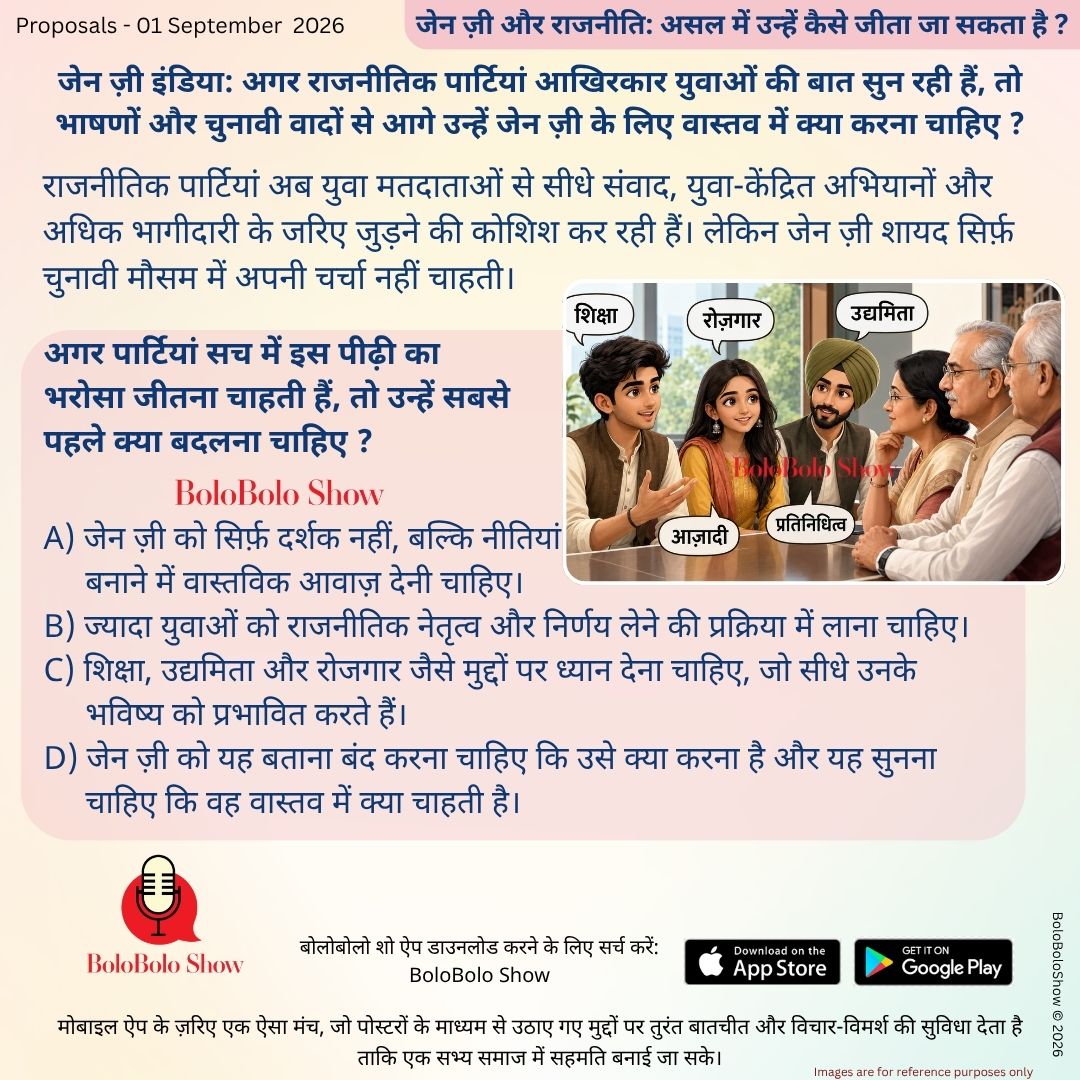
राजनीतिक पार्टियां अब युवा मतदाताओं से सीधे संवाद, युवा-केंद्रित अभियानों और अधिक भागीदारी के जरिए जुड़ने की कोशिश कर रही हैं। लेकिन जेन ज़ी शायद सिर्फ़ चुनावी मौसम में अपनी चर्चा नहीं चाहती। अगर पार्टियां सच में इस पीढ़ी का भरोसा जीतना चाहती हैं, तो उन्हें सबसे पहले क्या बदलना चाहिए ?