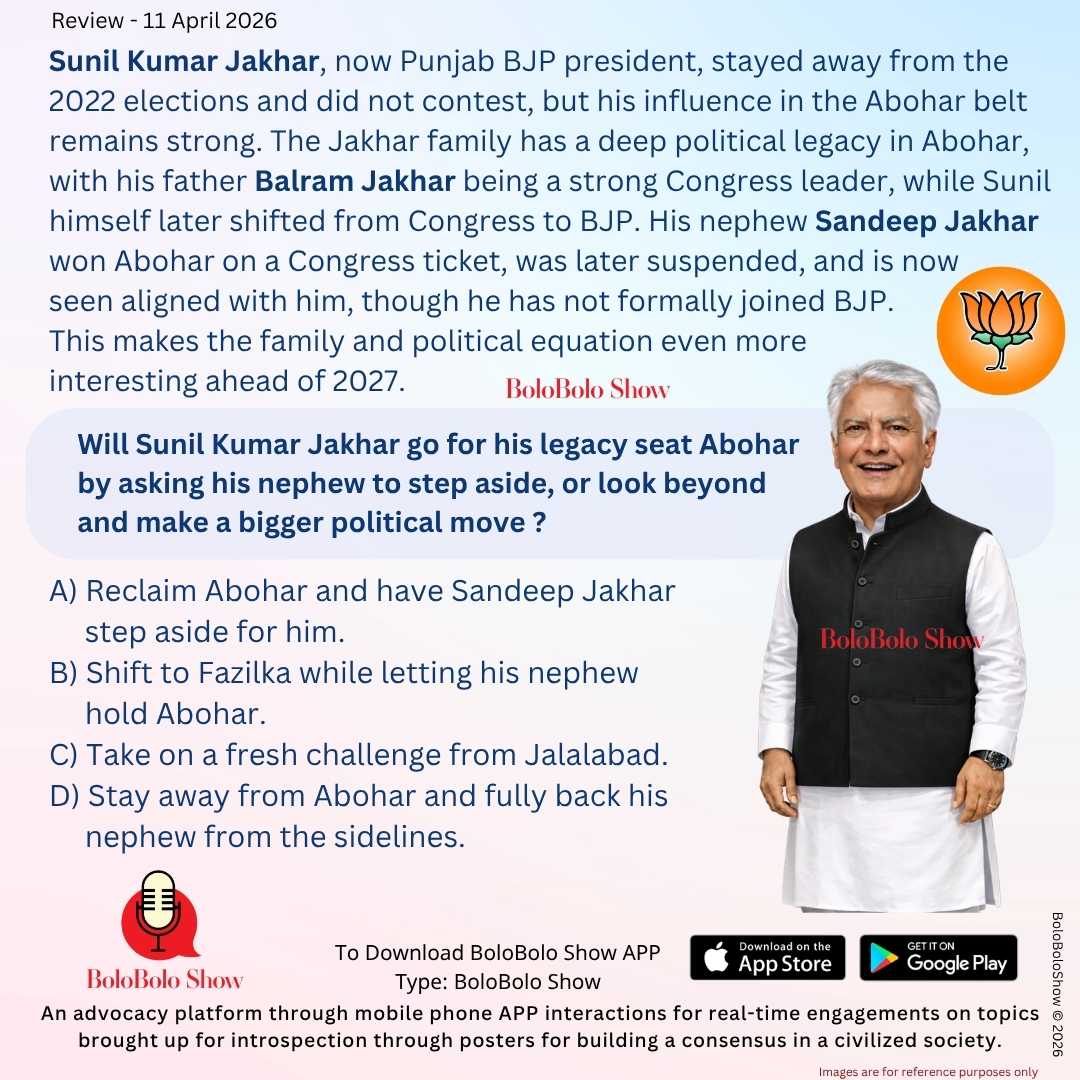
Sunil Kumar Jakhar, now Punjab BJP president, stayed away from the 2022 elections and did not contest, but his influence in the Abohar belt remains strong. The Jakhar family has a deep political legacy in Abohar, with his father Balram Jakhar being a strong Congress leader, while Sunil himself later shifted from Congress to BJP. His nephew Sandeep Jakhar won Abohar on a Congress ticket, was later suspended, and is now seen aligned with him, though he has not formally joined BJP. This makes the family and political equation even more interesting ahead of 2027. Will Sunil Kumar Jakhar go for his legacy seat Abohar by asking his nephew to step aside, or look beyond and make a bigger political move ?
Review - DEKHO
A) Reclaim Abohar and have Sandeep Jakhar step aside for him.
B) Shift to Fazilka while letting his nephew hold Abohar.
C) Take on a fresh challenge from Jalalabad.
D) Stay away from Abohar and fully back his nephew from the sidelines.
With Iran facing a prolonged Strait of Hormuz blockade and attention turning to Russia as a possible economic lifeline, a larger global question is now taking shape. If two heavily sanctioned nations begin relying on each other through alternative trade routes, payment systems, and energy ties, are we witnessing the rise of a parallel world economy outside Western control ? While Moscow may offer short-term relief to Tehran, can two pressured economies truly rescue each other, or does this only deepen mutual dependence and long-term weakness ? And if sanctions push rivals closer together instead of isolating them, could the strategy itself be creating new power blocs ?
ईरान पर लंबे समय से होर्मुज जलडमरूमध्य की नाकेबंदी जारी है और अब रूस को संभावित आर्थिक सहारे के रूप में देखा जा रहा है। ऐसे में एक बड़ा वैश्विक सवाल उभर रहा है। अगर दो भारी प्रतिबंधों से घिरे देश वैकल्पिक व्यापार मार्गों, भुगतान प्रणालियों और ऊर्जा साझेदारी के सहारे एक-दूसरे पर निर्भर होने लगें, तो क्या हम पश्चिमी नियंत्रण से बाहर एक समानांतर विश्व अर्थव्यवस्था का उदय देख रहे हैं ? रूस तेहरान को थोड़ी राहत दे सकता है, लेकिन क्या दबाव झेल रही दो अर्थव्यवस्थाएँ सच में एक-दूसरे को संभाल सकती हैं, या यह केवल आपसी निर्भरता और लंबी कमजोरी बढ़ाएगा ? और अगर प्रतिबंध विरोधियों को अलग करने की बजाय और करीब ला रहे हैं, तो क्या यही नीति नए शक्ति गुट बना रही है ?
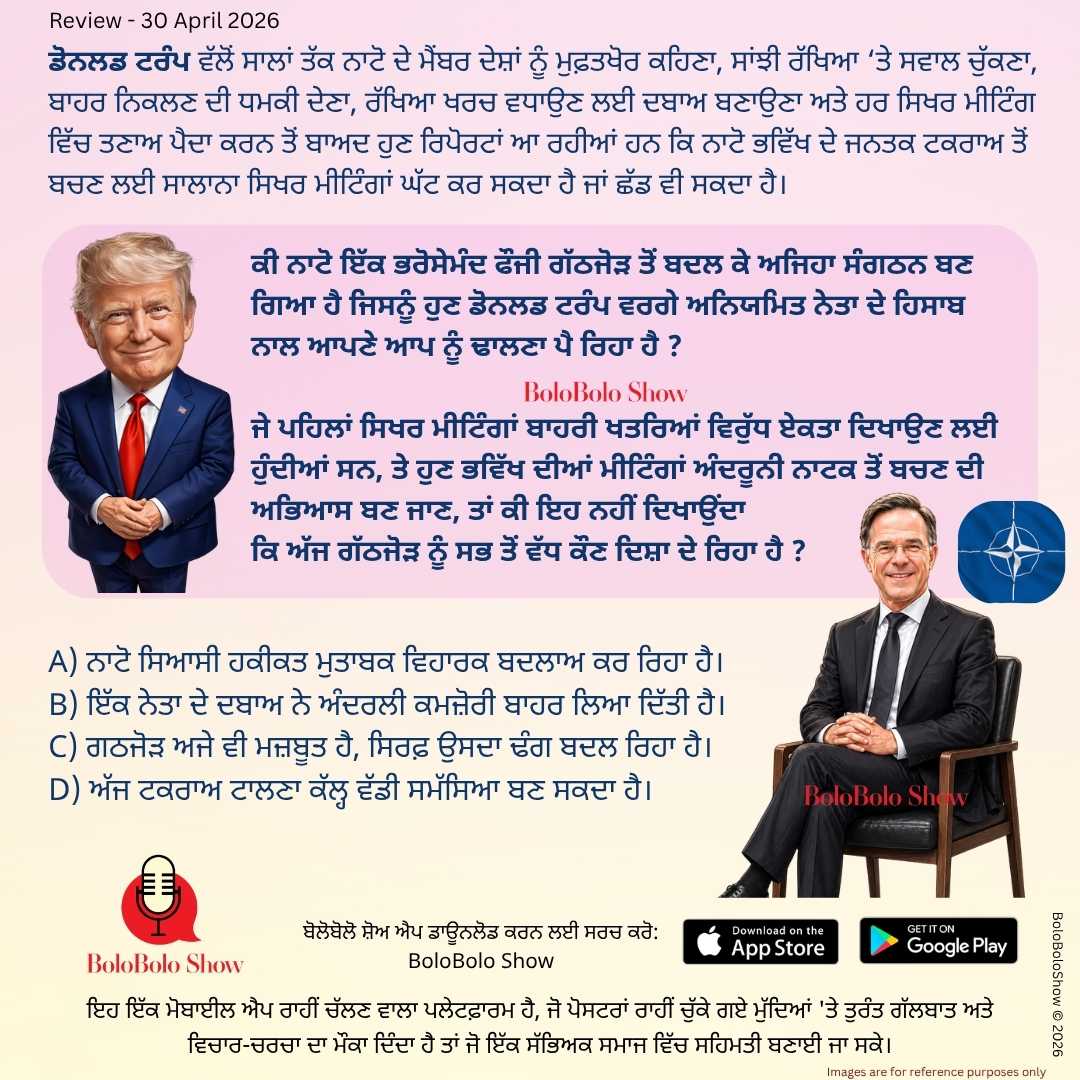
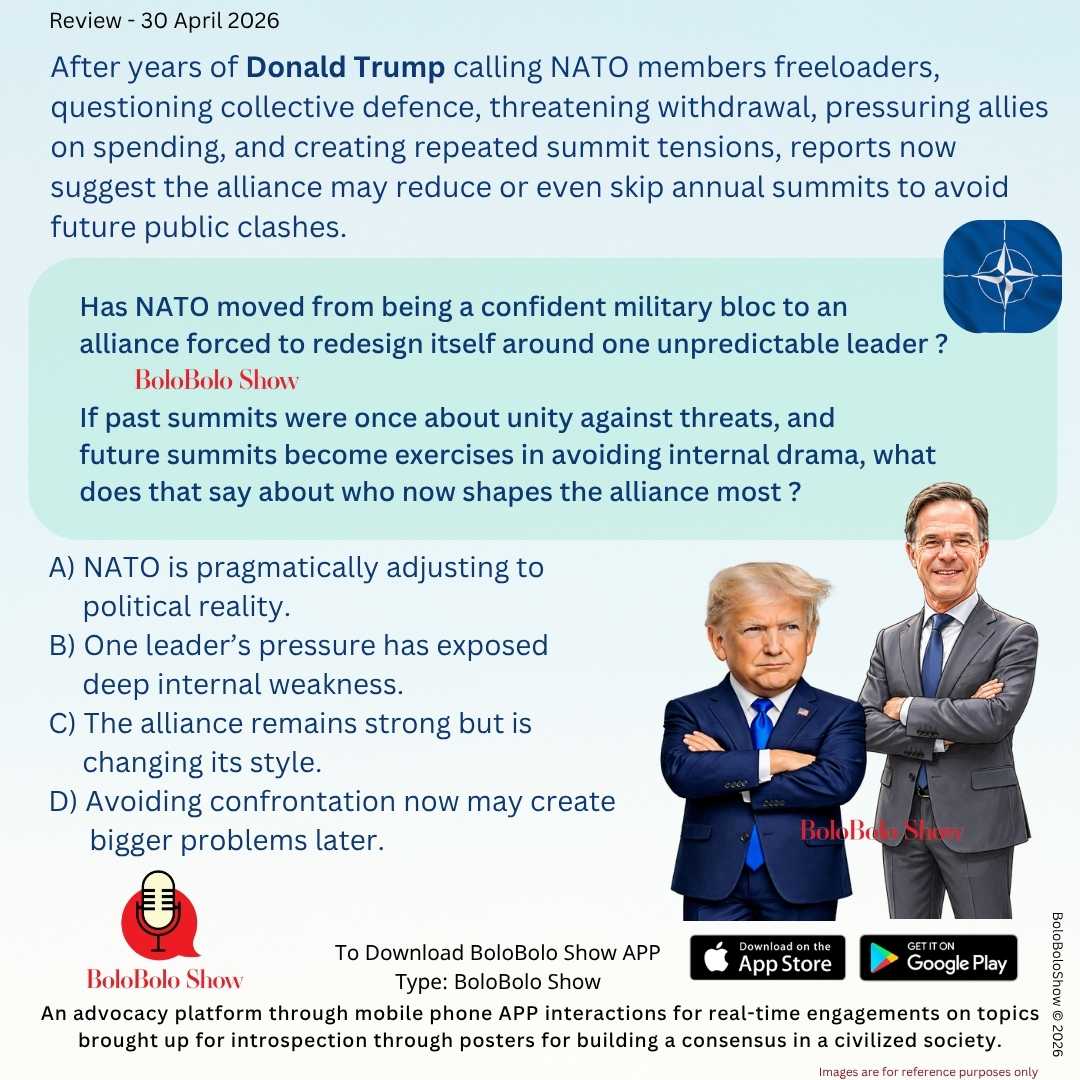
After years of Donald Trump calling NATO members freeloaders, questioning collective defence, threatening withdrawal, pressuring allies on spending, and creating repeated summit tensions, reports now suggest the alliance may reduce or even skip annual summits to avoid future public clashes. Has NATO moved from being a confident military bloc to an alliance forced to redesign itself around one unpredictable leader ? If past summits were once about unity against threats, and future summits become exercises in avoiding internal drama, what does that say about who now shapes the alliance most ?