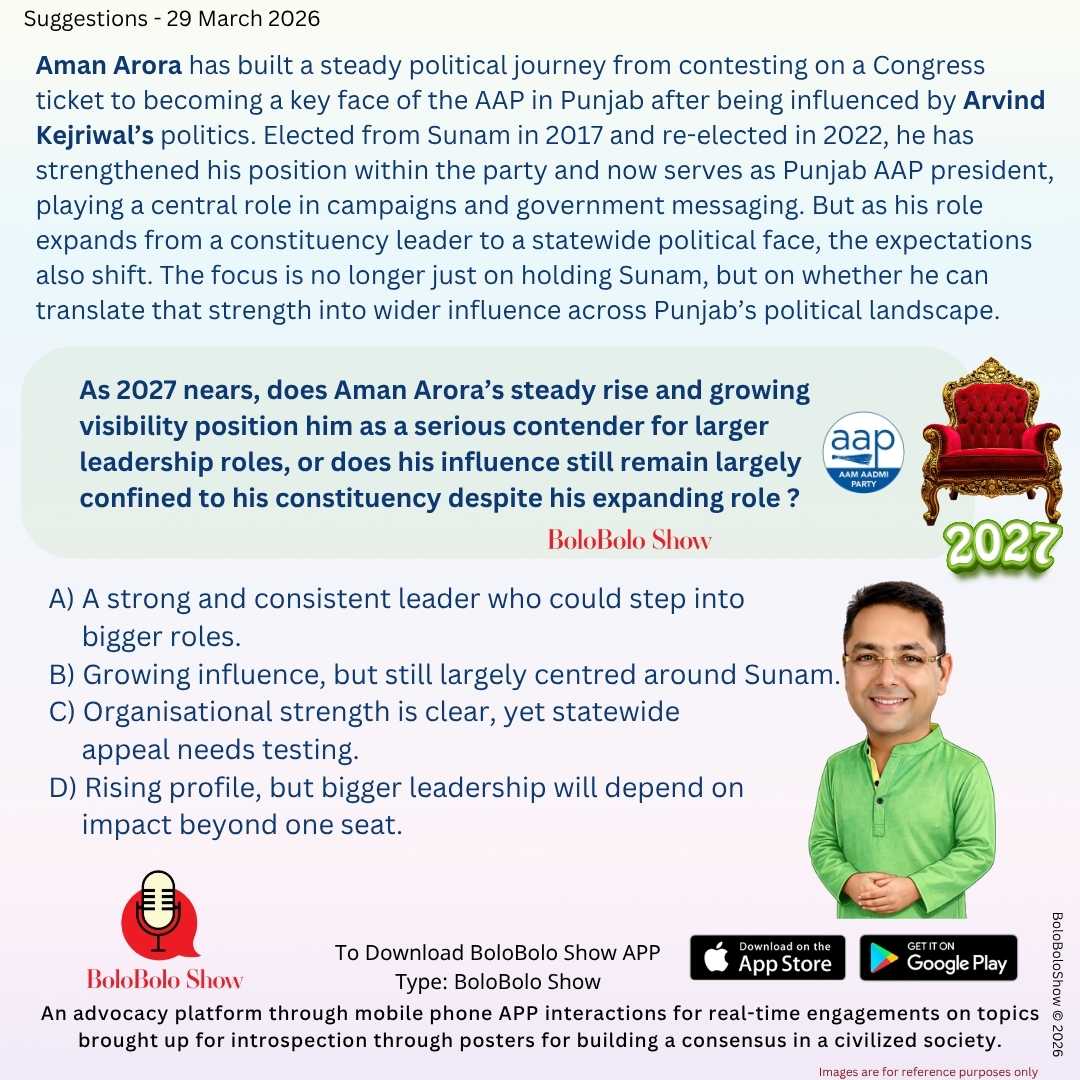
Aman Arora has built a steady political journey from contesting on a Congress ticket to becoming a key face of the AAP in Punjab after being influenced by Arvind Kejriwal’s politics. Elected from Sunam in 2017 and re-elected in 2022, he has strengthened his position within the party and now serves as Punjab AAP president, playing a central role in campaigns and government messaging. But as his role expands from a constituency leader to a statewide political face, the expectations also shift. The focus is no longer just on holding Sunam, but on whether he can translate that strength into wider influence across Punjab’s political landscape. As 2027 nears, does Aman Arora’s steady rise and growing visibility position him as a serious contender for larger leadership roles, or does his influence still remain largely confined to his constituency despite his expanding role ?
अमन अरोड़ा ने कांग्रेस से चुनाव लड़ने से लेकर आम आदमी पार्टी में एक अहम चेहरा बनने तक एक स्थिर राजनीतिक सफर तय किया है, जो अरविंद केजरीवाल की राजनीति से प्रभावित रहा। 2017 में सुनाम से विधायक चुने गए और 2022 में दोबारा जीत हासिल कर उन्होंने पार्टी में अपनी स्थिति मजबूत की है और अब पंजाब आम आदमी पार्टी अध्यक्ष के रूप में अभियान और सरकारी संदेश को आगे बढ़ाने में अहम भूमिका निभा रहे हैं। लेकिन जैसे-जैसे उनकी भूमिका एक क्षेत्रीय नेता से राज्यस्तरीय चेहरे में बदल रही है, उम्मीदें भी बढ़ रही हैं। अब सवाल सिर्फ सुनाम तक सीमित नहीं है, बल्कि यह है कि क्या वह अपनी पकड़ को पूरे पंजाब में प्रभाव में बदल सकते हैं। 2027 के करीब आते हुए, क्या अमन अरोड़ा का उभार उन्हें बड़ी अगुवाई के लिए मजबूत दावेदार बनाता है, या उनका प्रभाव अभी भी उनके क्षेत्र तक ही सीमित है ?
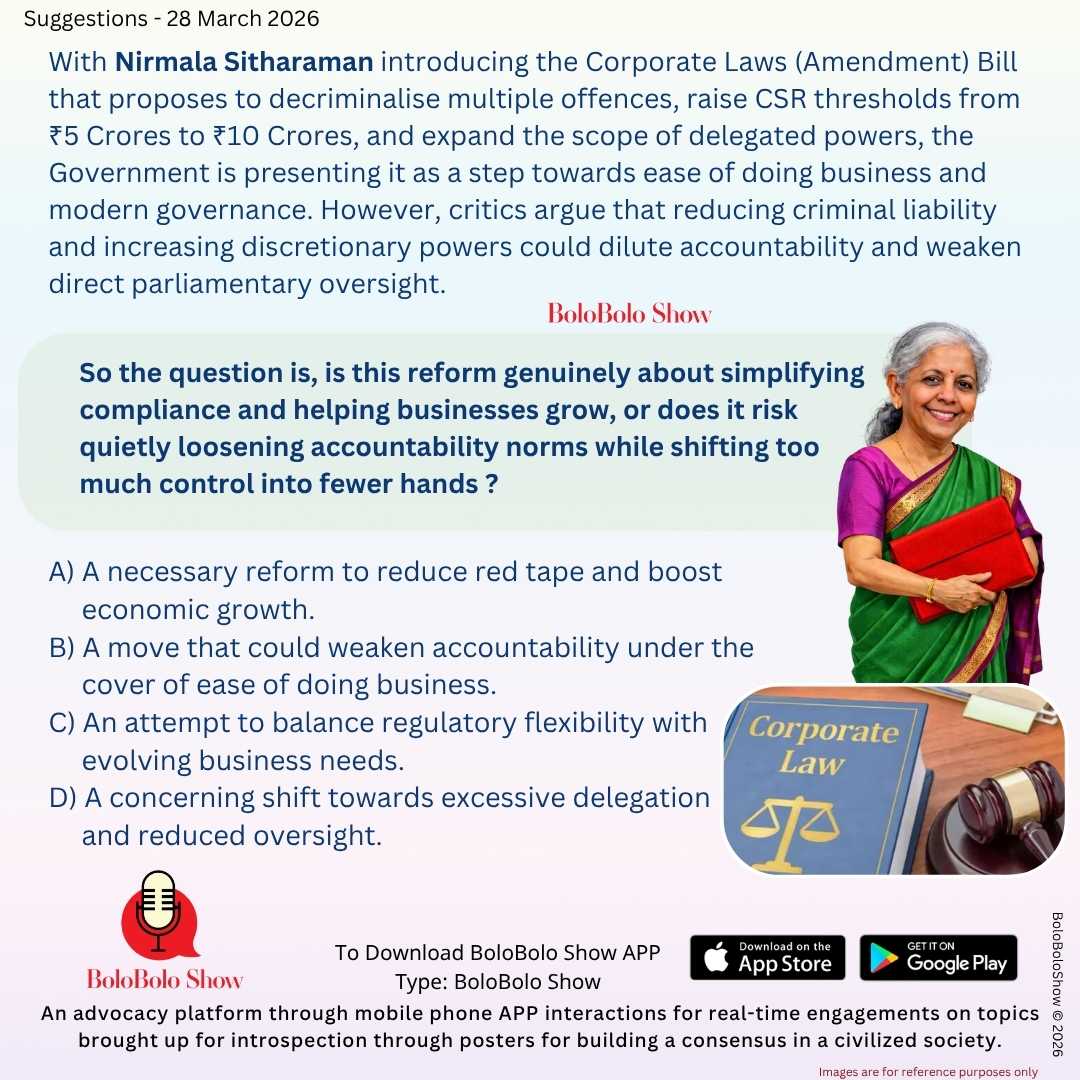
With Nirmala Sitharaman introducing the Corporate Laws (Amendment) Bill that proposes to decriminalise multiple offences, raise CSR thresholds from ₹5 Crores to ₹10 Crores, and expand the scope of delegated powers, the Government is presenting it as a step towards ease of doing business and modern governance. However, critics argue that reducing criminal liability and increasing discretionary powers could dilute accountability and weaken direct parliamentary oversight. So the question is, is this reform genuinely about simplifying compliance and helping businesses grow, or does it risk quietly loosening accountability norms while shifting too much control into fewer hands ?
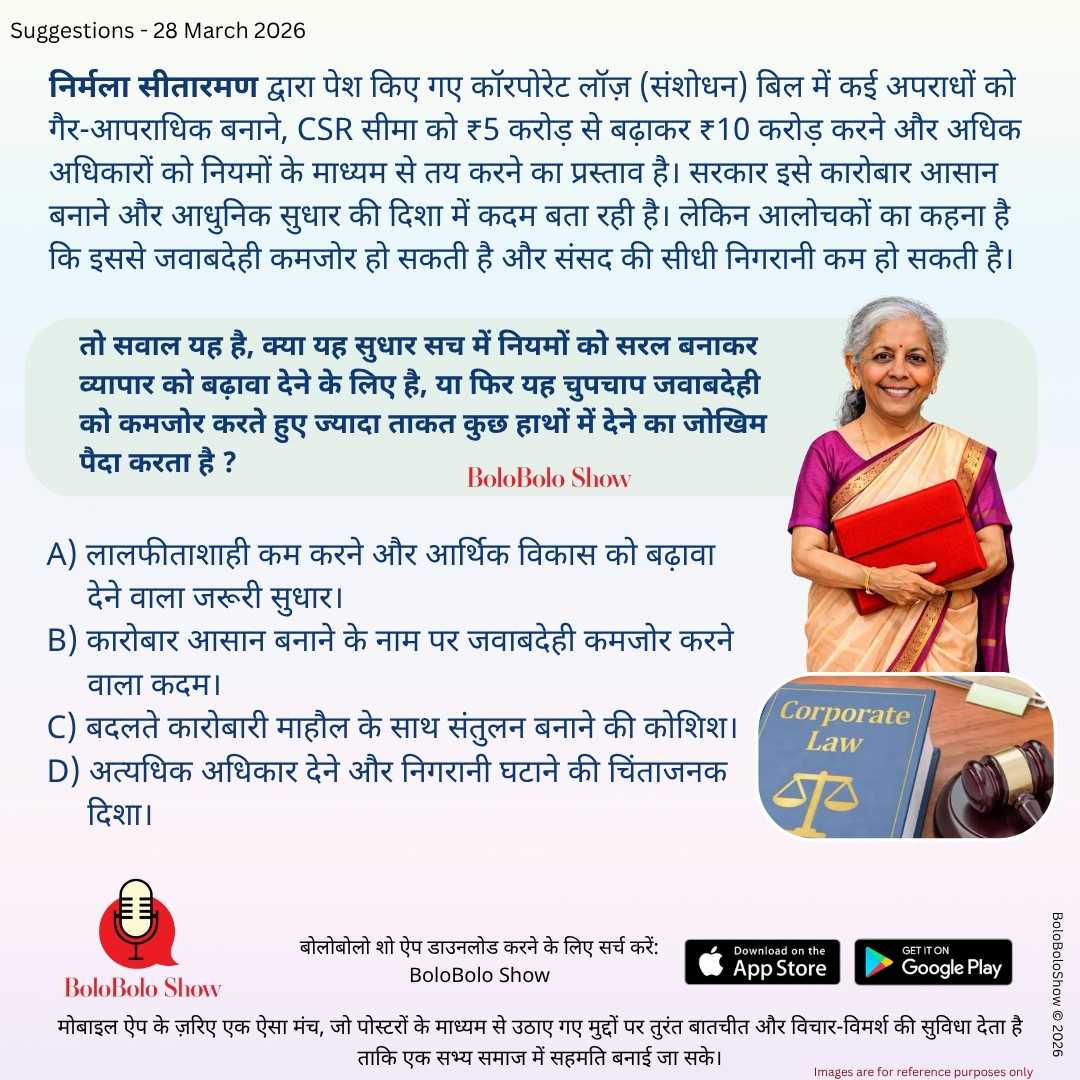
निर्मला सीतारमण द्वारा पेश किए गए कॉरपोरेट लॉज़ (संशोधन) बिल में कई अपराधों को गैर-आपराधिक बनाने, CSR सीमा को ₹5 करोड़ से बढ़ाकर ₹10 करोड़ करने और अधिक अधिकारों को नियमों के माध्यम से तय करने का प्रस्ताव है। सरकार इसे कारोबार आसान बनाने और आधुनिक सुधार की दिशा में कदम बता रही है। लेकिन आलोचकों का कहना है कि इससे जवाबदेही कमजोर हो सकती है और संसद की सीधी निगरानी कम हो सकती है। तो सवाल यह है, क्या यह सुधार सच में नियमों को सरल बनाकर व्यापार को बढ़ावा देने के लिए है, या फिर यह चुपचाप जवाबदेही को कमजोर करते हुए ज्यादा ताकत कुछ हाथों में देने का जोखिम पैदा करता है ?