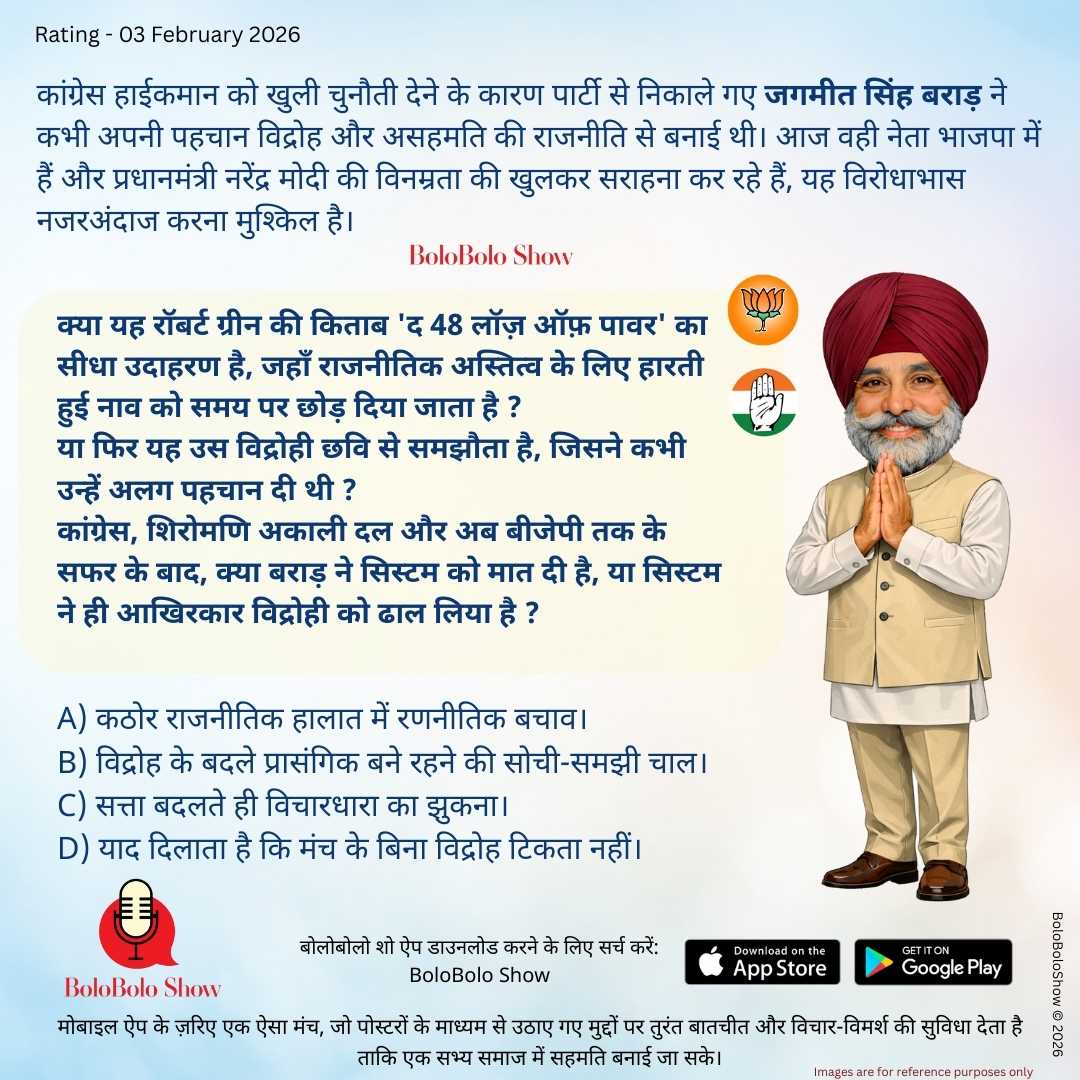
कांग्रेस हाईकमान को खुली चुनौती देने के कारण पार्टी से निकाले गए जगमीत सिंह बराड़ ने कभी अपनी पहचान विद्रोह और असहमति की राजनीति से बनाई थी। आज वही नेता भाजपा में हैं और प्रधानमंत्री नरेंद्र मोदी की विनम्रता की खुलकर सराहना कर रहे हैं, यह विरोधाभास नजरअंदाज करना मुश्किल है। क्या यह रॉबर्ट ग्रीन की किताब 'द 48 लॉज़ ऑफ़ पावर' का सीधा उदाहरण है, जहाँ राजनीतिक अस्तित्व के लिए हारती हुई नाव को समय पर छोड़ दिया जाता है ? या फिर यह उस विद्रोही छवि से समझौता है, जिसने कभी उन्हें अलग पहचान दी थी ? कांग्रेस, शिरोमणि अकाली दल और अब बीजेपी तक के सफर के बाद, क्या बराड़ ने सिस्टम को मात दी है, या सिस्टम ने ही आखिरकार विद्रोही को ढाल लिया है ?
Rating
A) कठोर राजनीतिक हालात में रणनीतिक बचाव।
B) विद्रोह के बदले प्रासंगिक बने रहने की सोची-समझी चाल।
C) सत्ता बदलते ही विचारधारा का झुकना।
D) याद दिलाता है कि मंच के बिना विद्रोह टिकता नहीं।
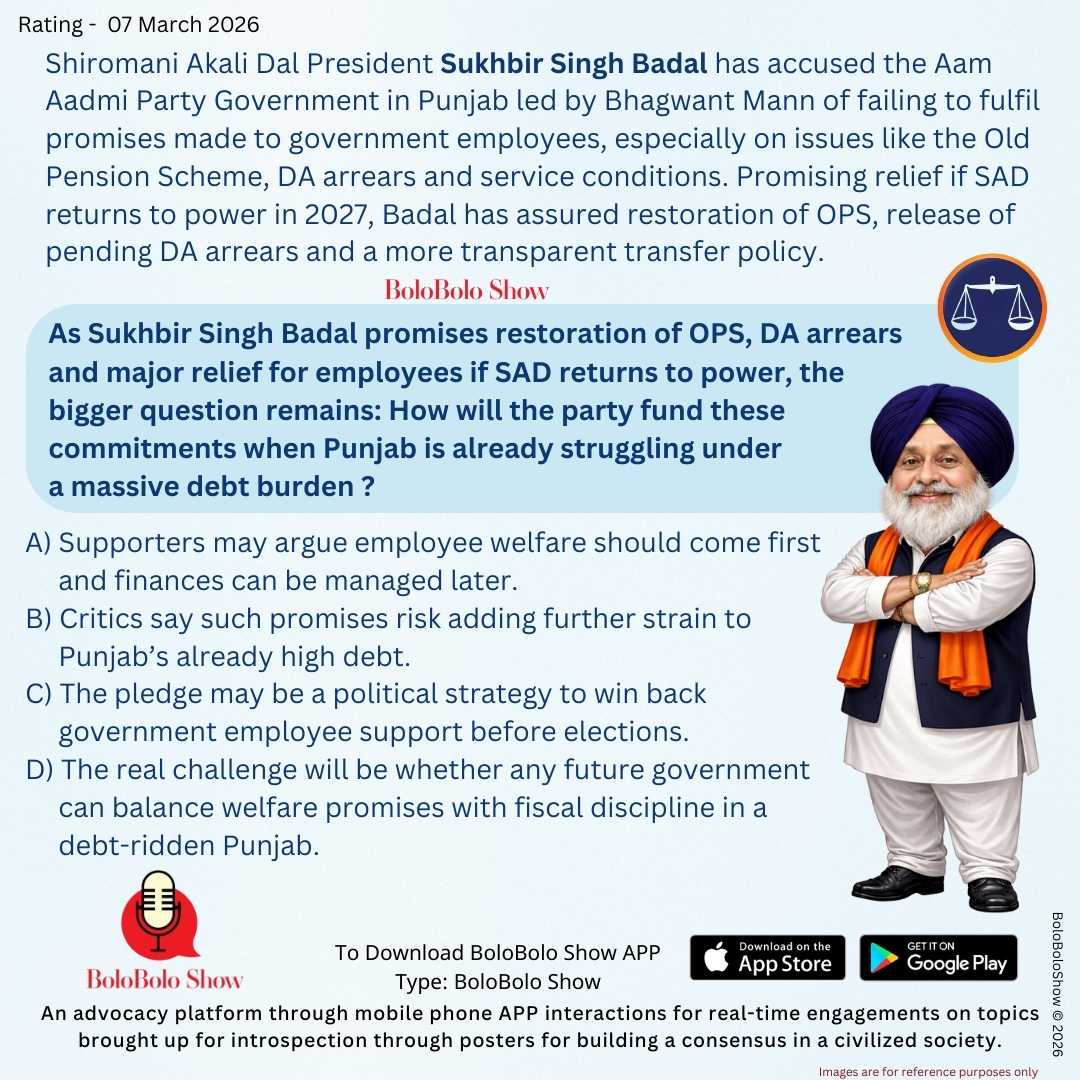
Shiromani Akali Dal President Sukhbir Singh Badal has accused the Aam Aadmi Party Government in Punjab led by Bhagwant Mann of failing to fulfil promises made to government employees, especially on issues like the Old Pension Scheme, DA arrears and service conditions. Promising relief if SAD returns to power in 2027, Badal has assured restoration of OPS, release of pending DA arrears and a more transparent transfer policy. As Sukhbir Singh Badal promises restoration of OPS, DA arrears and major relief for employees if SAD returns to power, the bigger question remains: How will the party fund these commitments when Punjab is already struggling under a massive debt burden ?
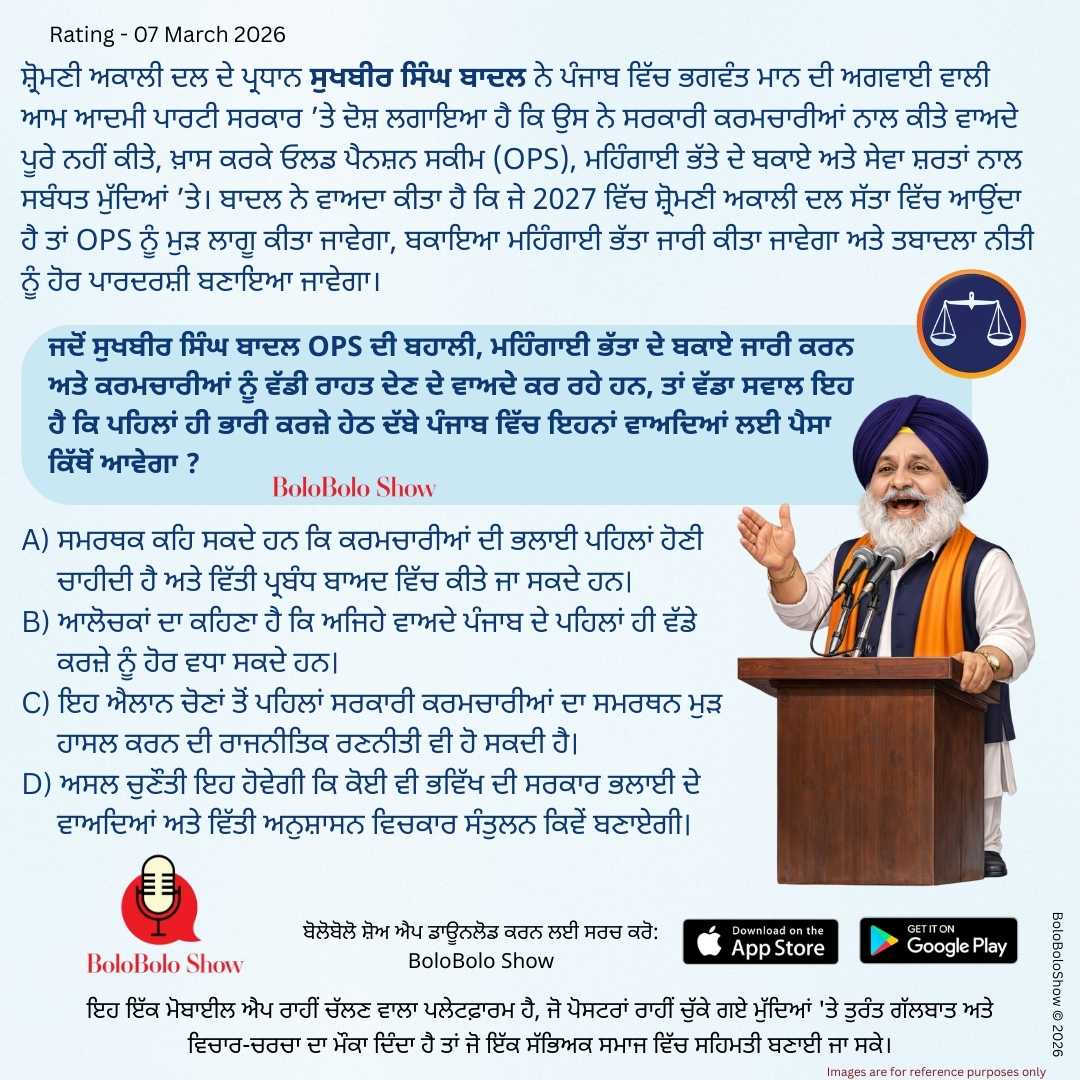
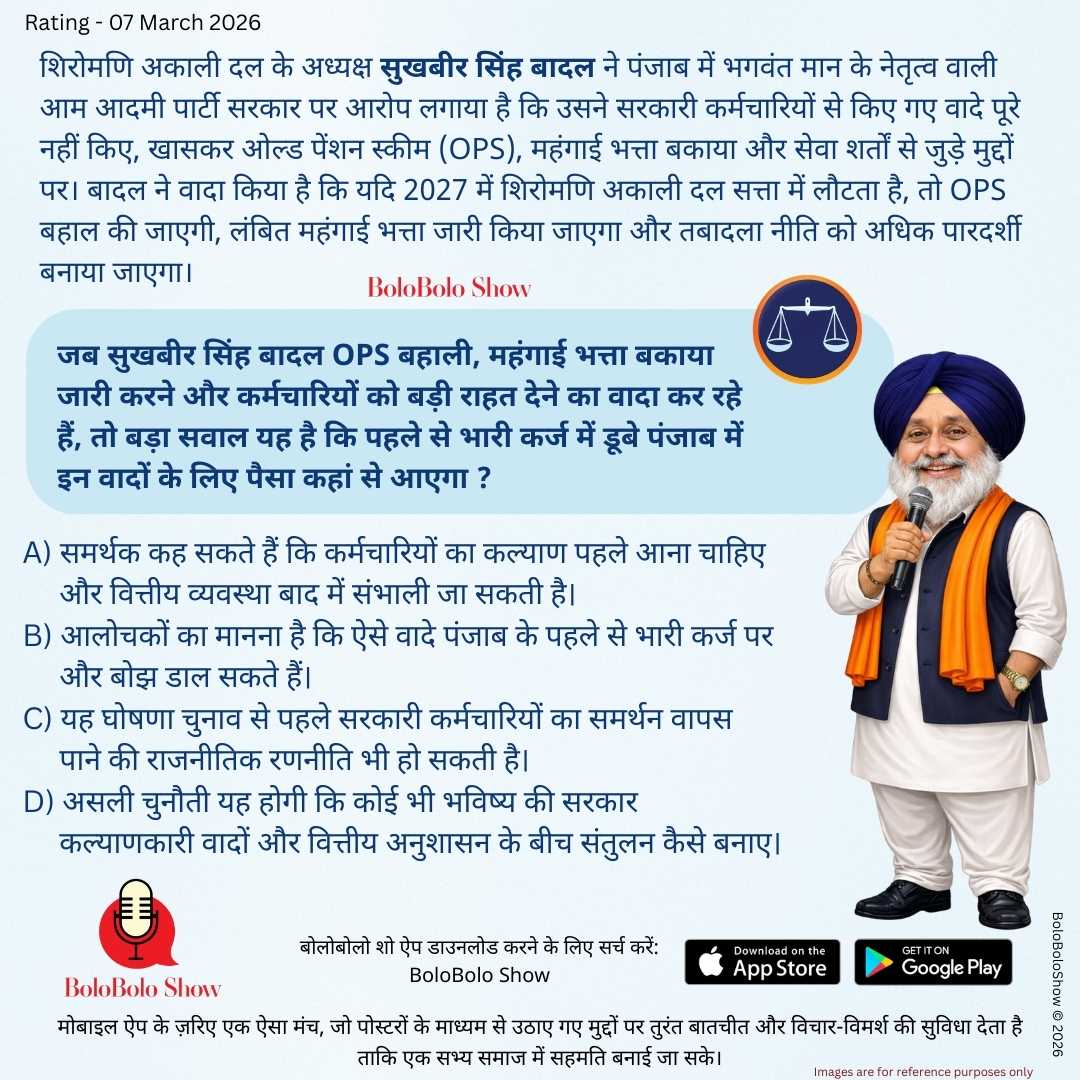
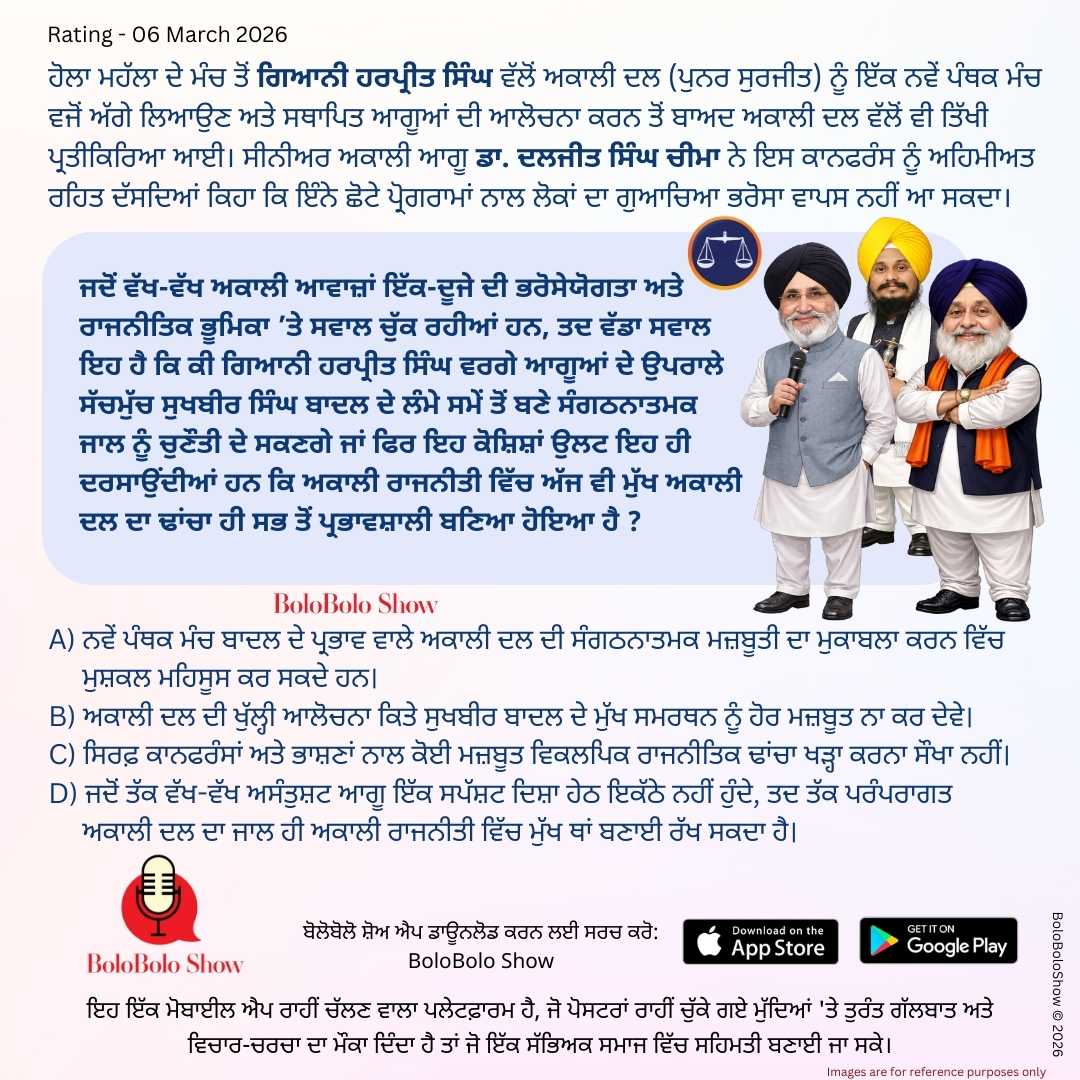
शिरोमणि अकाली दल के अध्यक्ष सुखबीर सिंह बादल ने पंजाब में भगवंत मान के नेतृत्व वाली आम आदमी पार्टी सरकार पर आरोप लगाया है कि उसने सरकारी कर्मचारियों से किए गए वादे पूरे नहीं किए, खासकर ओल्ड पेंशन स्कीम (OPS), महंगाई भत्ता बकाया और सेवा शर्तों से जुड़े मुद्दों पर। बादल ने वादा किया है कि यदि 2027 में शिरोमणि अकाली दल सत्ता में लौटता है, तो OPS बहाल की जाएगी, लंबित महंगाई भत्ता जारी किया जाएगा और तबादला नीति को अधिक पारदर्शी बनाया जाएगा। जब सुखबीर सिंह बादल OPS बहाली, महंगाई भत्ता बकाया जारी करने और कर्मचारियों को बड़ी राहत देने का वादा कर रहे हैं, तो बड़ा सवाल यह है कि पहले से भारी कर्ज में डूबे पंजाब में इन वादों के लिए पैसा कहां से आएगा ?
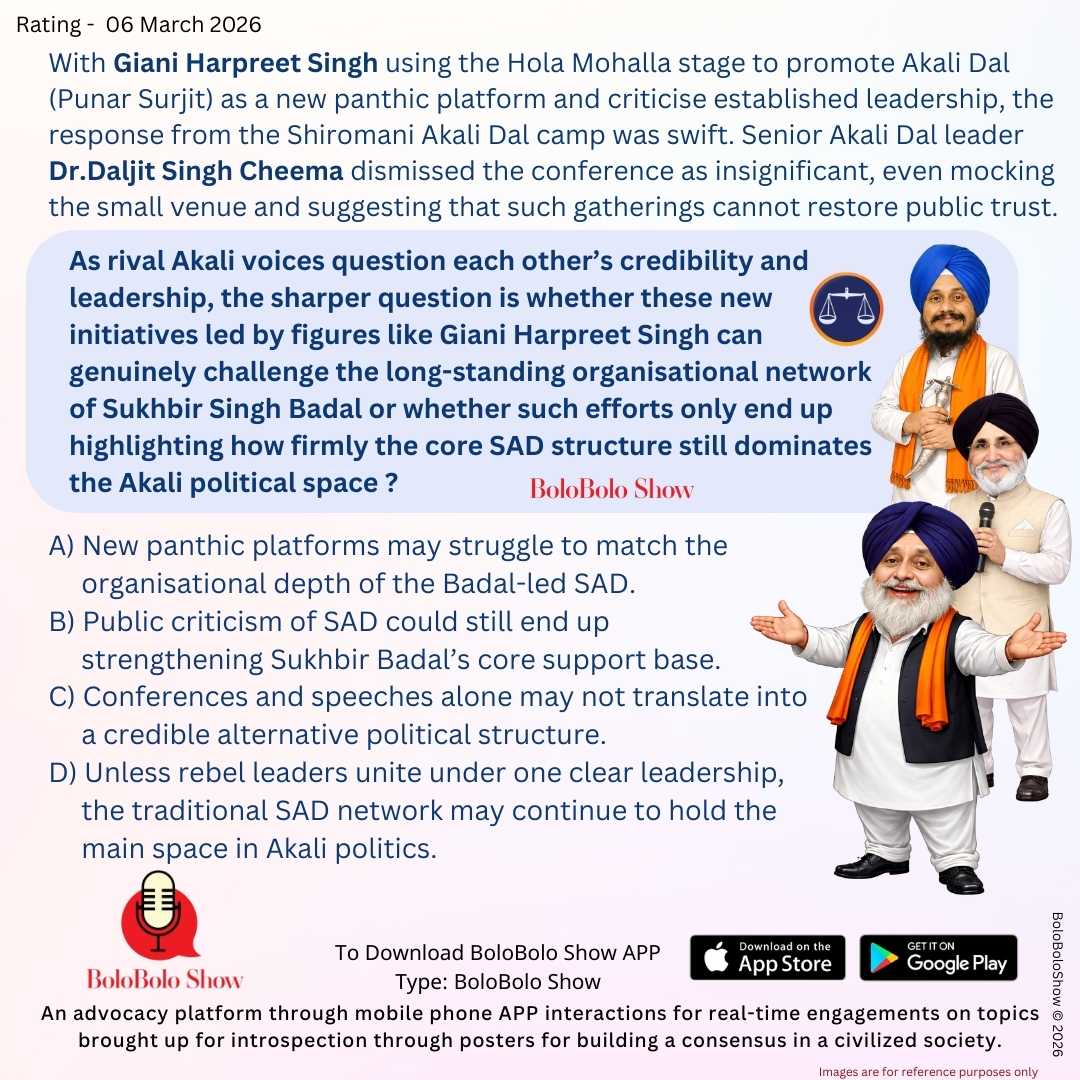
With Giani Harpreet Singh using the Hola Mohalla stage to promote Akali Dal (Punar Surjit) as a new panthic platform and criticise established leadership, the response from the Shiromani Akali Dal camp was swift. Senior Akali Dal leader Dr.Daljit Singh Cheema dismissed the conference as insignificant, even mocking the small venue and suggesting that such gatherings cannot restore public trust. As rival Akali voices question each other’s credibility and leadership, the sharper question is whether these new initiatives led by figures like Giani Harpreet Singh can genuinely challenge the long-standing organisational network of Sukhbir Singh Badal or whether such efforts only end up highlighting how firmly the core SAD structure still dominates the Akali political space ?