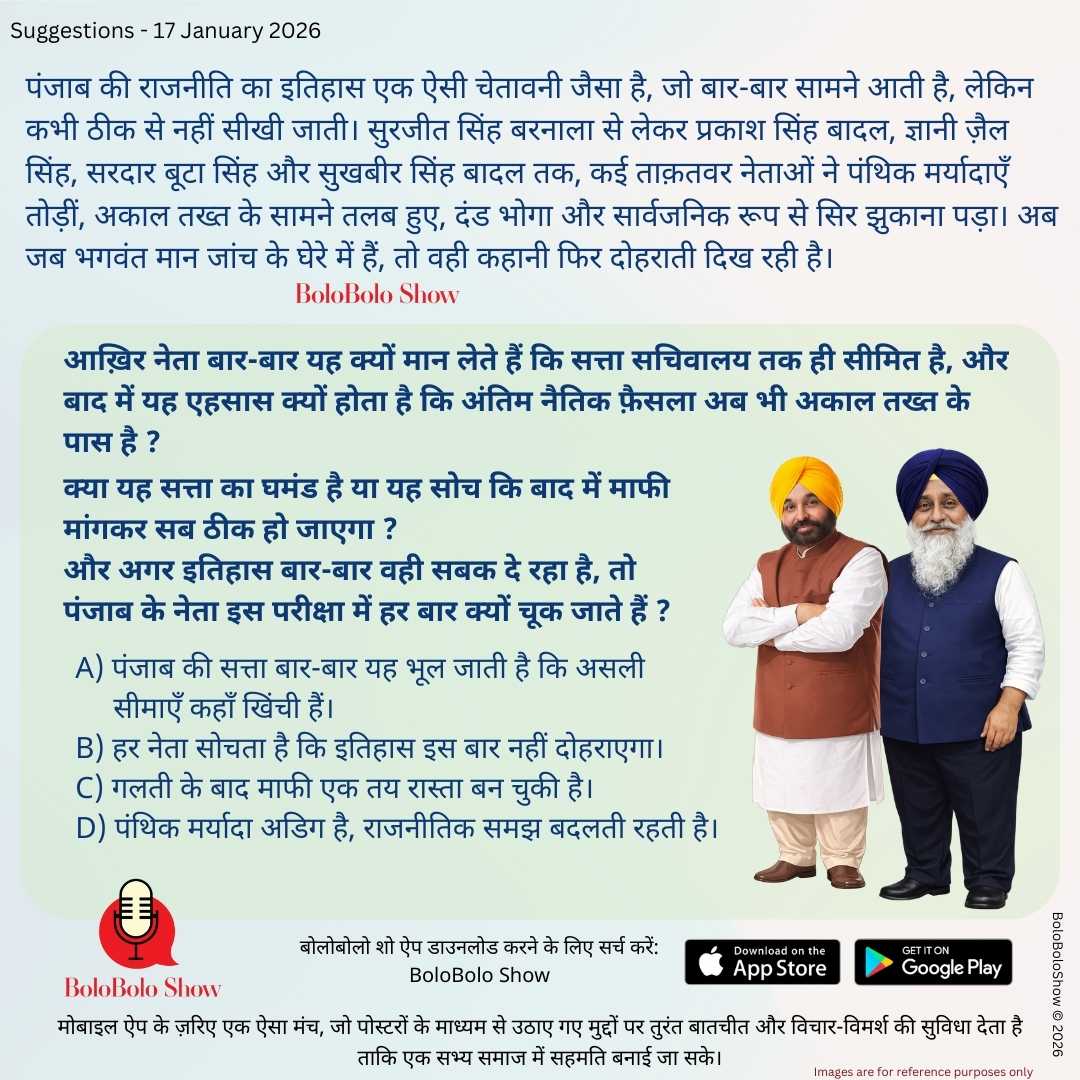
पंजाब की राजनीति का इतिहास एक ऐसी चेतावनी जैसा है, जो बार-बार सामने आती है, लेकिन कभी ठीक से नहीं सीखी जाती। सुरजीत सिंह बरनाला से लेकर प्रकाश सिंह बादल, ज्ञानी ज़ैल सिंह, सरदार बूटा सिंह और सुखबीर सिंह बादल तक, कई ताक़तवर नेताओं ने पंथिक मर्यादाएँ तोड़ीं, अकाल तख्त के सामने तलब हुए, दंड भोगा और सार्वजनिक रूप से सिर झुकाना पड़ा। अब जब भगवंत मान जांच के घेरे में हैं, तो वही कहानी फिर दोहराती दिख रही है। आख़िर नेता बार-बार यह क्यों मान लेते हैं कि सत्ता सचिवालय तक ही सीमित है, और बाद में यह एहसास क्यों होता है कि अंतिम नैतिक फ़ैसला अब भी अकाल तख्त के पास है ? क्या यह सत्ता का घमंड है या यह सोच कि बाद में माफी मांगकर सब ठीक हो जाएगा ? और अगर इतिहास बार-बार वही सबक दे रहा है, तो पंजाब के नेता इस परीक्षा में हर बार क्यों चूक जाते हैं ?
Suggestions - SLAH
A) पंजाब की सत्ता बार-बार यह भूल जाती है कि असली सीमाएँ कहाँ खिंची हैं।
B) हर नेता सोचता है कि इतिहास इस बार नहीं दोहराएगा।
C) गलती के बाद माफी एक तय रास्ता बन चुकी है।
D) पंथिक मर्यादा अडिग है, राजनीतिक समझ बदलती रहती है।
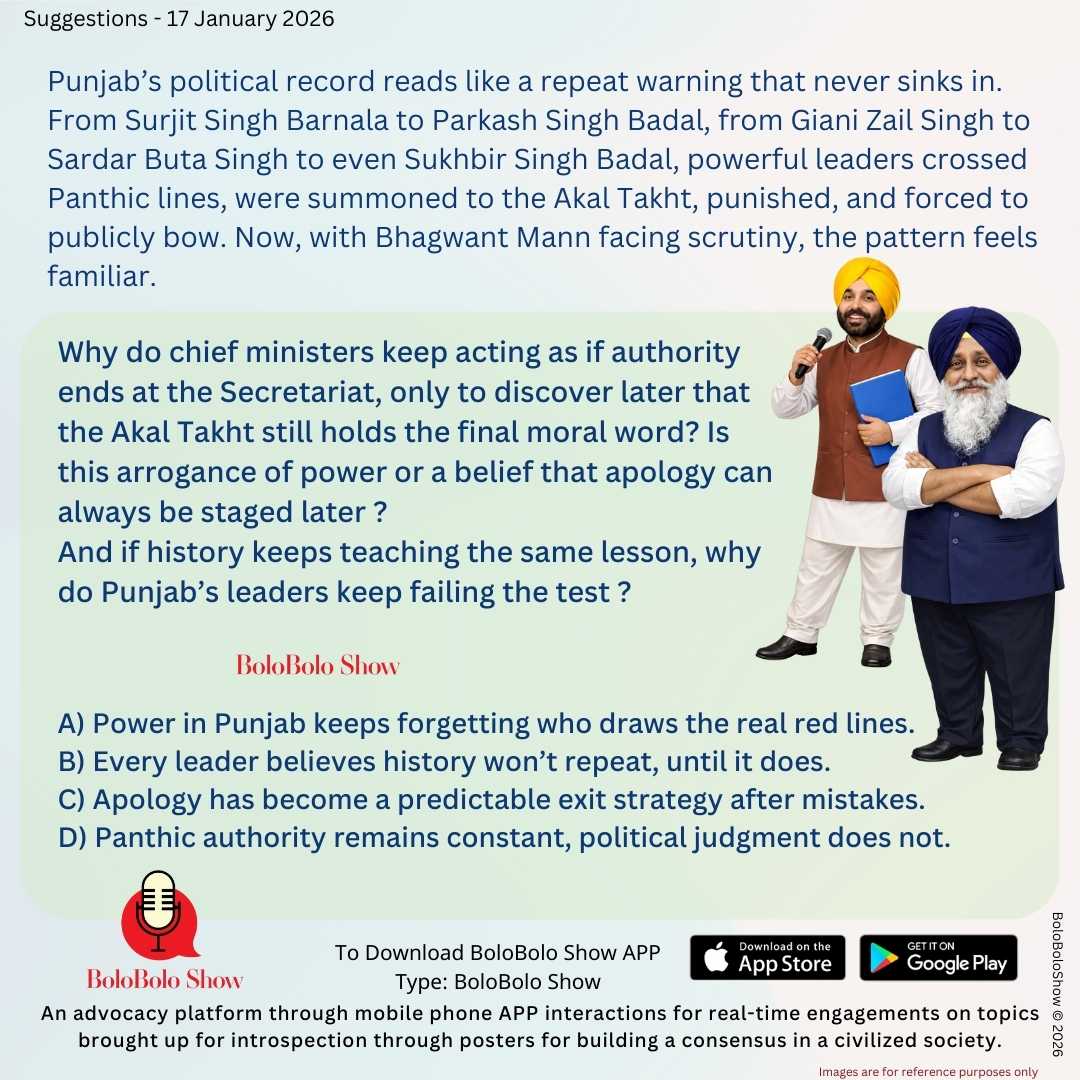
Punjab’s political record reads like a repeat warning that never sinks in. From Surjit Singh Barnala to Parkash Singh Badal, from Giani Zail Singh to Sardar Buta Singh to even Sukhbir Singh Badal, powerful leaders crossed Panthic lines, were summoned to the Akal Takht, punished, and forced to publicly bow. Now, with Bhagwant Mann facing scrutiny, the pattern feels familiar. Why do chief ministers keep acting as if authority ends at the Secretariat, only to discover later that the Akal Takht still holds the final moral word? Is this arrogance of power or a belief that apology can always be staged later ? And if history keeps teaching the same lesson, why do Punjab’s leaders keep failing the test ?
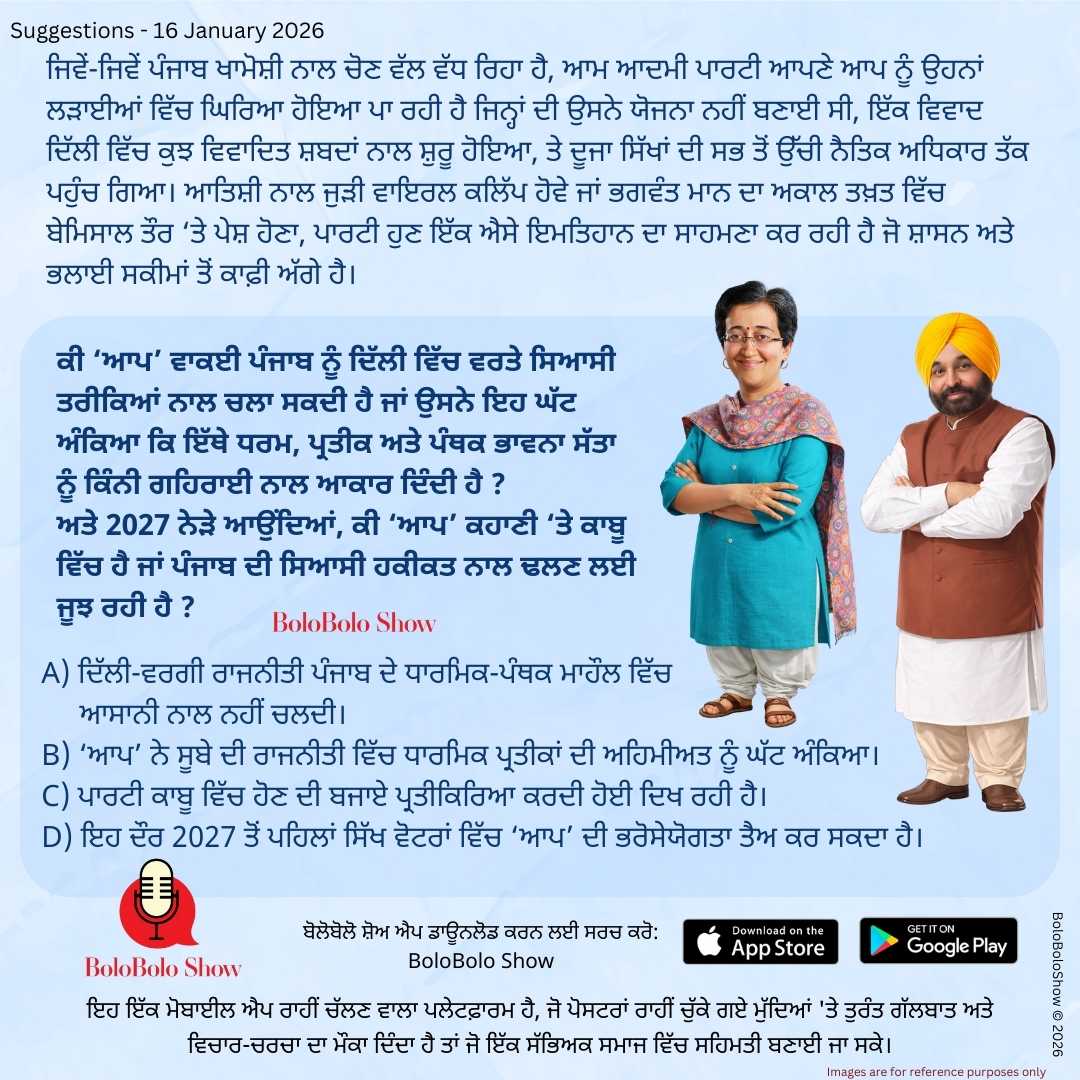
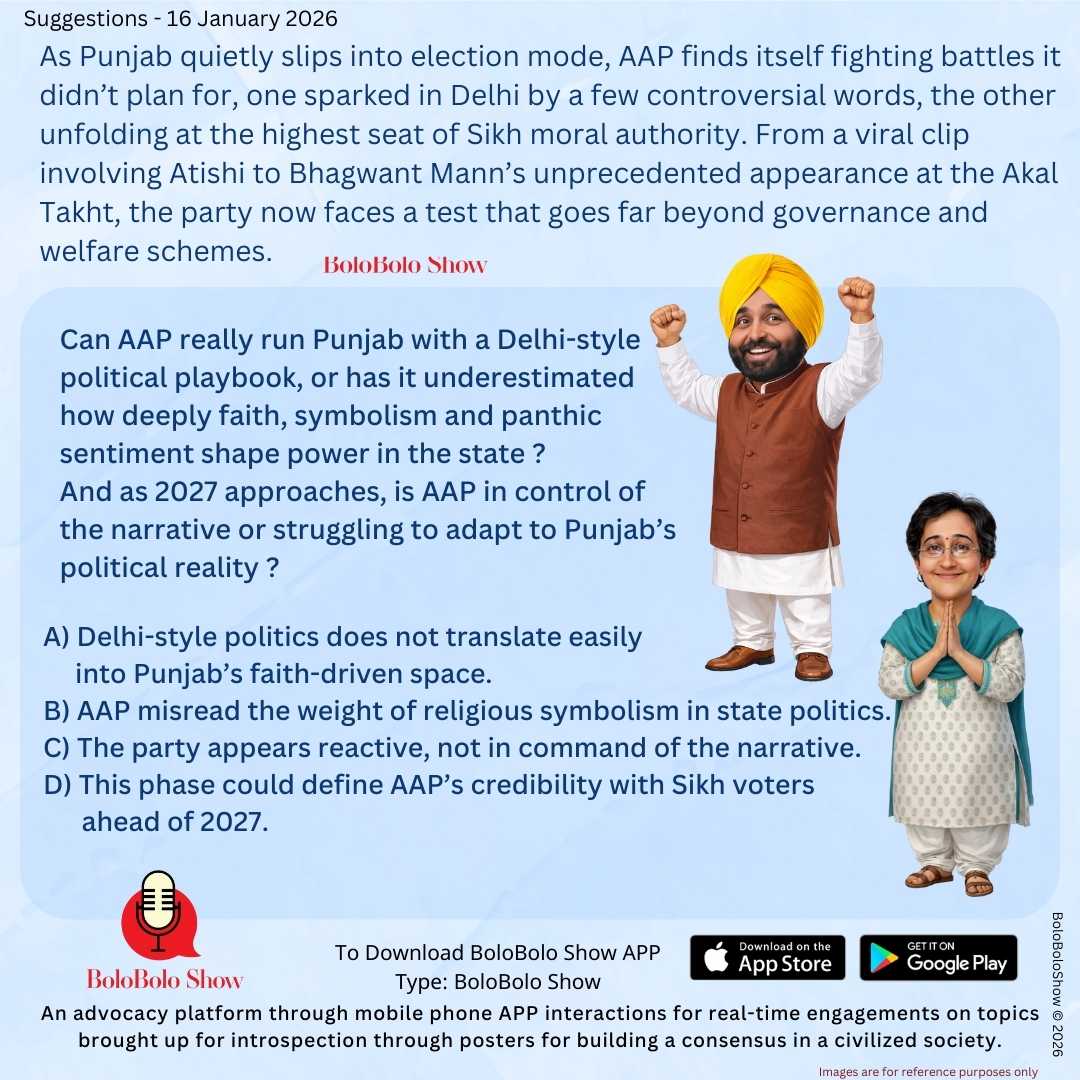
As Punjab quietly slips into election mode, AAP finds itself fighting battles it didn’t plan for, one sparked in Delhi by a few controversial words, the other unfolding at the highest seat of Sikh moral authority. From a viral clip involving Atishi to Bhagwant Mann’s unprecedented appearance at the Akal Takht, the party now faces a test that goes far beyond governance and welfare schemes. Can AAP really run Punjab with a Delhi-style political playbook, or has it underestimated how deeply faith, symbolism and panthic sentiment shape power in the state ? And as 2027 approaches, is AAP in control of the narrative or struggling to adapt to Punjab’s political reality ?
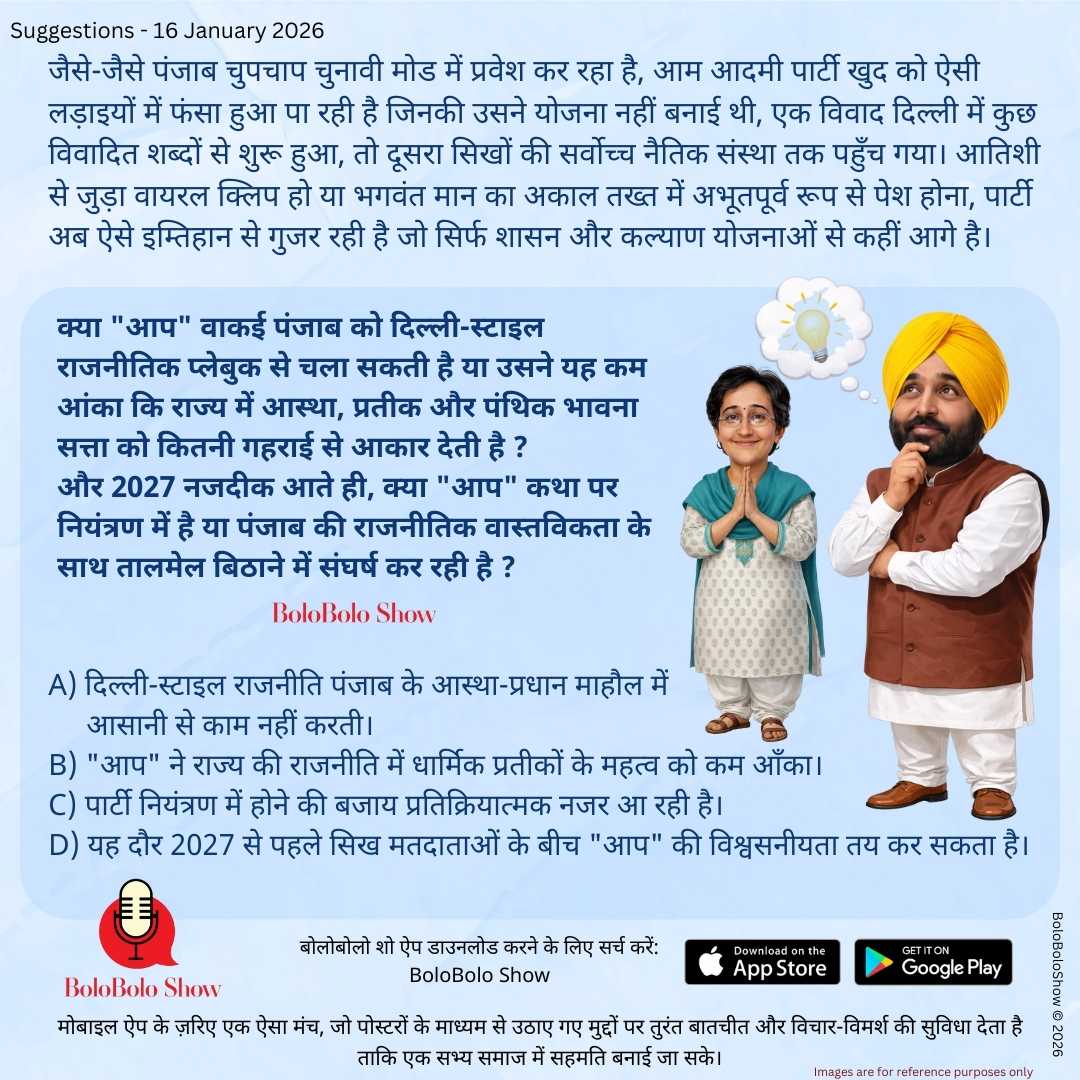
जैसे-जैसे पंजाब चुपचाप चुनावी मोड में प्रवेश कर रहा है, आम आदमी पार्टी खुद को ऐसी लड़ाइयों में फंसा हुआ पा रही है जिनकी उसने योजना नहीं बनाई थी, एक विवाद दिल्ली में कुछ विवादित शब्दों से शुरू हुआ, तो दूसरा सिखों की सर्वोच्च नैतिक संस्था तक पहुँच गया। आतिशी से जुड़ा वायरल क्लिप हो या भगवंत मान का अकाल तख्त में अभूतपूर्व रूप से पेश होना, पार्टी अब ऐसे इम्तिहान से गुजर रही है जो सिर्फ शासन और कल्याण योजनाओं से कहीं आगे है। क्या "आप" वाकई पंजाब को दिल्ली-स्टाइल राजनीतिक प्लेबुक से चला सकती है या उसने यह कम आंका कि राज्य में आस्था, प्रतीक और पंथिक भावना सत्ता को कितनी गहराई से आकार देती है ? और 2027 नजदीक आते ही, क्या "आप" कथा पर नियंत्रण में है या पंजाब की राजनीतिक वास्तविकता के साथ तालमेल बिठाने में संघर्ष कर रही है ?