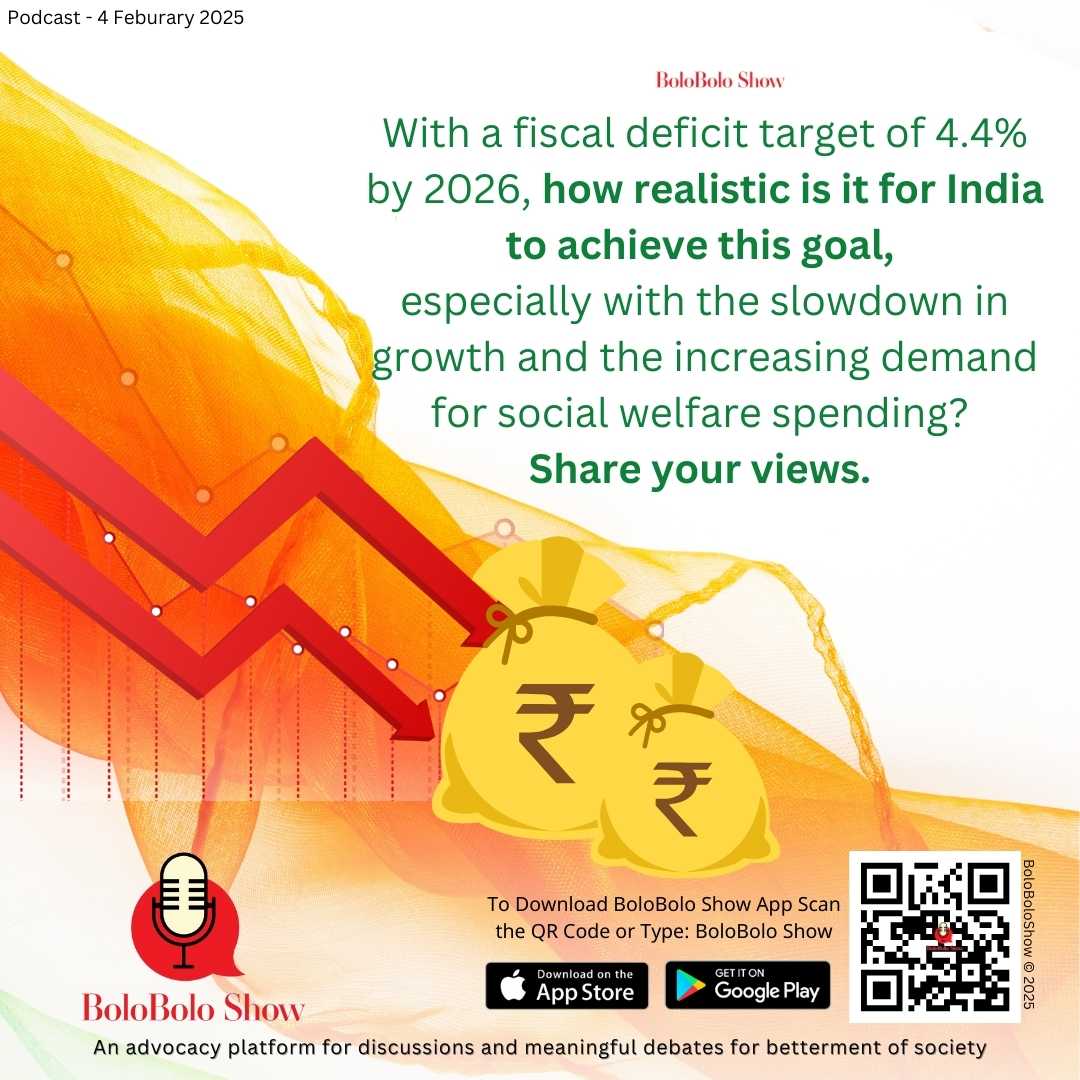
With a fiscal deficit target of 4.4% by 2026, how realistic is it for India to achieve this goal, especially with the slowdown in growth and the increasing demand for social welfare spending? Share your views.
Proposals - SUNLO
To share your thoughts...
⟶ Go to the home page of the BoloBolo Show app on your Android or iPhone. ⟶ Click on the microphone button icon on the bottom bar. ⟶ Then record your thoughts in a clear voice.
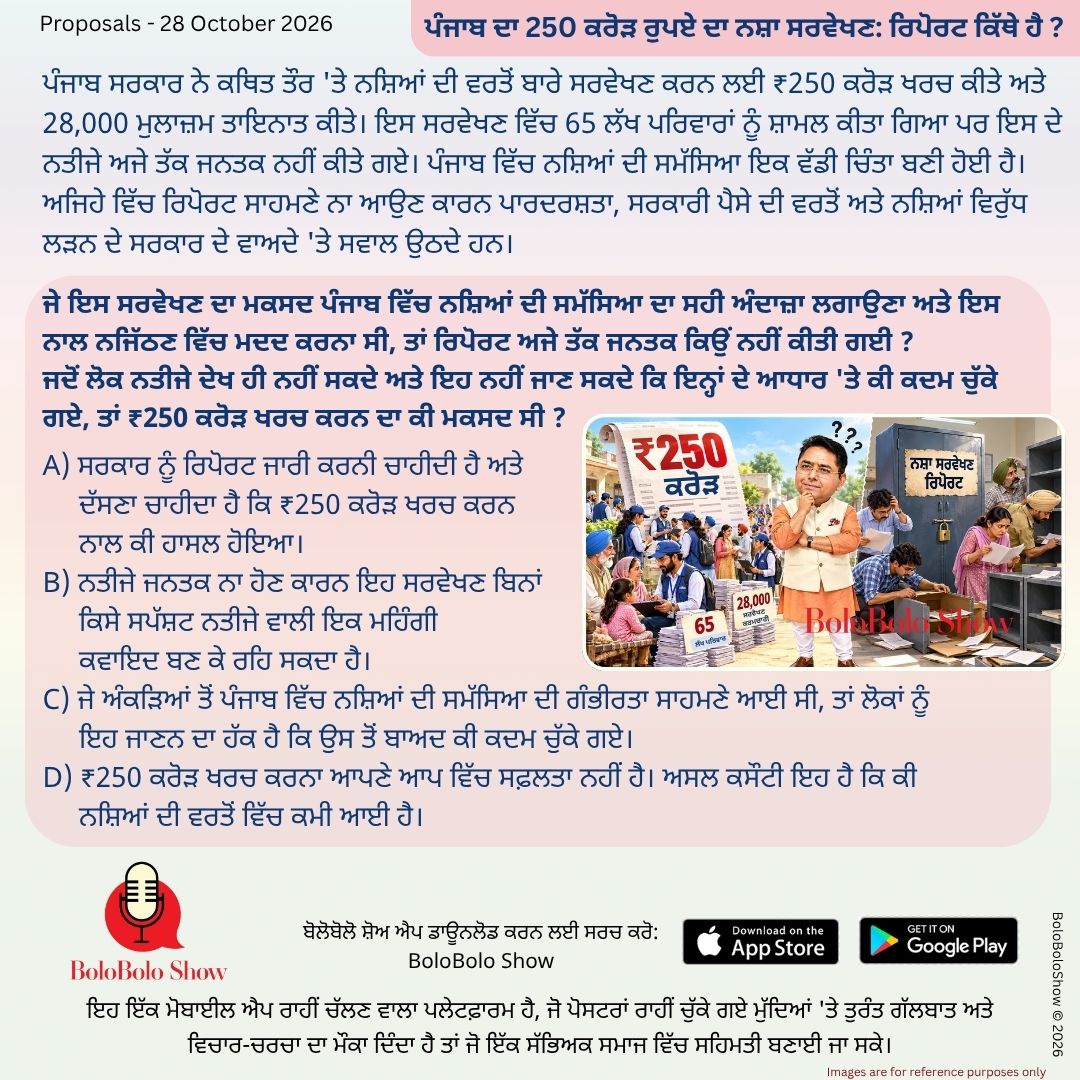
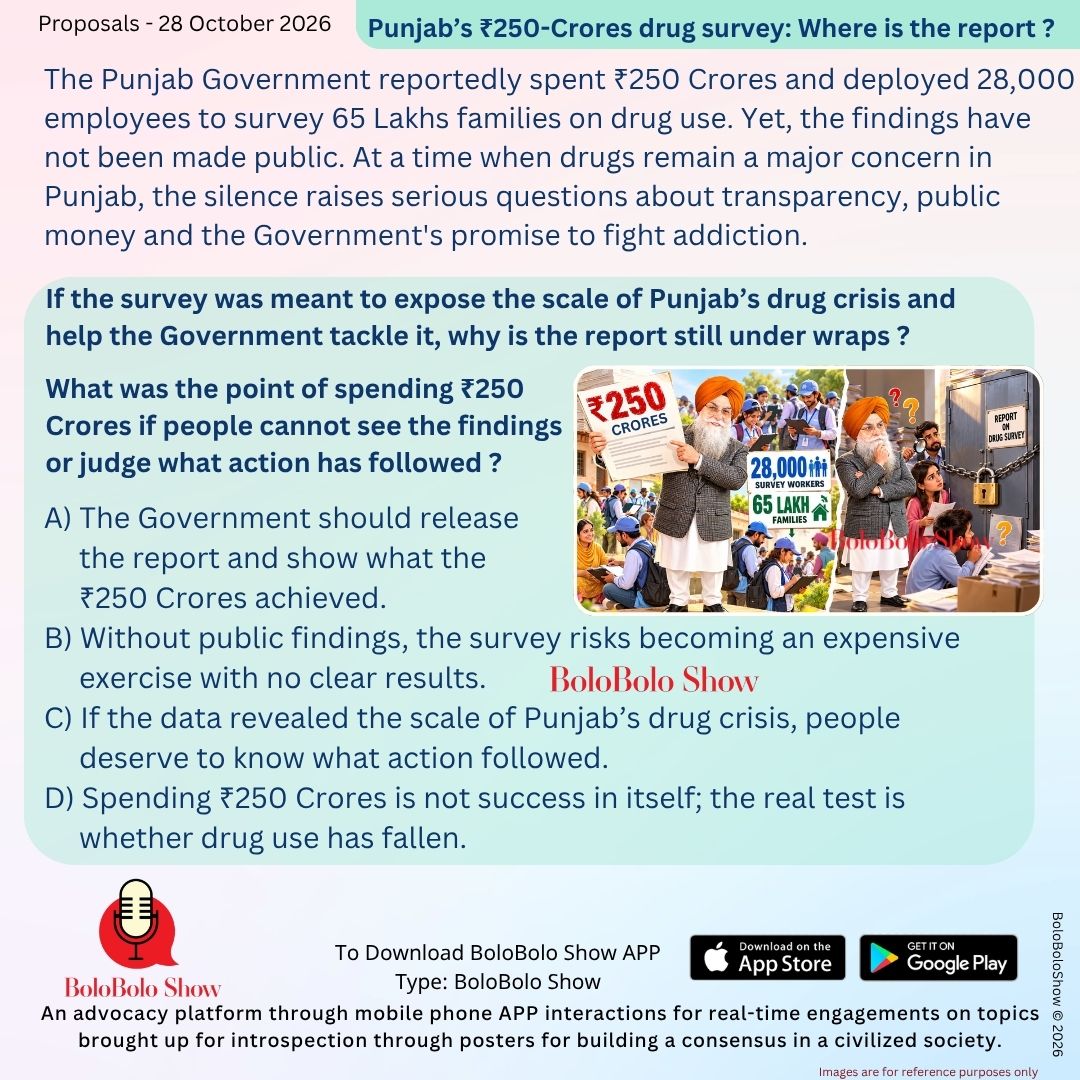
The Punjab Government reportedly spent ₹250 Crores and deployed 28,000 employees to survey 65 Lakhs families on drug use. Yet, the findings have not been made public. At a time when drugs remain a major concern in Punjab, the silence raises serious questions about transparency, public money and the Government's promise to fight addiction. If the survey was meant to expose the scale of Punjab’s drug crisis and help the Government tackle it, why is the report still under wraps ? What was the point of spending ₹250 Crores if people cannot see the findings or judge what action has followed ?
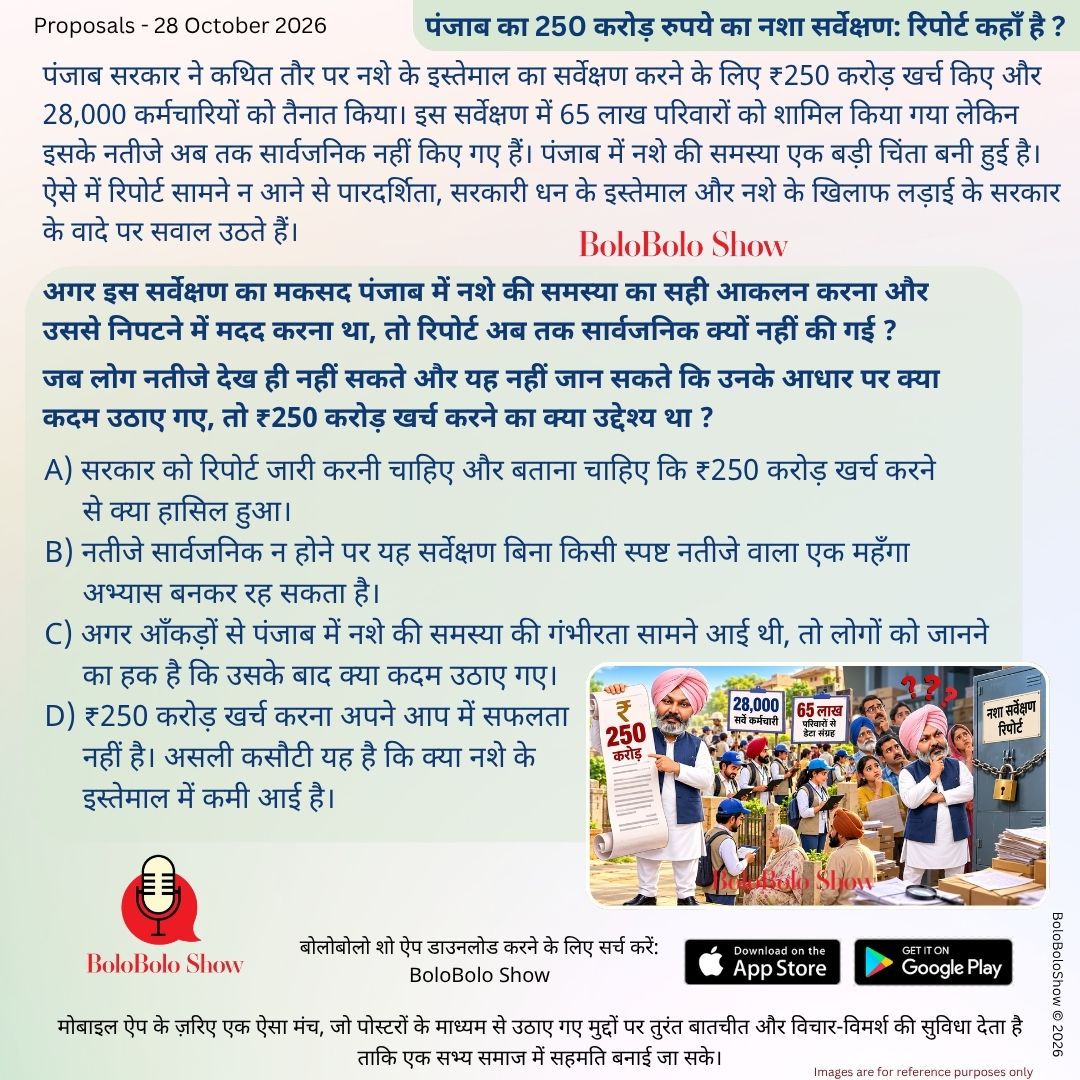
पंजाब सरकार ने कथित तौर पर नशे के इस्तेमाल का सर्वेक्षण करने के लिए ₹250 करोड़ खर्च किए और 28,000 कर्मचारियों को तैनात किया। इस सर्वेक्षण में 65 लाख परिवारों को शामिल किया गया लेकिन इसके नतीजे अब तक सार्वजनिक नहीं किए गए हैं। पंजाब में नशे की समस्या एक बड़ी चिंता बनी हुई है। ऐसे में रिपोर्ट सामने न आने से पारदर्शिता, सरकारी धन के इस्तेमाल और नशे के खिलाफ लड़ाई के सरकार के वादे पर सवाल उठते हैं। अगर इस सर्वेक्षण का मकसद पंजाब में नशे की समस्या का सही आकलन करना और उससे निपटने में मदद करना था, तो रिपोर्ट अब तक सार्वजनिक क्यों नहीं की गई ? जब लोग नतीजे देख ही नहीं सकते और यह नहीं जान सकते कि उनके आधार पर क्या कदम उठाए गए, तो ₹250 करोड़ खर्च करने का क्या उद्देश्य था ?
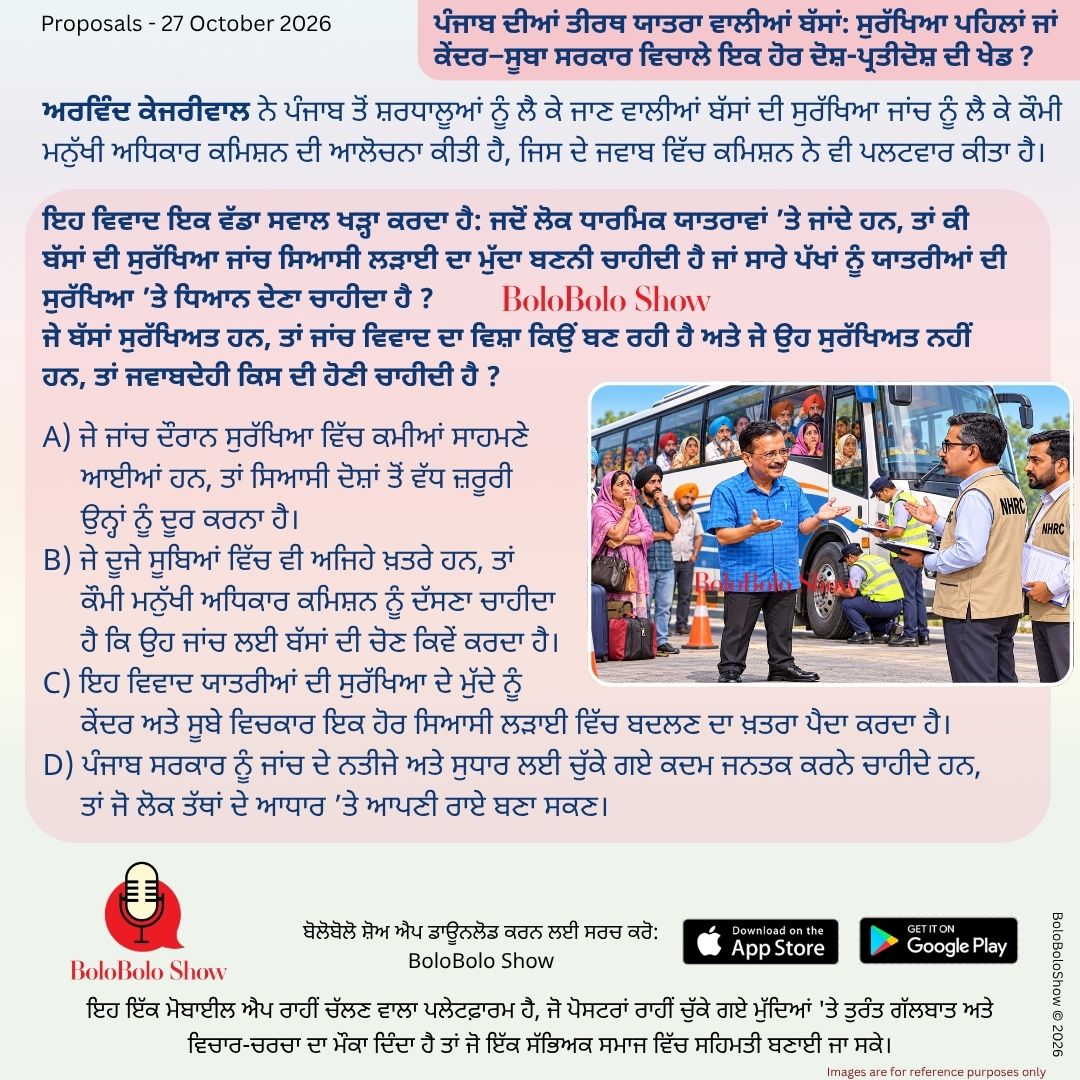
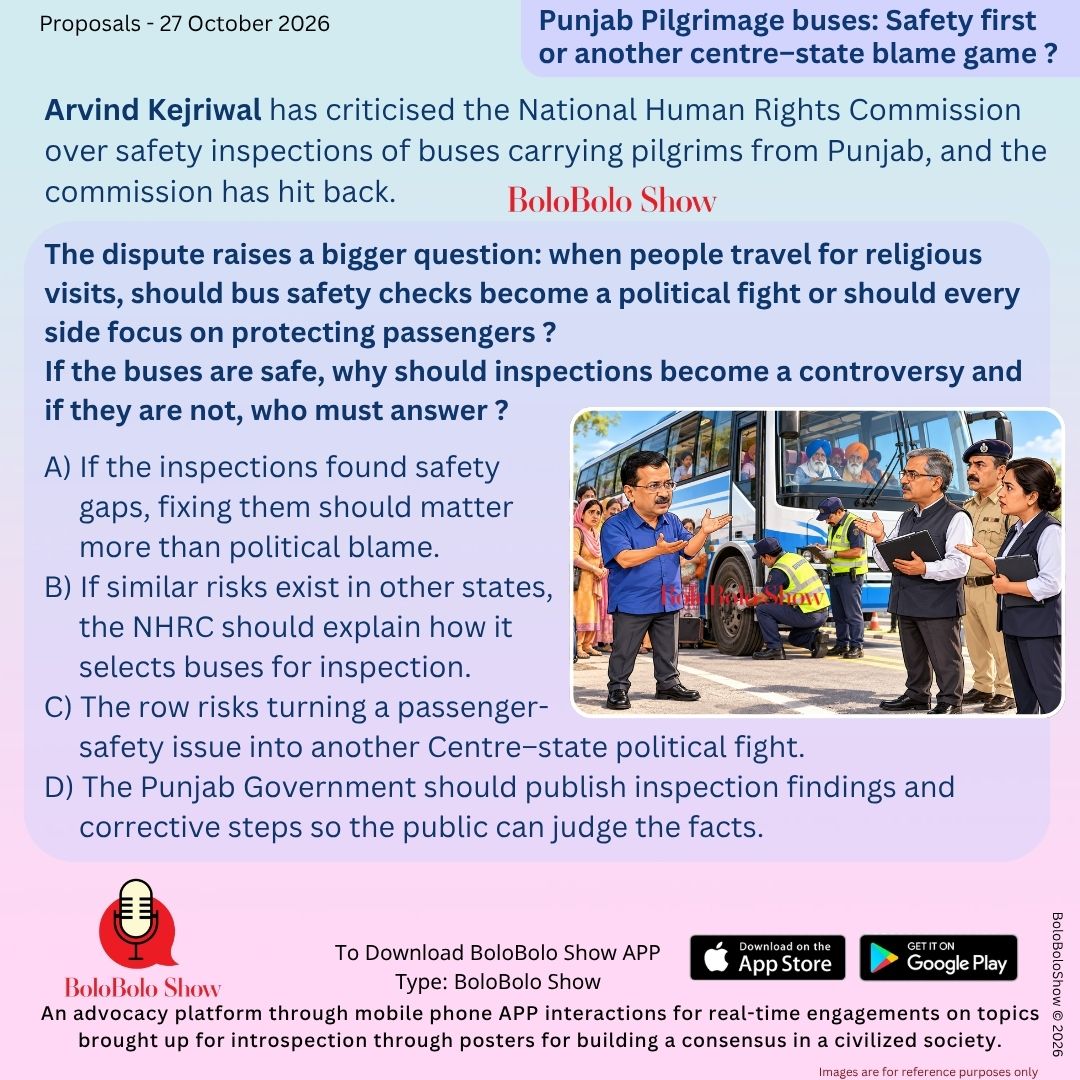
Arvind Kejriwal has criticised the National Human Rights Commission over safety inspections of buses carrying pilgrims from Punjab, and the commission has hit back. The dispute raises a bigger question: when people travel for religious visits, should bus safety checks become a political fight or should every side focus on protecting passengers ? If the buses are safe, why should inspections become a controversy and if they are not, who must answer ?