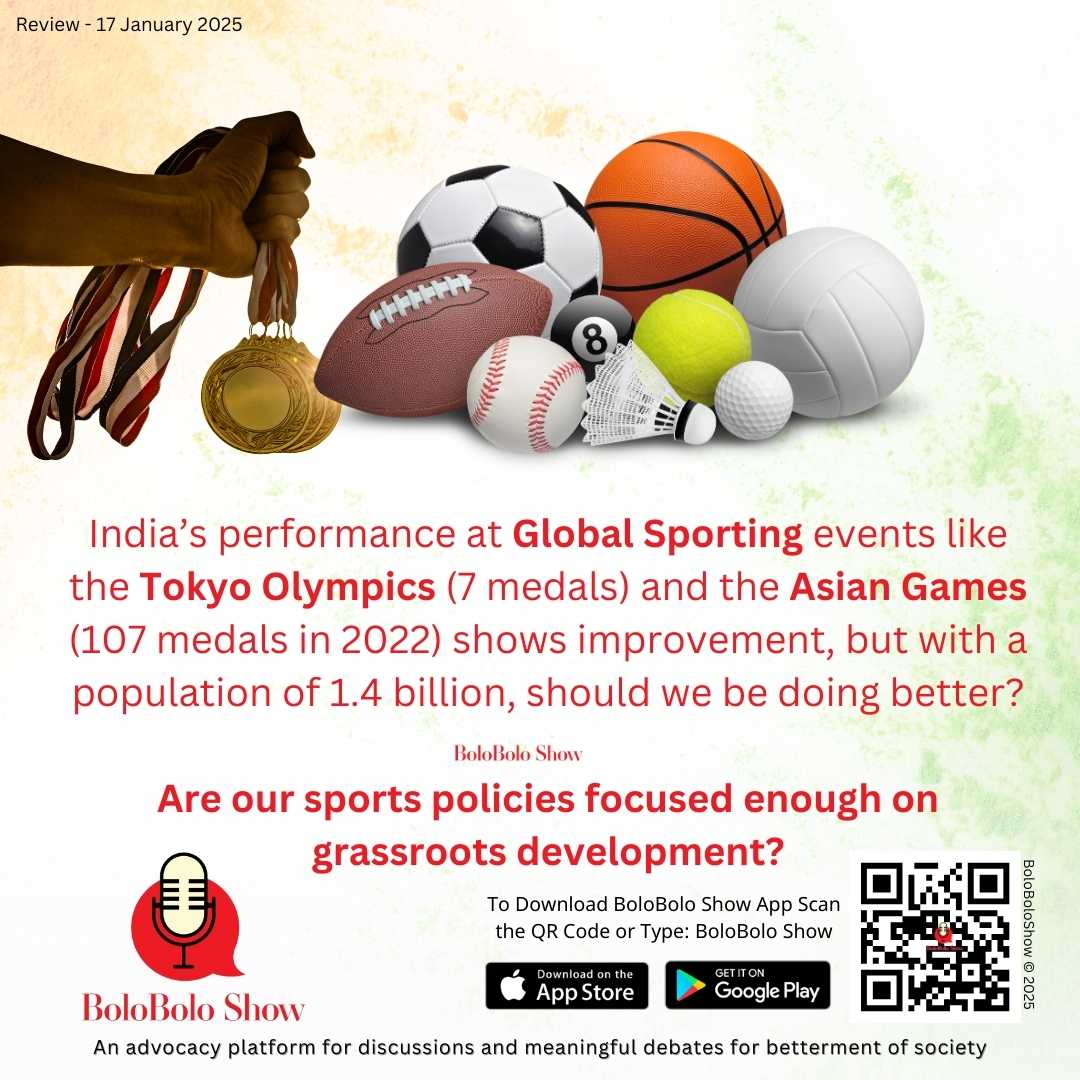
India’s performance at Global Sporting events like the Tokyo Olympics (7 medals) and the Asian Games (107 medals in 2022) shows improvement, but with a population of 1.4 billion, should we be doing better?
Review - DEKHO
Are our sports policies focused enough on grassroots development?
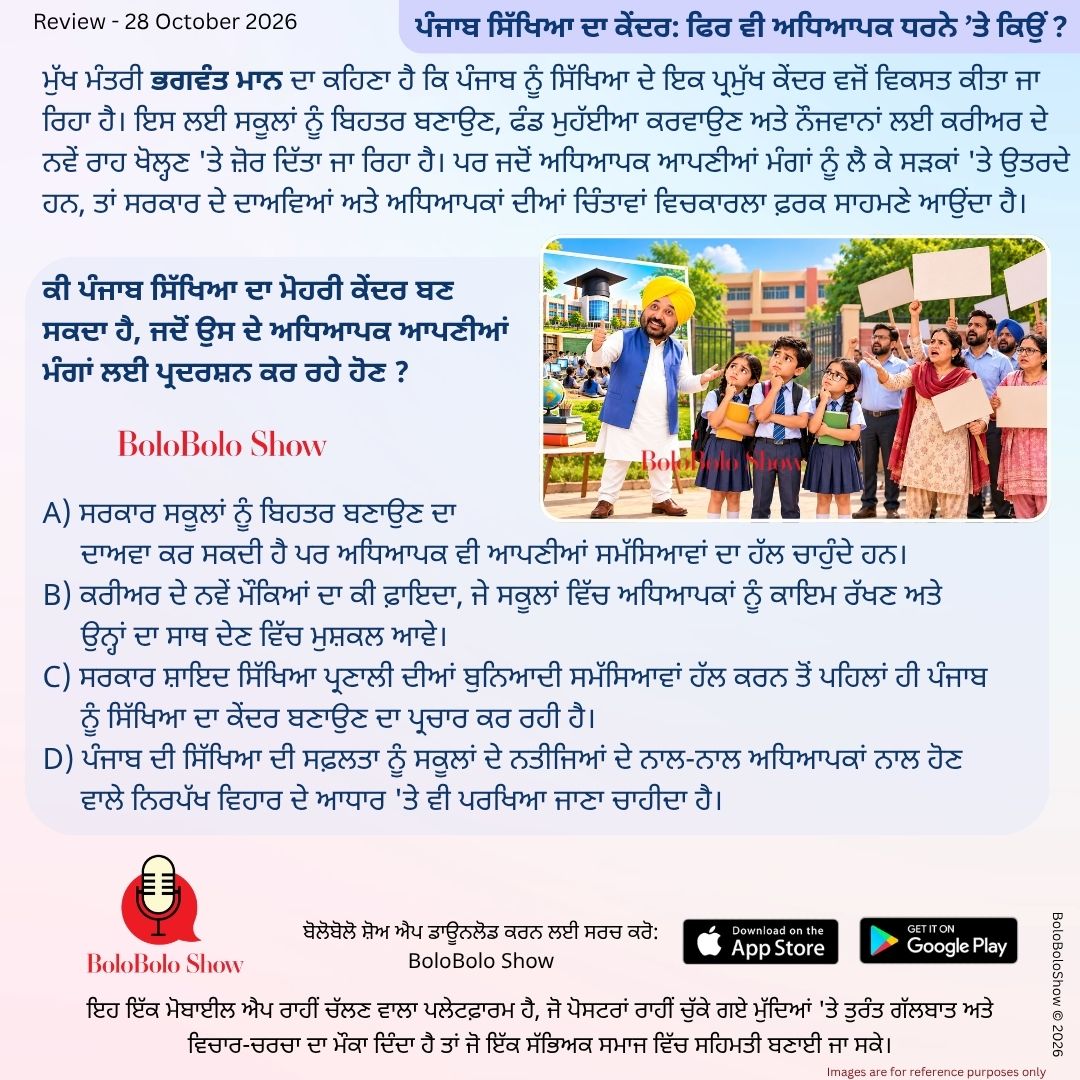
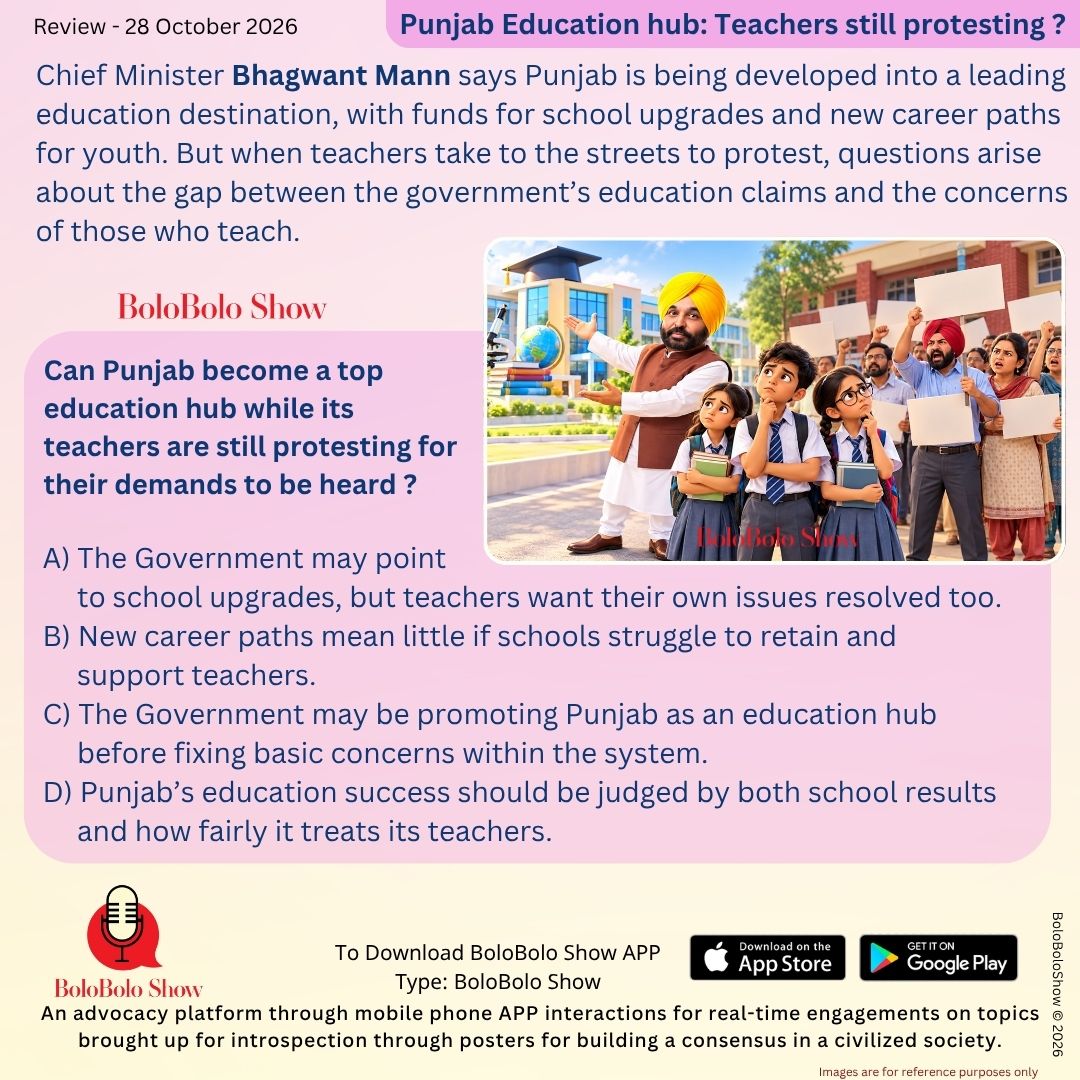
Chief Minister Bhagwant Mann says Punjab is being developed into a leading education destination, with funds for school upgrades and new career paths for youth. But when teachers take to the streets to protest, questions arise about the gap between the government’s education claims and the concerns of those who teach. Can Punjab become a top education hub while its teachers are still protesting for their demands to be heard ?
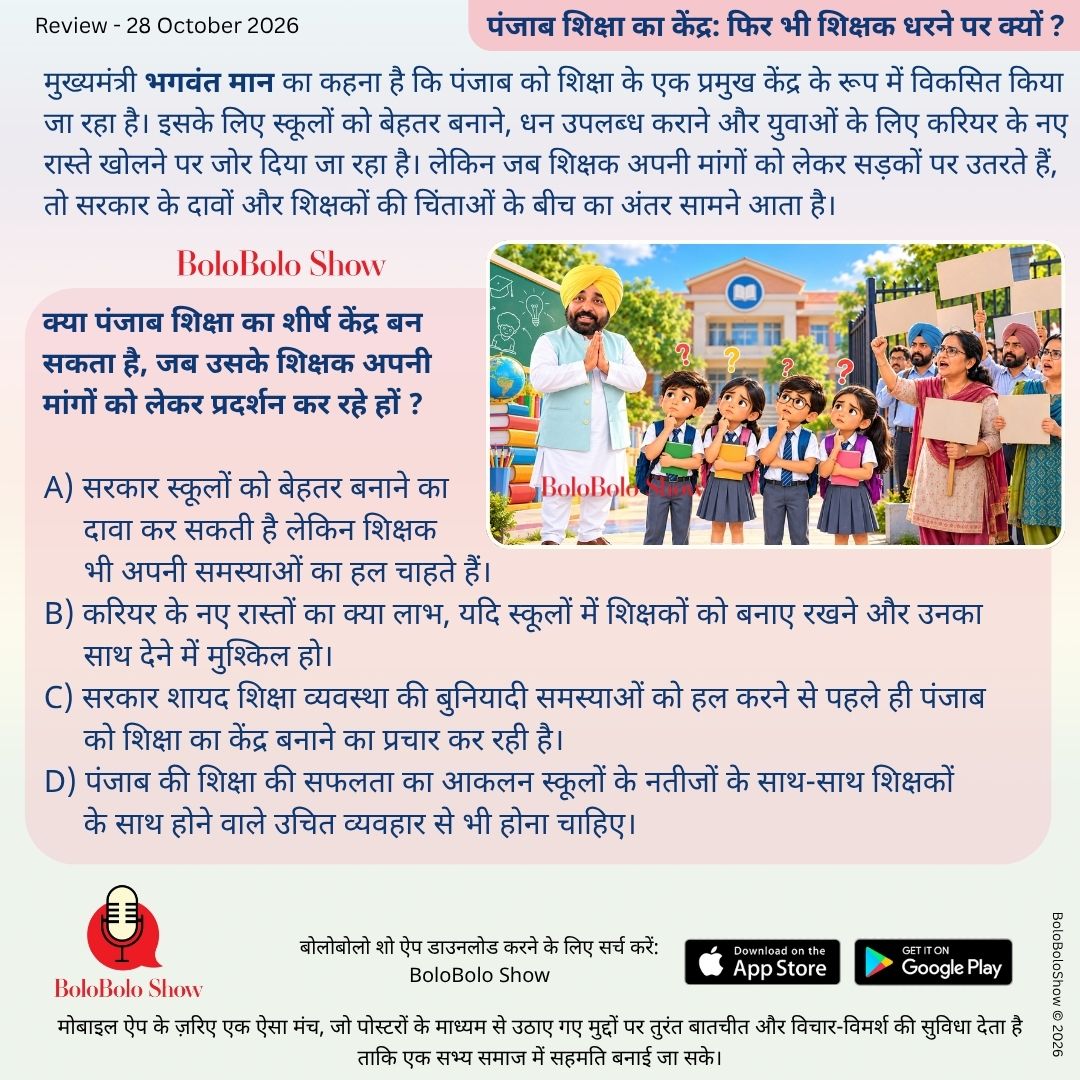
मुख्यमंत्री भगवंत मान का कहना है कि पंजाब को शिक्षा के एक प्रमुख केंद्र के रूप में विकसित किया जा रहा है। इसके लिए स्कूलों को बेहतर बनाने, धन उपलब्ध कराने और युवाओं के लिए करियर के नए रास्ते खोलने पर जोर दिया जा रहा है। लेकिन जब शिक्षक अपनी मांगों को लेकर सड़कों पर उतरते हैं, तो सरकार के दावों और शिक्षकों की चिंताओं के बीच का अंतर सामने आता है। क्या पंजाब शिक्षा का शीर्ष केंद्र बन सकता है, जब उसके शिक्षक अपनी मांगों को लेकर प्रदर्शन कर रहे हों ?
Arvind Kejriwal’s 2018 apology to Bikram Singh Majithia has returned to the political spotlight after Kejriwal’s latest remarks on the Akalis and drug allegations. Before the 2017 Punjab elections, Kejriwal had accused Majithia of being involved in the drug trade, but later apologised in a defamation case. Majithia has now brought the old letter back into the debate. When a leader retreats from a major election charge, does it weaken the party’s credibility, give rivals fresh ammunition or show why political claims must stand up to proof ?