According to the data released by the Punjab government, based on the 2011 census and now estimated to have crossed a population of 3 crores, there are over 35 lakh agricultural workers in Punjab, accounting for 35% of the total workforce. The total workforce in Punjab is approximately 97.98 lakh.
Rating
Considering these statistics, do you think there is a need for a new strategy for the development of the agricultural sector in Punjab?
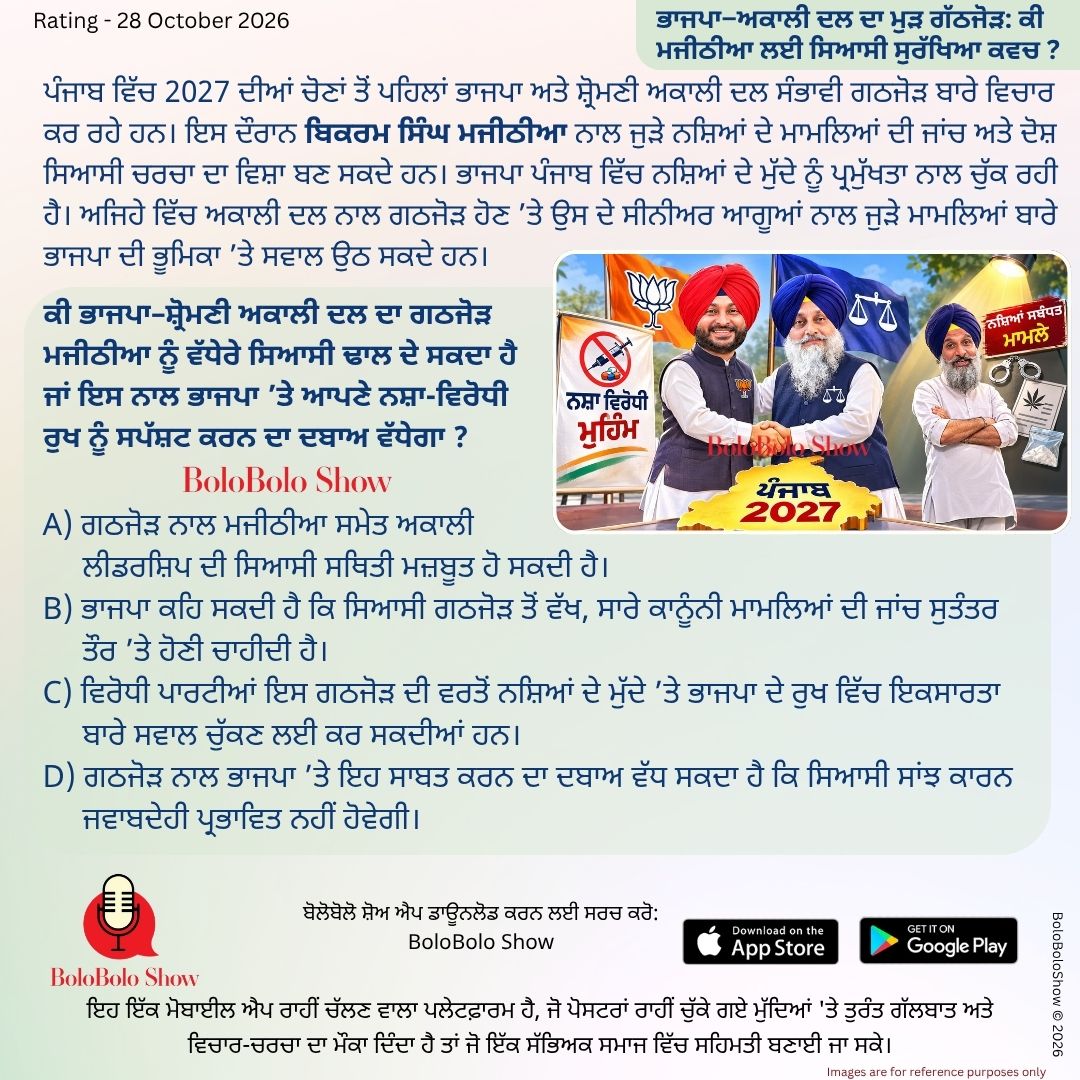
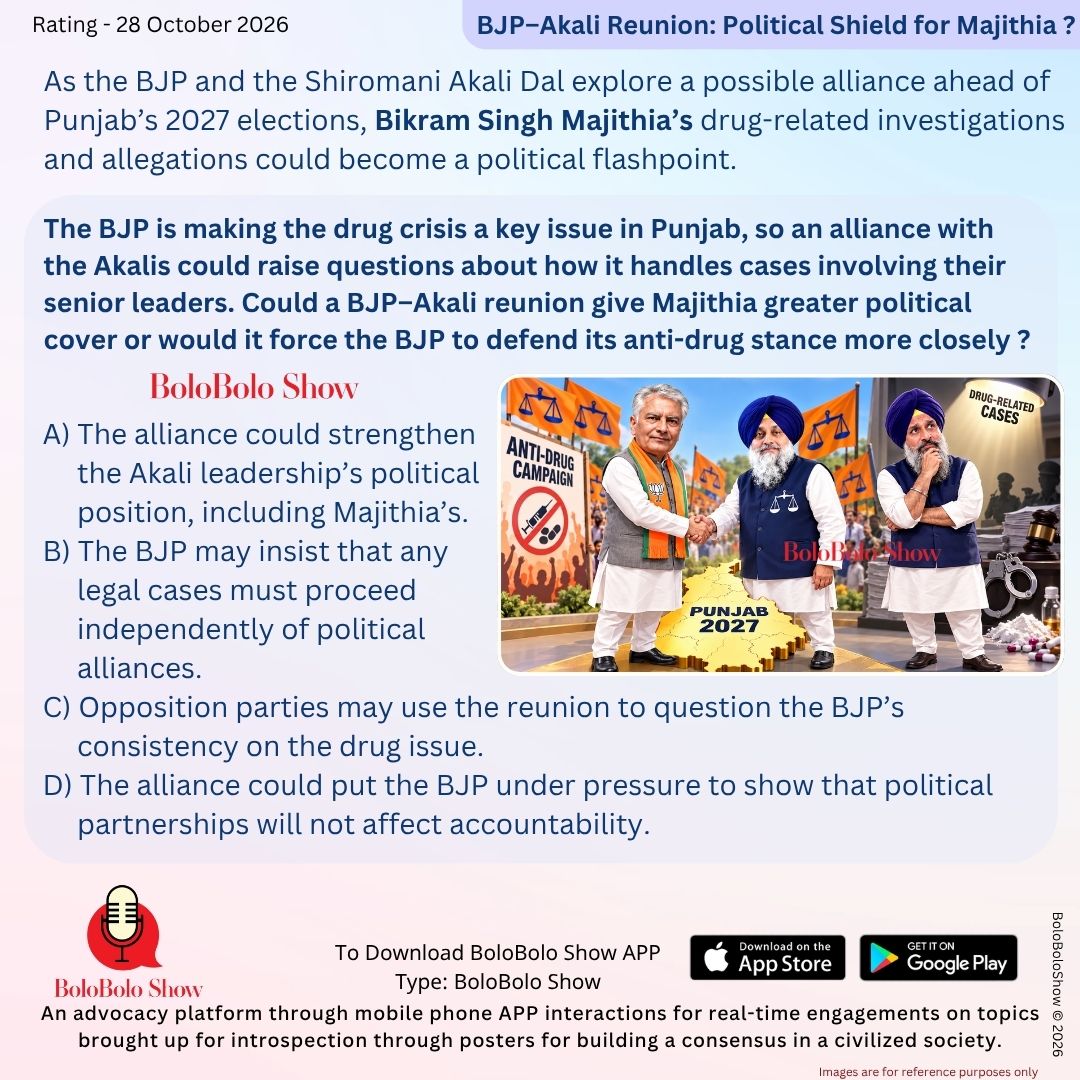
As the BJP and the Shiromani Akali Dal explore a possible alliance ahead of Punjab’s 2027 elections, Bikram Singh Majithia’s drug-related investigations and allegations could become a political flashpoint. The BJP is making the drug crisis a key issue in Punjab, so an alliance with the Akalis could raise questions about how it handles cases involving their senior leaders. Could a BJP–Akali reunion give Majithia greater political cover or would it force the BJP to defend its anti-drug stance more closely ?
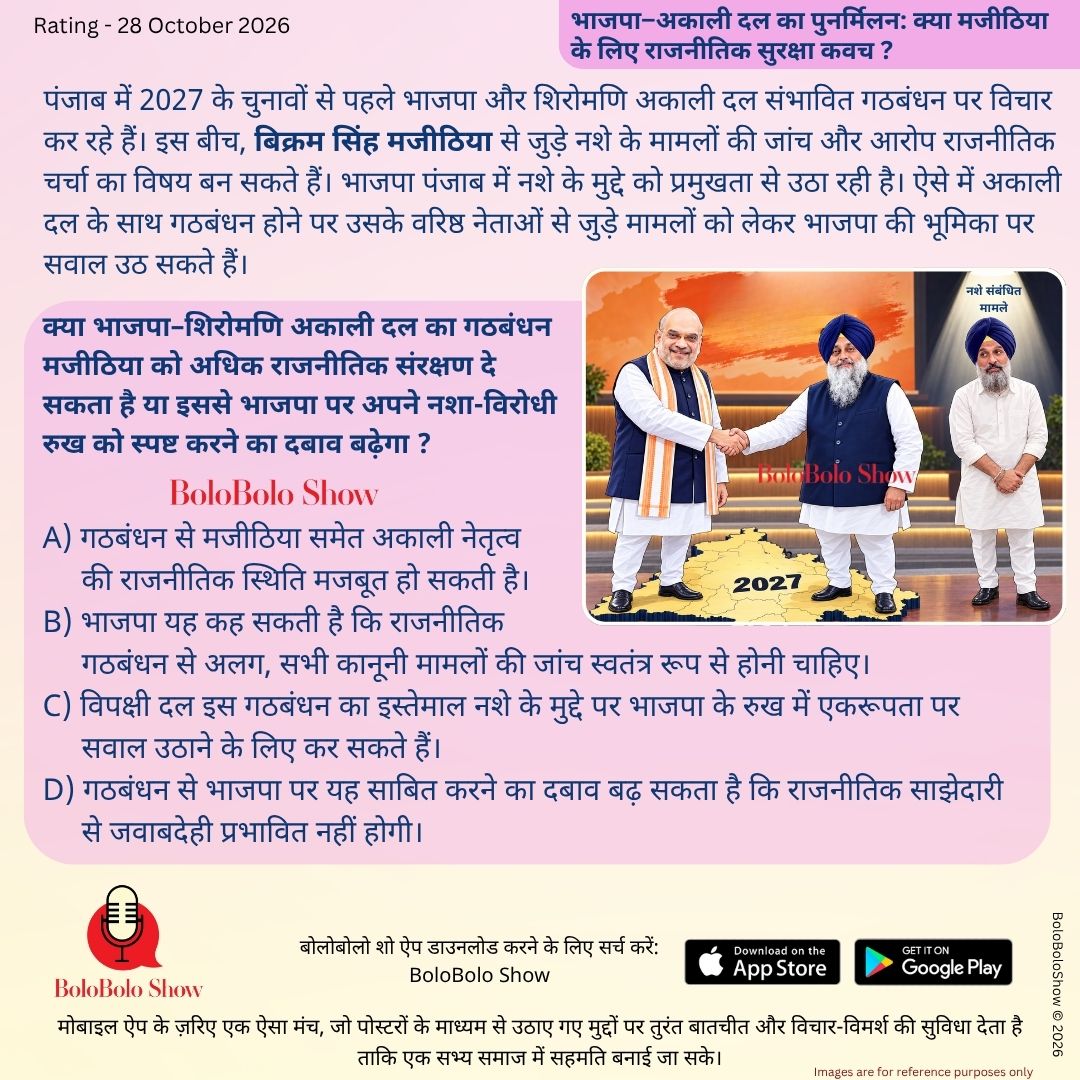
पंजाब में 2027 के चुनावों से पहले भाजपा और शिरोमणि अकाली दल संभावित गठबंधन पर विचार कर रहे हैं। इस बीच, बिक्रम सिंह मजीठिया से जुड़े नशे के मामलों की जांच और आरोप राजनीतिक चर्चा का विषय बन सकते हैं। भाजपा पंजाब में नशे के मुद्दे को प्रमुखता से उठा रही है। ऐसे में अकाली दल के साथ गठबंधन होने पर उसके वरिष्ठ नेताओं से जुड़े मामलों को लेकर भाजपा की भूमिका पर सवाल उठ सकते हैं। क्या भाजपा–शिरोमणि अकाली दल का गठबंधन मजीठिया को अधिक राजनीतिक संरक्षण दे सकता है या इससे भाजपा पर अपने नशा-विरोधी रुख को स्पष्ट करने का दबाव बढ़ेगा ?
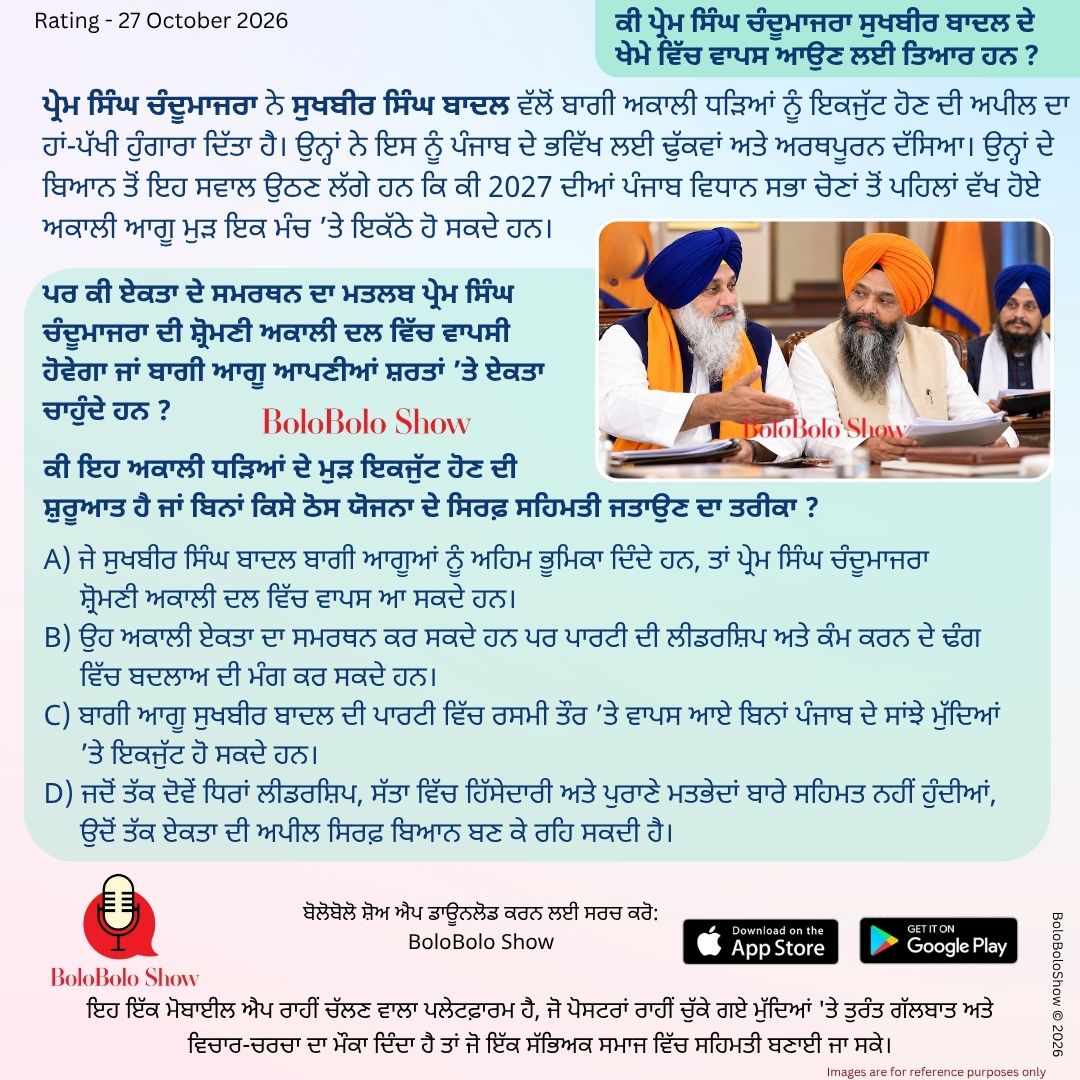
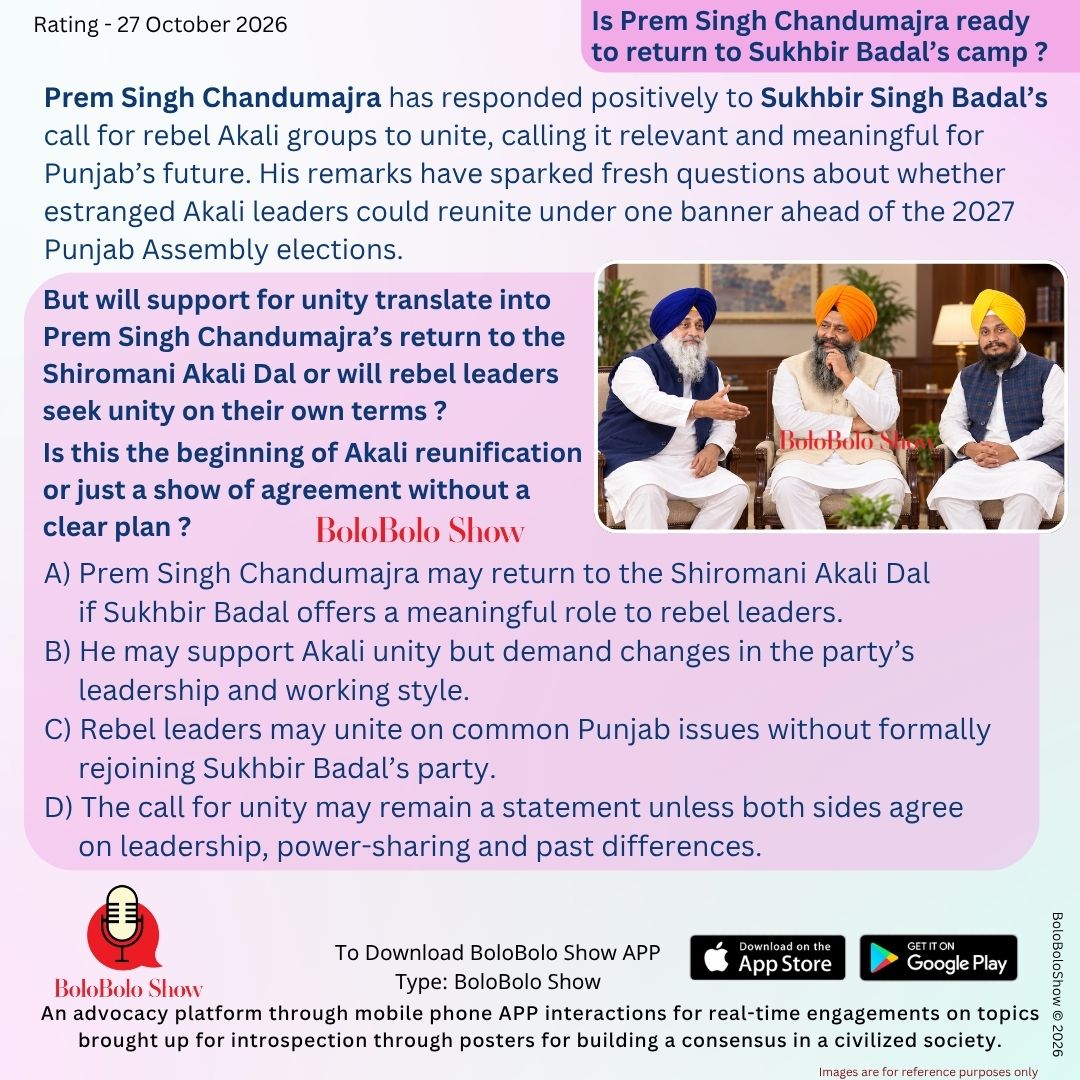
Prem Singh Chandumajra has responded positively to Sukhbir Singh Badal’s call for rebel Akali groups to unite, calling it relevant and meaningful for Punjab’s future. His remarks have sparked fresh questions about whether estranged Akali leaders could reunite under one banner ahead of the 2027 Punjab Assembly elections. But will support for unity translate into Prem Singh Chandumajra’s return to the Shiromani Akali Dal or will rebel leaders seek unity on their own terms ? Is this the beginning of Akali reunification or just a show of agreement without a clear plan ?