In the year 2023-24, 49.4 percent of young people above the age of 15 are engaged in manual labor, and there has been a 5 percent increase in the number of children involved as well. What does this indicate?
Suggestions - SLAH
Do you know? With businesses shutting down, people are resorting to manual labor!
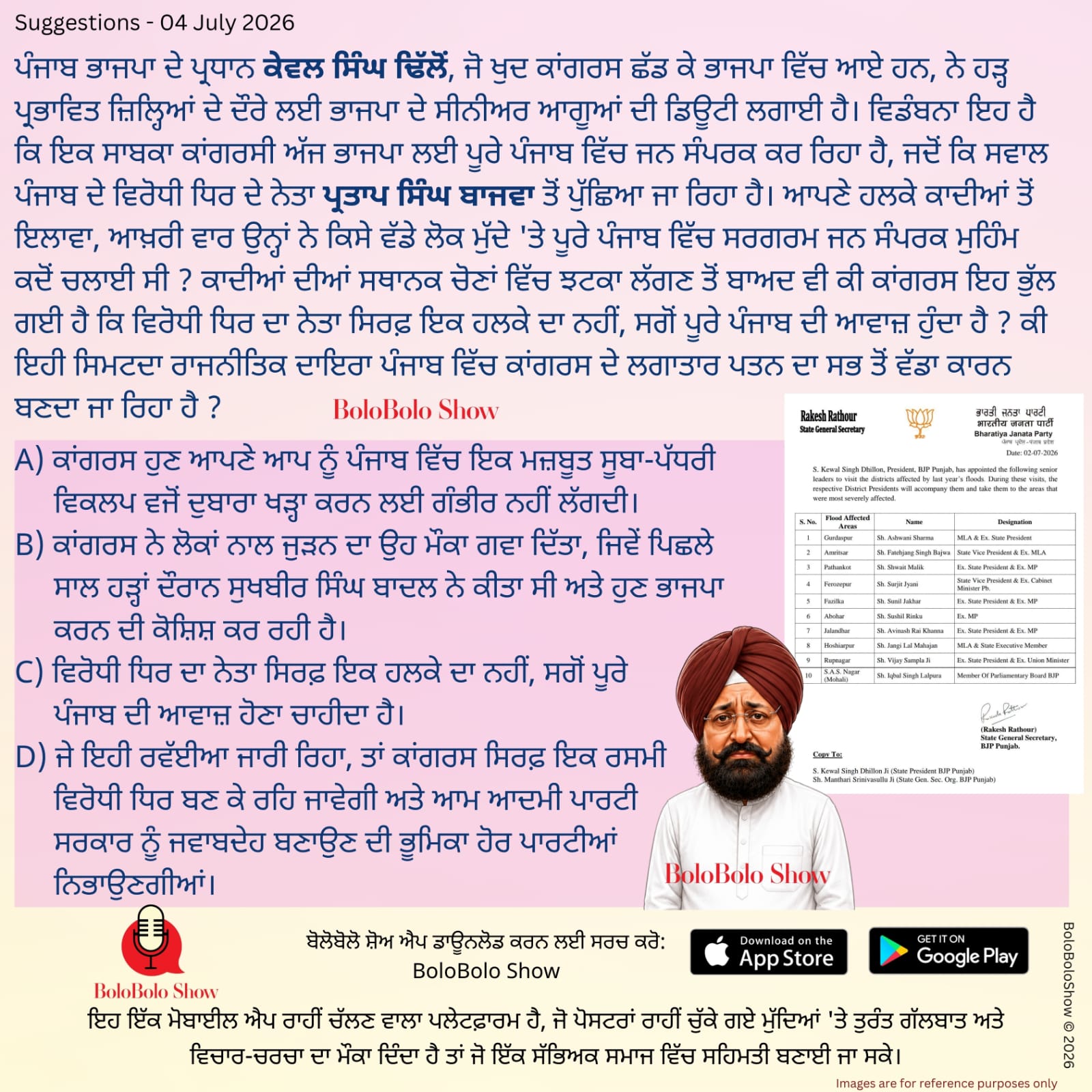
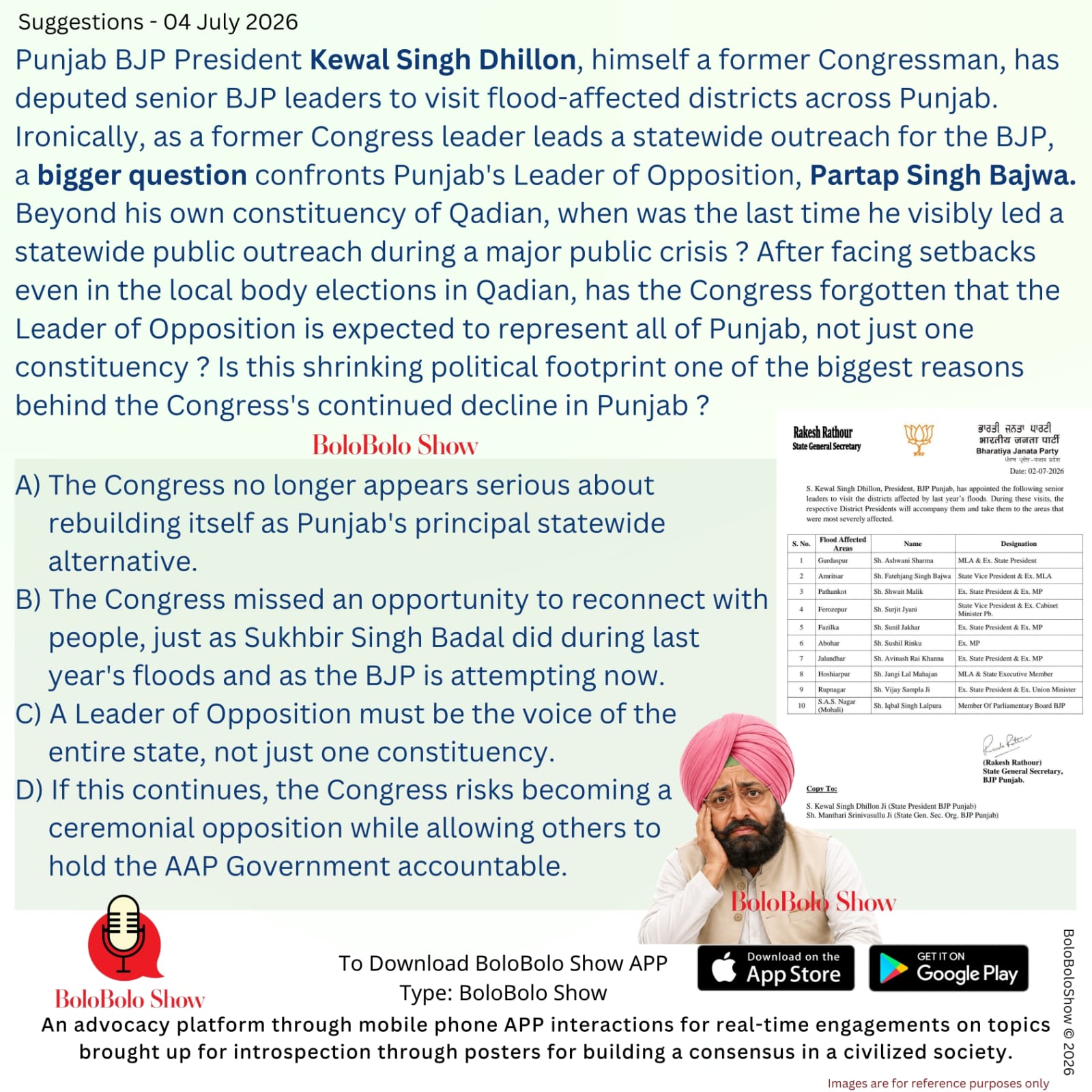
Punjab BJP President Kewal Singh Dhillon, himself a former Congressman, has deputed senior BJP leaders to visit flood-affected districts across Punjab. Ironically, as a former Congress leader leads a statewide outreach for the BJP, a bigger question confronts Punjab's Leader of Opposition, Partap Singh Bajwa. Beyond his own constituency of Qadian, when was the last time he visibly led a statewide public outreach during a major public crisis ? After facing setbacks even in the local body elections in Qadian, has the Congress forgotten that the Leader of Opposition is expected to represent all of Punjab, not just one constituency ? Is this shrinking political footprint one of the biggest reasons behind the Congress's continued decline in Punjab ?
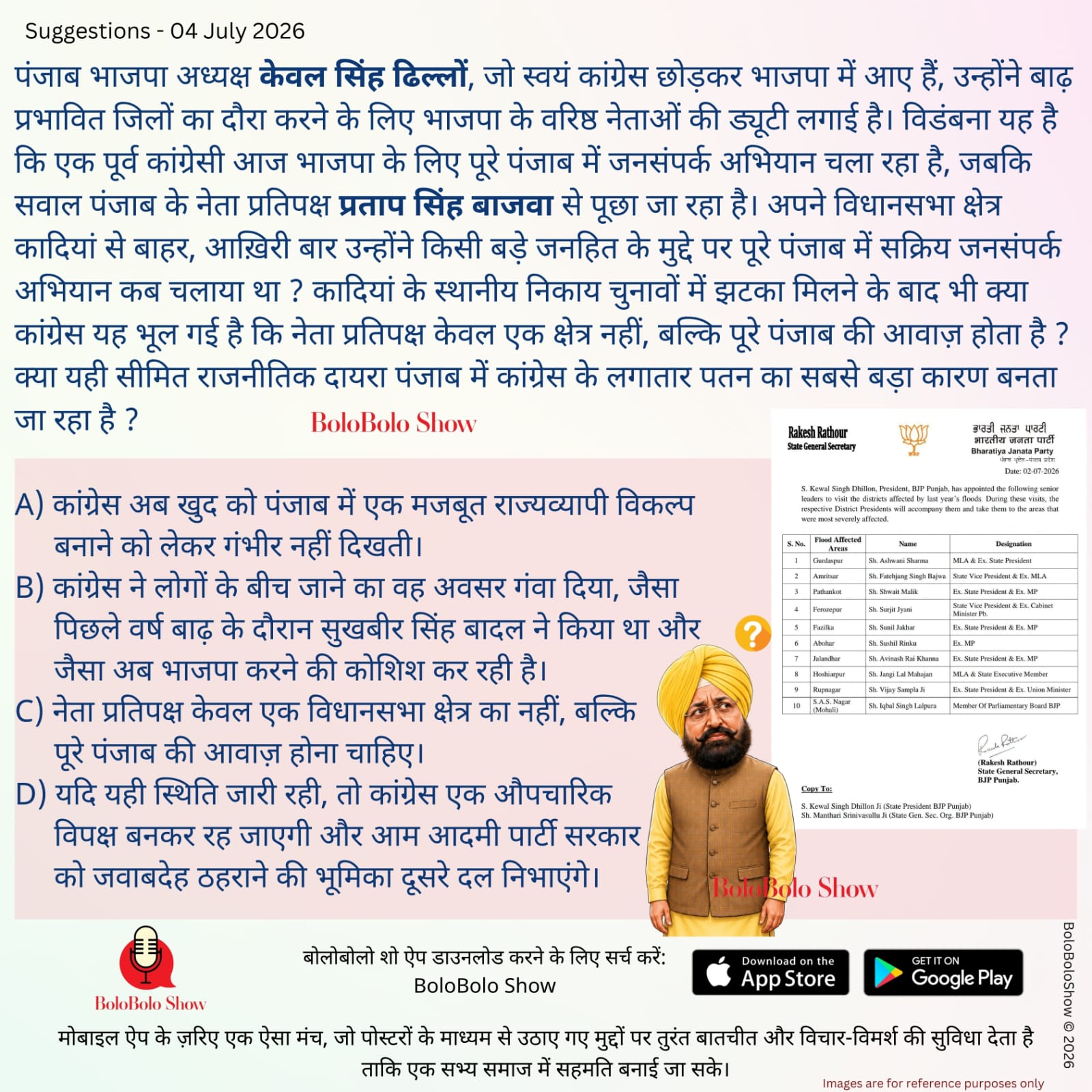
पंजाब भाजपा अध्यक्ष केवल सिंह ढिल्लों, जो स्वयं कांग्रेस छोड़कर भाजपा में आए हैं, उन्होंने बाढ़ प्रभावित जिलों का दौरा करने के लिए भाजपा के वरिष्ठ नेताओं की ड्यूटी लगाई है। विडंबना यह है कि एक पूर्व कांग्रेसी आज भाजपा के लिए पूरे पंजाब में जनसंपर्क अभियान चला रहा है, जबकि सवाल पंजाब के नेता प्रतिपक्ष प्रताप सिंह बाजवा से पूछा जा रहा है। अपने विधानसभा क्षेत्र कादियां से बाहर, आख़िरी बार उन्होंने किसी बड़े जनहित के मुद्दे पर पूरे पंजाब में सक्रिय जनसंपर्क अभियान कब चलाया था ? कादियां के स्थानीय निकाय चुनावों में झटका मिलने के बाद भी क्या कांग्रेस यह भूल गई है कि नेता प्रतिपक्ष केवल एक क्षेत्र नहीं, बल्कि पूरे पंजाब की आवाज़ होता है ? क्या यही सीमित राजनीतिक दायरा पंजाब में कांग्रेस के लगातार पतन का सबसे बड़ा कारण बनता जा रहा है ?
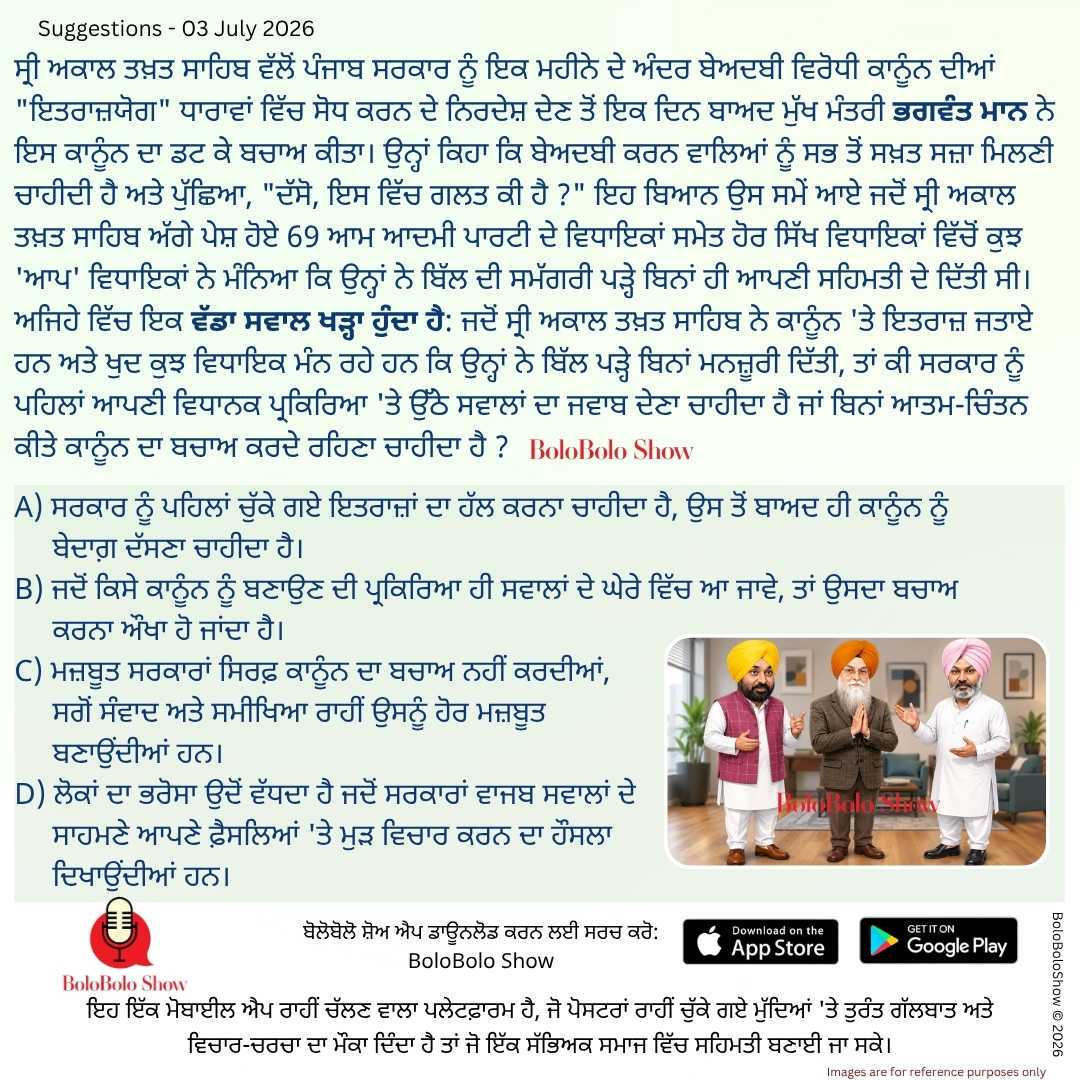
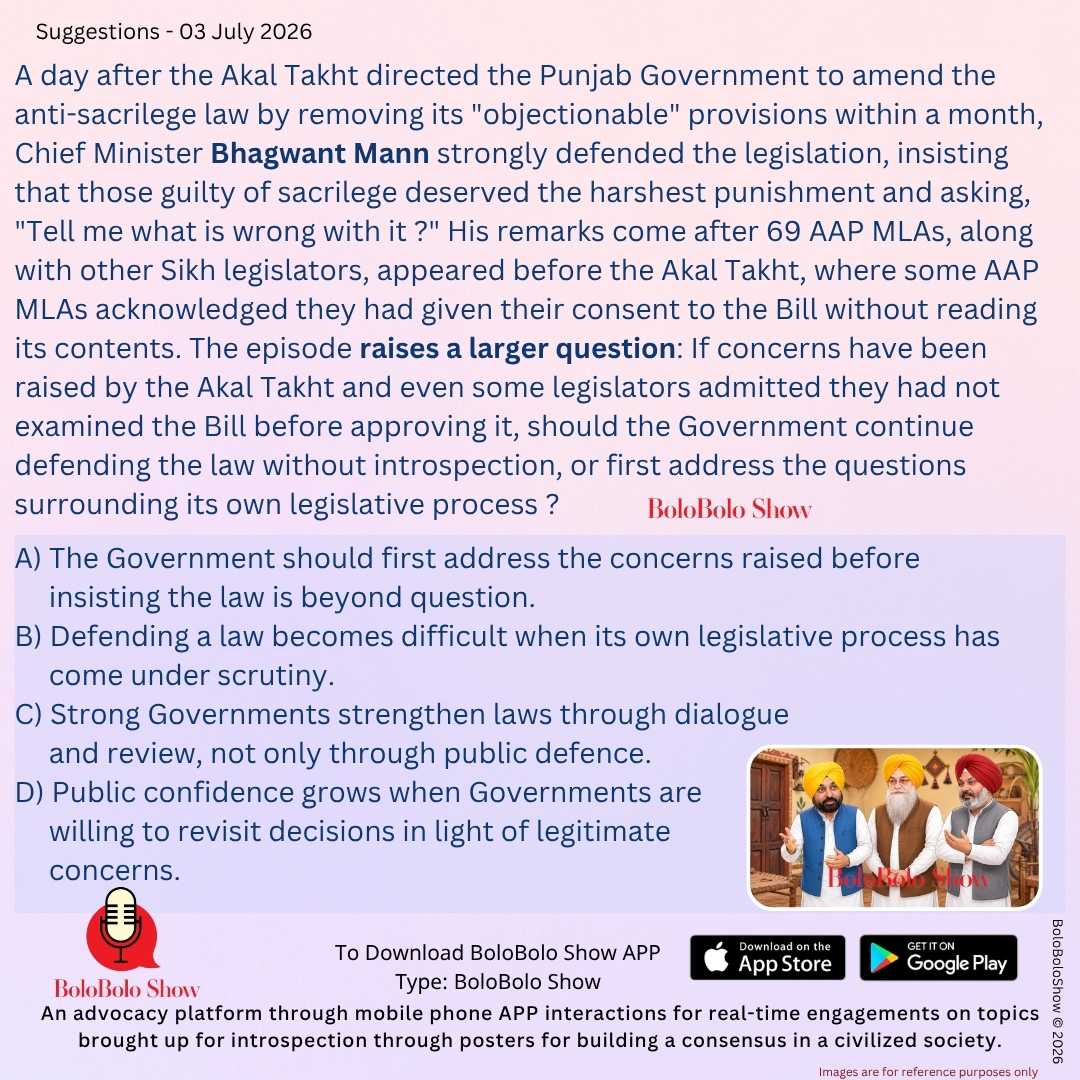
A day after the Akal Takht directed the Punjab Government to amend the anti-sacrilege law by removing its "objectionable" provisions within a month, Chief Minister Bhagwant Mann strongly defended the legislation, insisting that those guilty of sacrilege deserved the harshest punishment and asking, "Tell me what is wrong with it ?" His remarks come after 69 AAP MLAs, along with other Sikh legislators, appeared before the Akal Takht, where some AAP MLAs acknowledged they had given their consent to the Bill without reading its contents. The episode raises a larger question: If concerns have been raised by the Akal Takht and even some legislators admitted they had not examined the Bill before approving it, should the Government continue defending the law without introspection, or first address the questions surrounding its own legislative process ?