Do you think ISRO's successful test of the CE20 Cryogenic engine for the Gaganyaan mission, this achievement will contribute to India's space exploration goals and inspire future generations to pursue science and space technology?
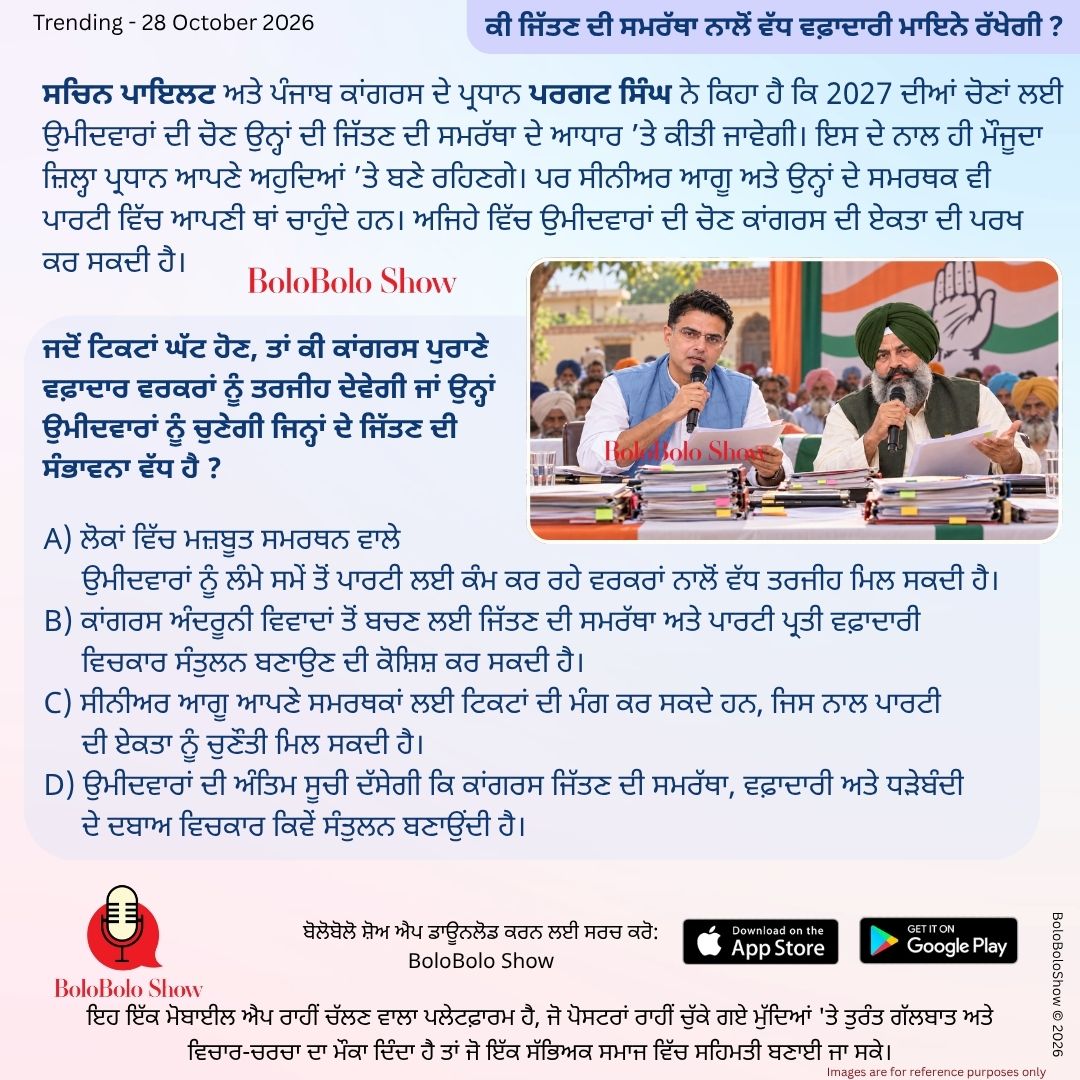
Sachin Pilot and Punjab Congress Chief Pargat Singh have said that candidate selection for the 2027 elections will focus on winnability, while existing district presidents will continue in their roles. But with senior leaders and their supporters seeking political space, the choice of candidates could test the party’s unity. When tickets are limited, will Congress reward loyal workers or favour candidates seen as more likely to win ?
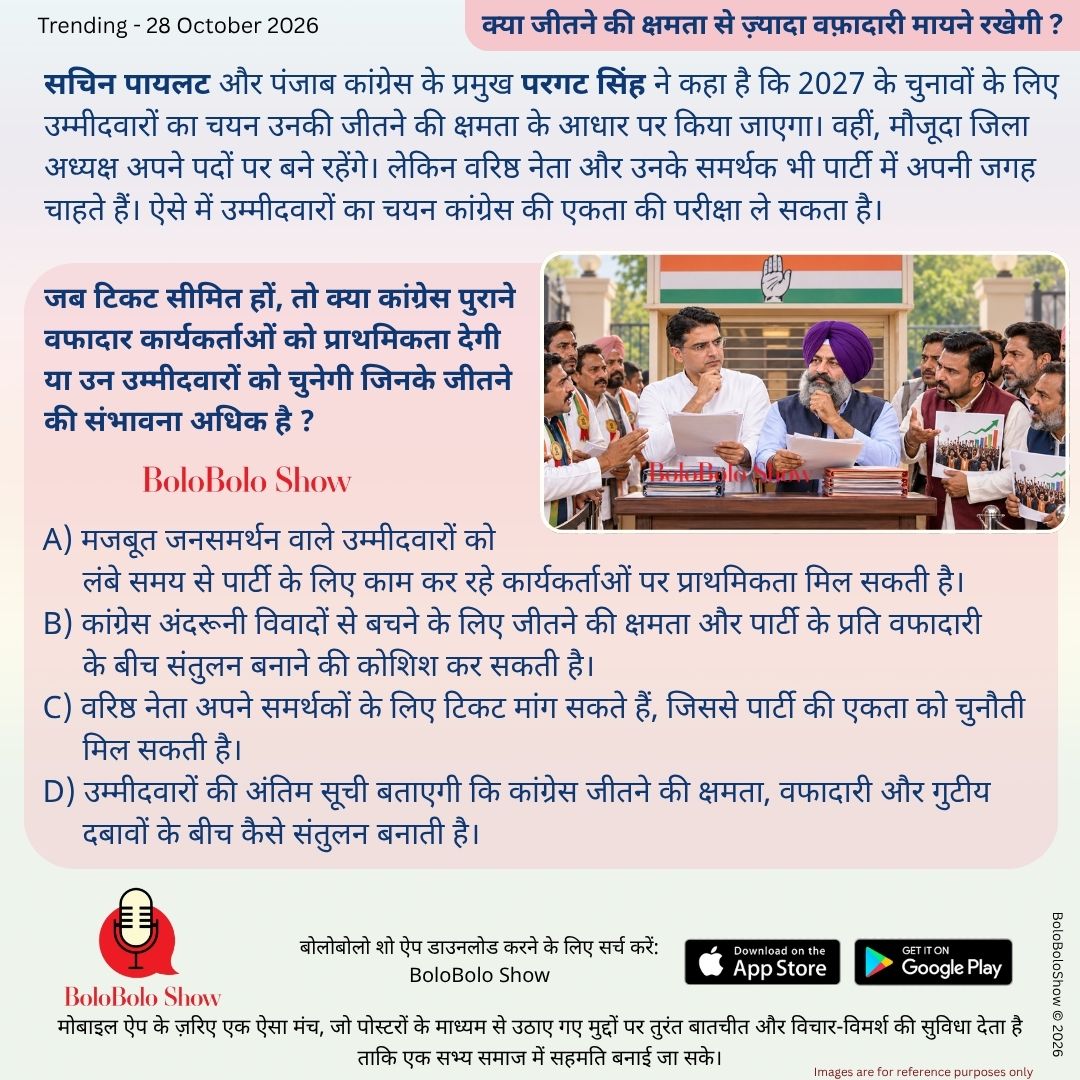
सचिन पायलट और पंजाब कांग्रेस के प्रमुख परगट सिंह ने कहा है कि 2027 के चुनावों के लिए उम्मीदवारों का चयन उनकी जीतने की क्षमता के आधार पर किया जाएगा। वहीं, मौजूदा जिला अध्यक्ष अपने पदों पर बने रहेंगे। लेकिन वरिष्ठ नेता और उनके समर्थक भी पार्टी में अपनी जगह चाहते हैं। ऐसे में उम्मीदवारों का चयन कांग्रेस की एकता की परीक्षा ले सकता है। जब टिकट सीमित हों, तो क्या कांग्रेस पुराने वफादार कार्यकर्ताओं को प्राथमिकता देगी या उन उम्मीदवारों को चुनेगी जिनके जीतने की संभावना अधिक है ?
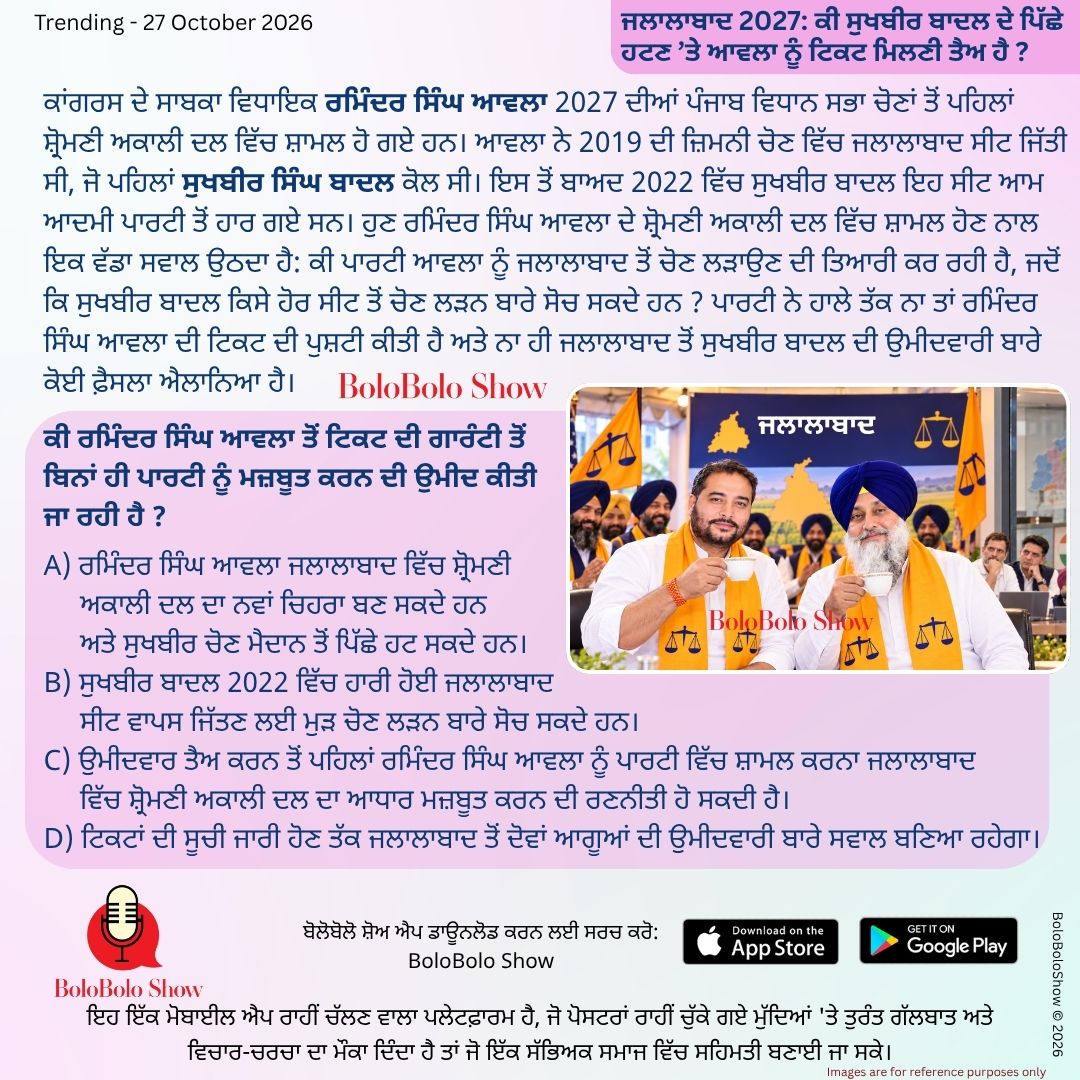
Former Congress MLA Raminder Singh Awla has joined the Shiromani Akali Dal ahead of the 2027 Punjab elections. Raminder Singh Awla won Jalalabad in the 2019 by-election, taking the seat from Sukhbir Singh Badal’s camp. Sukhbir later lost the constituency to the Aam Aadmi Party in 2022. Now, Raminder Singh Awla’s entry into the Akali Dal raises a big question: is the party preparing Raminder Singh Awla to contest from Jalalabad while Sukhbir Badal looks for another seat ? The party has not yet confirmed Raminder Singh Awla’s ticket or Sukhbir Badal’s plans for the constituency. Is Raminder Singh Awla expected to strengthen the party without a ticket guarantee ?