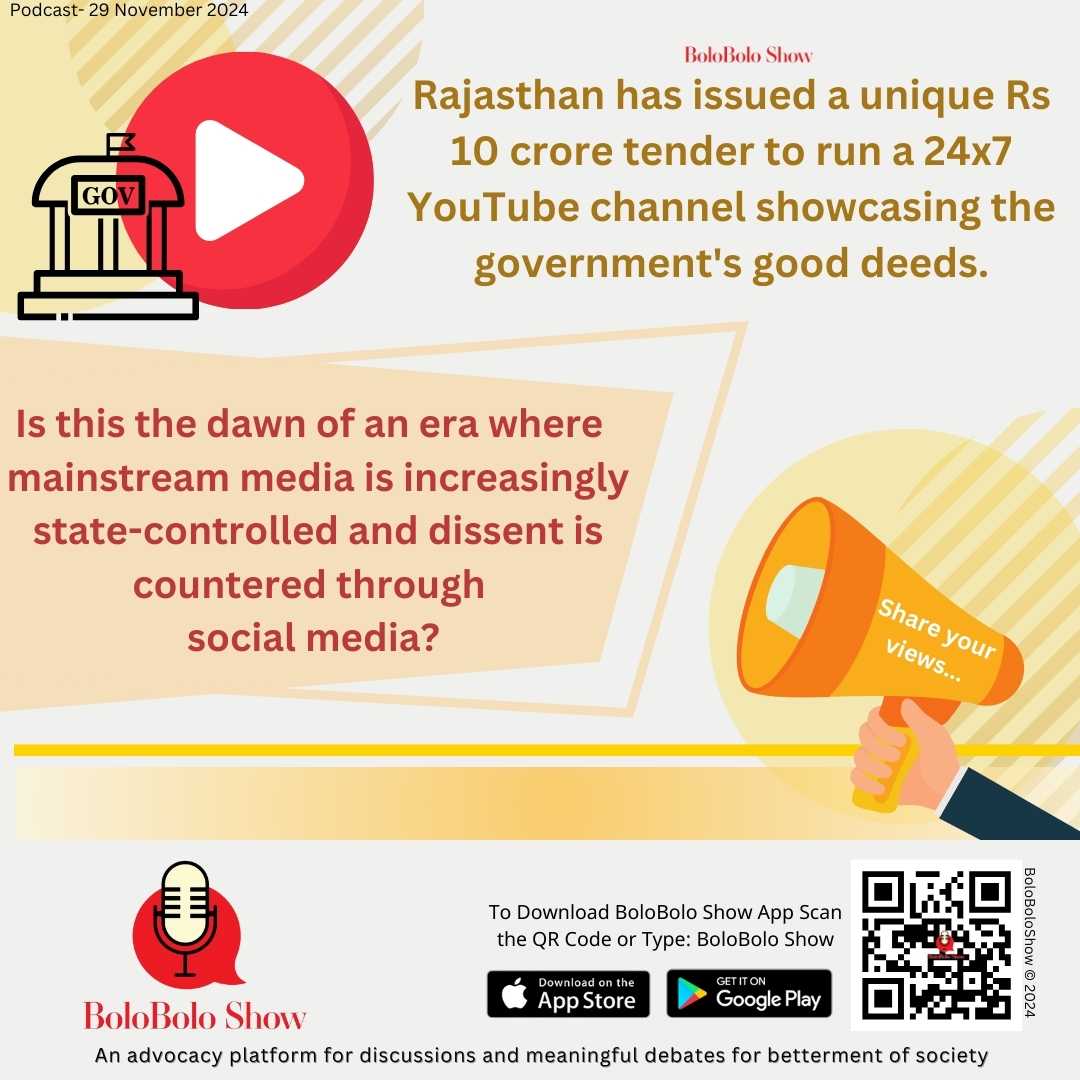
Rajasthan has issued a unique Rs 10 crore tender to run a 24x7 YouTube channel showcasing the government's good deeds. Is this the dawn of an era where mainstream media is increasingly state-controlled and dissent is countered through social media?
Proposals - SUNLO
To share your thoughts...
⟶ Go to the home page of the BoloBolo Show app on your Android or iPhone. ⟶ Click on the microphone button icon on the bottom bar. ⟶ Then record your thoughts in a clear voice.
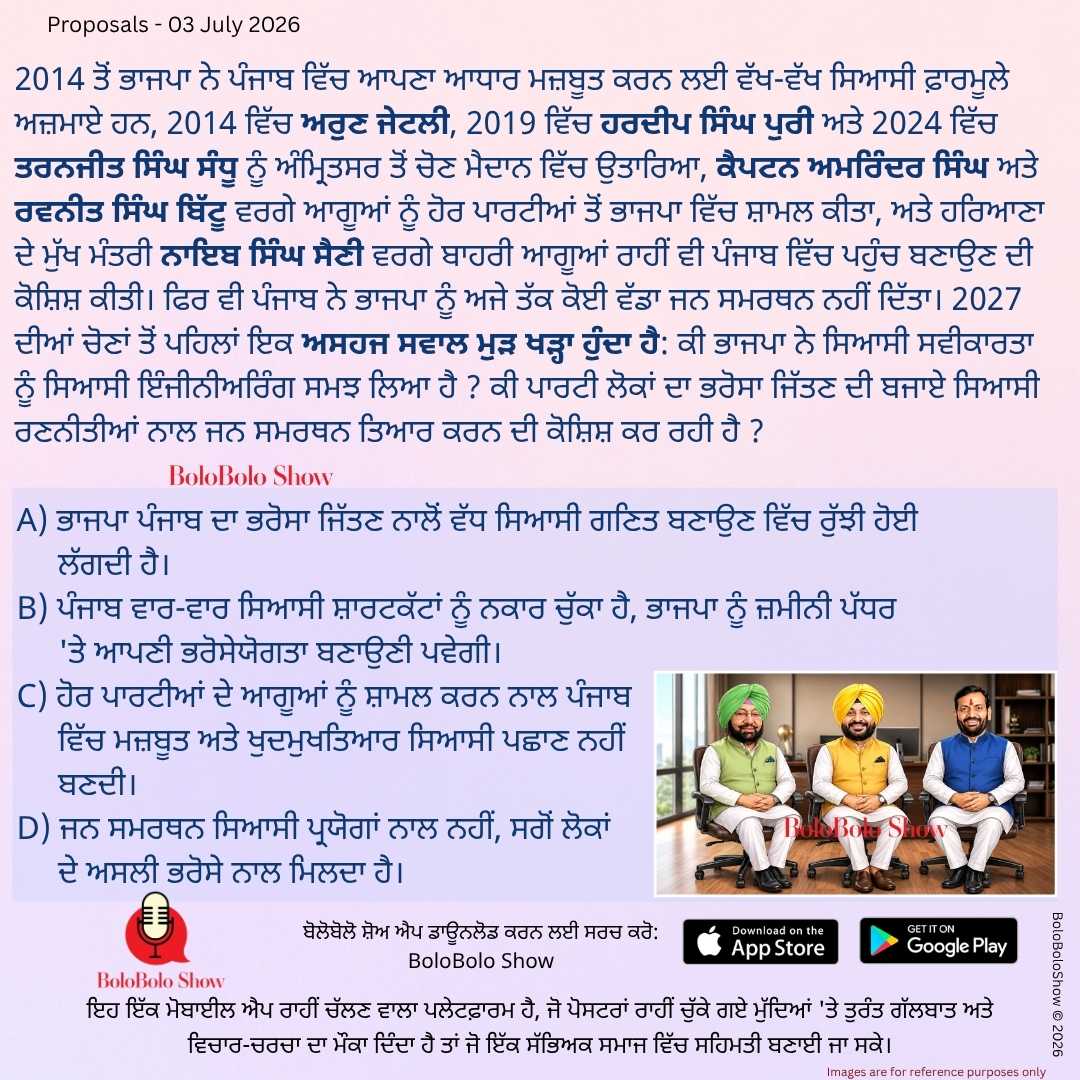
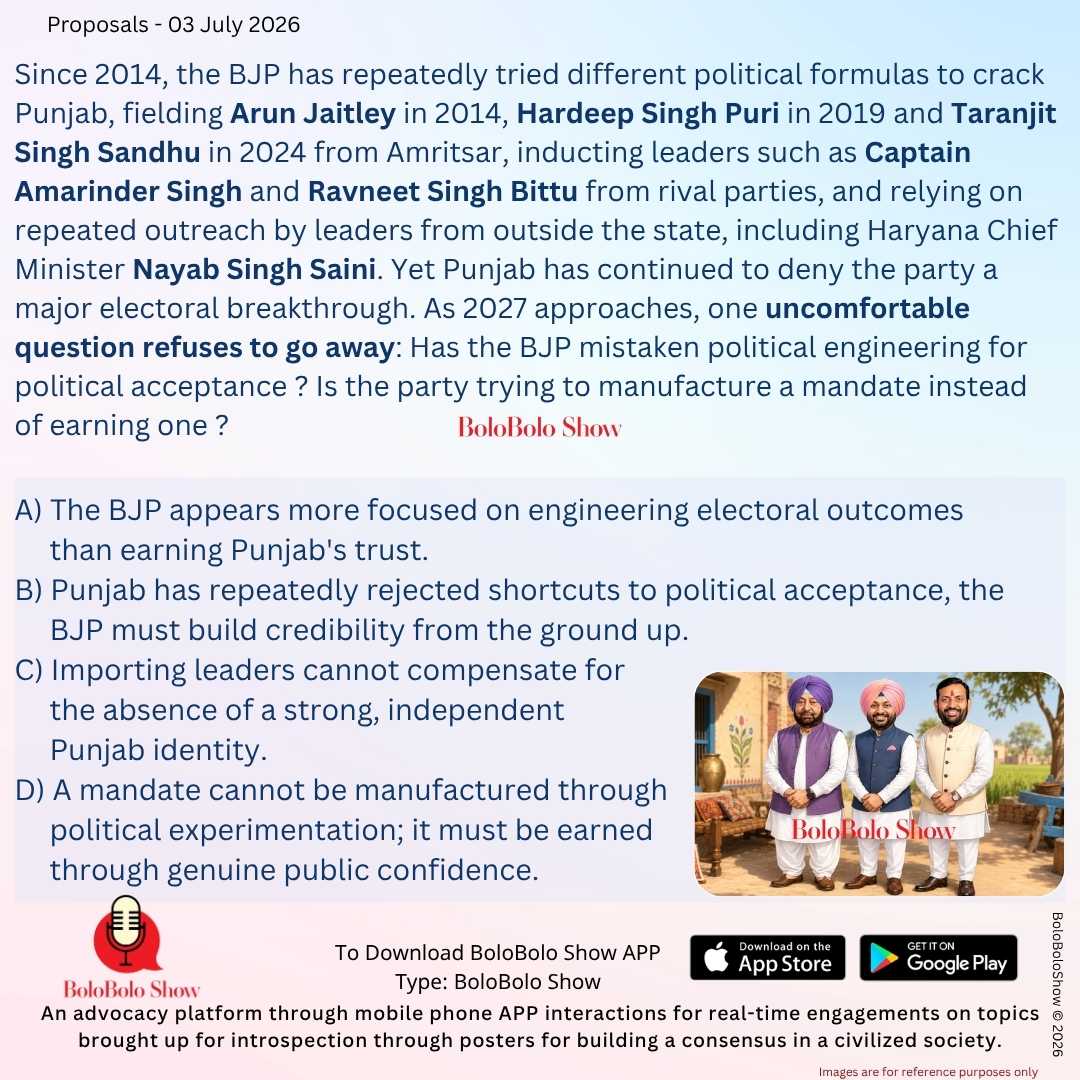
Since 2014, the BJP has repeatedly tried different political formulas to crack Punjab, fielding Arun Jaitley in 2014, Hardeep Singh Puri in 2019 and Taranjit Singh Sandhu in 2024 from Amritsar, inducting leaders such as Captain Amarinder Singh and Ravneet Singh Bittu from rival parties, and relying on repeated outreach by leaders from outside the state, including Haryana Chief Minister Nayab Singh Saini. Yet Punjab has continued to deny the party a major electoral breakthrough. As 2027 approaches, one uncomfortable question refuses to go away: Has the BJP mistaken political engineering for political acceptance ? Is the party trying to manufacture a mandate instead of earning one ?
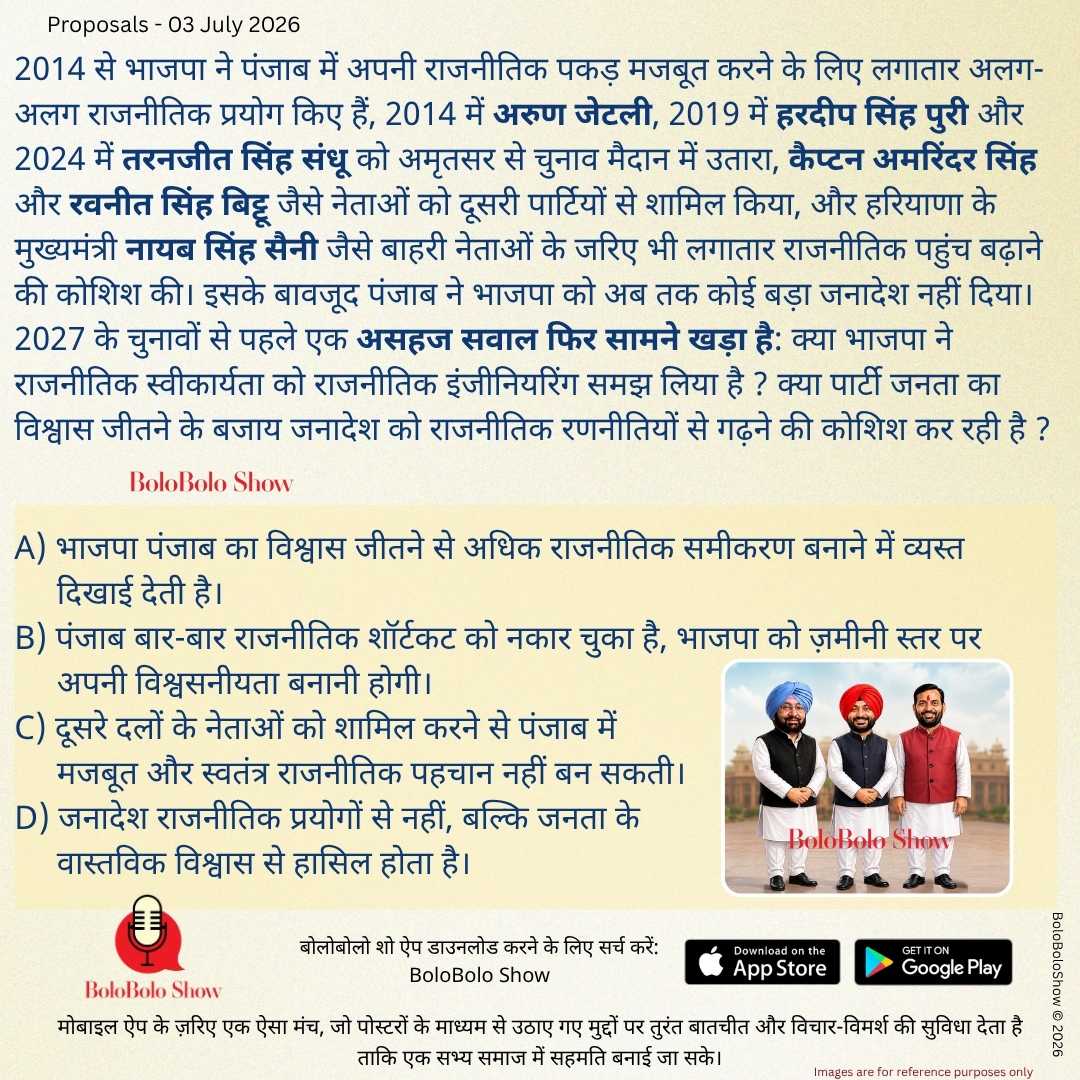
2014 से भाजपा ने पंजाब में अपनी राजनीतिक पकड़ मजबूत करने के लिए लगातार अलग-अलग राजनीतिक प्रयोग किए हैं, 2014 में अरुण जेटली, 2019 में हरदीप सिंह पुरी और 2024 में तरनजीत सिंह संधू को अमृतसर से चुनाव मैदान में उतारा, कैप्टन अमरिंदर सिंह और रवनीत सिंह बिट्टू जैसे नेताओं को दूसरी पार्टियों से शामिल किया, और हरियाणा के मुख्यमंत्री नायब सिंह सैनी जैसे बाहरी नेताओं के जरिए भी लगातार राजनीतिक पहुंच बढ़ाने की कोशिश की। इसके बावजूद पंजाब ने भाजपा को अब तक कोई बड़ा जनादेश नहीं दिया। 2027 के चुनावों से पहले एक असहज सवाल फिर सामने खड़ा है: क्या भाजपा ने राजनीतिक स्वीकार्यता को राजनीतिक इंजीनियरिंग समझ लिया है ? क्या पार्टी जनता का विश्वास जीतने के बजाय जनादेश को राजनीतिक रणनीतियों से गढ़ने की कोशिश कर रही है ?
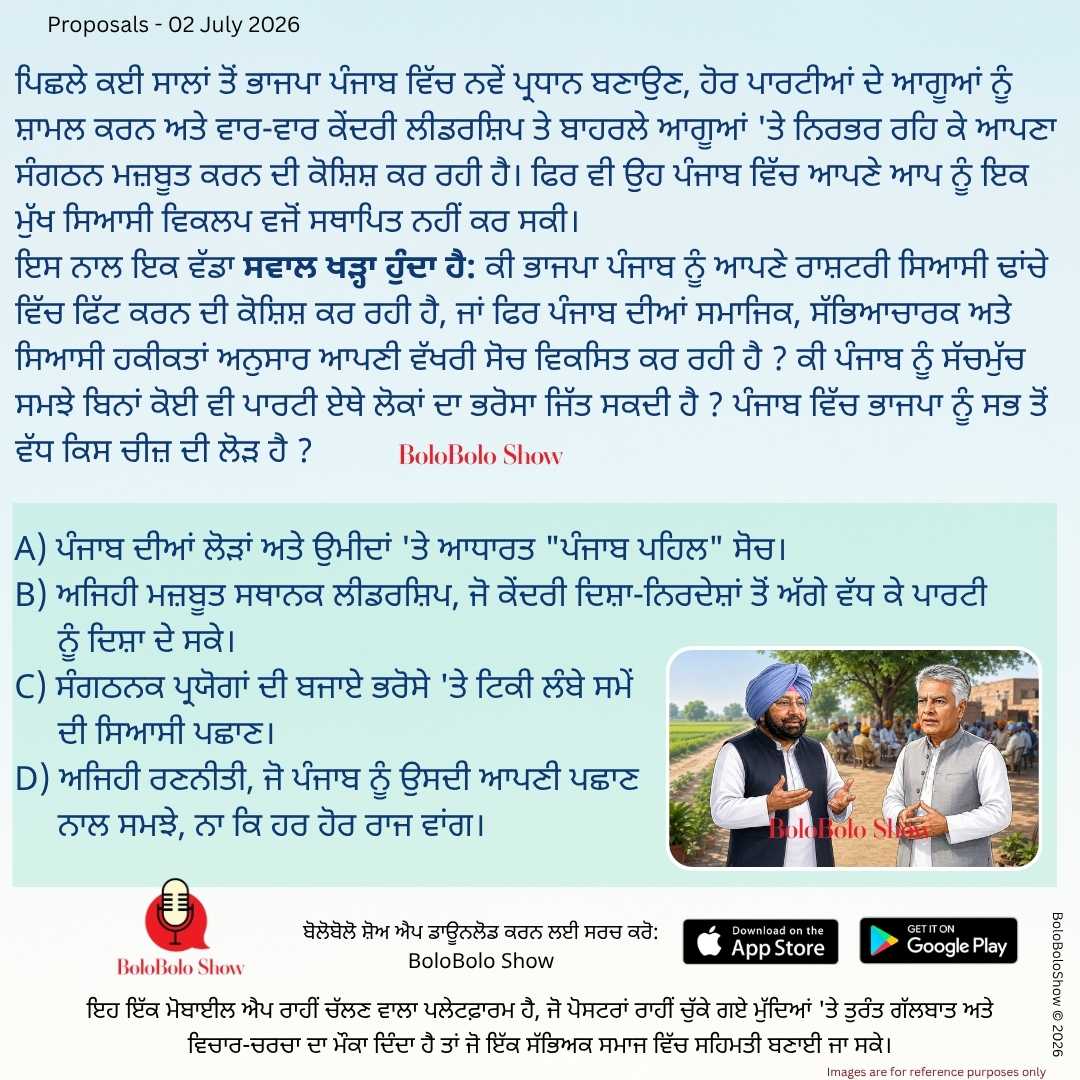
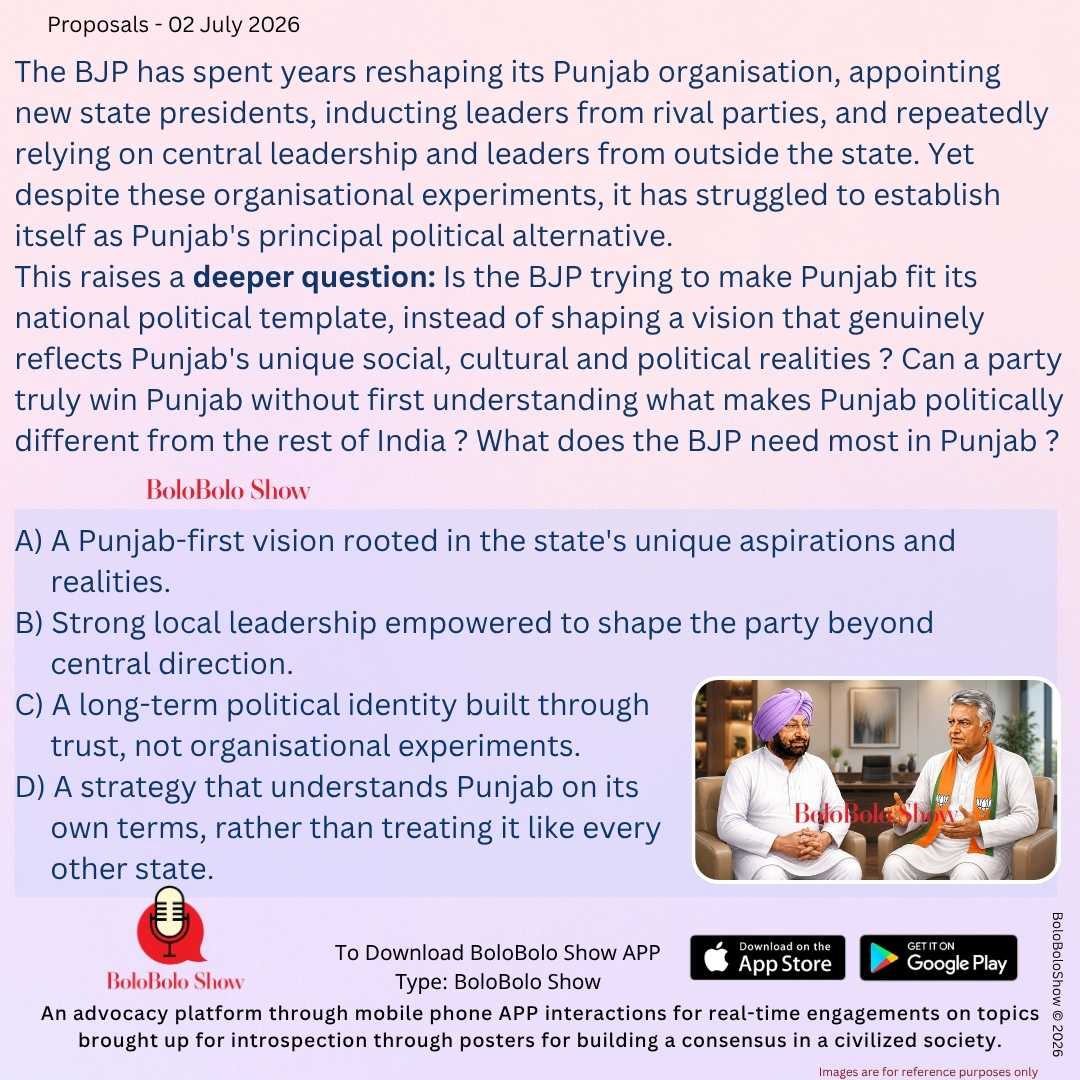
The BJP has spent years reshaping its Punjab organisation, appointing new state presidents, inducting leaders from rival parties, and repeatedly relying on central leadership and leaders from outside the state. Yet despite these organisational experiments, it has struggled to establish itself as Punjab's principal political alternative. This raises a deeper question: Is the BJP trying to make Punjab fit its national political template, instead of shaping a vision that genuinely reflects Punjab's unique social, cultural and political realities ? Can a party truly win Punjab without first understanding what makes Punjab politically different from the rest of India ? What does the BJP need most in Punjab ?