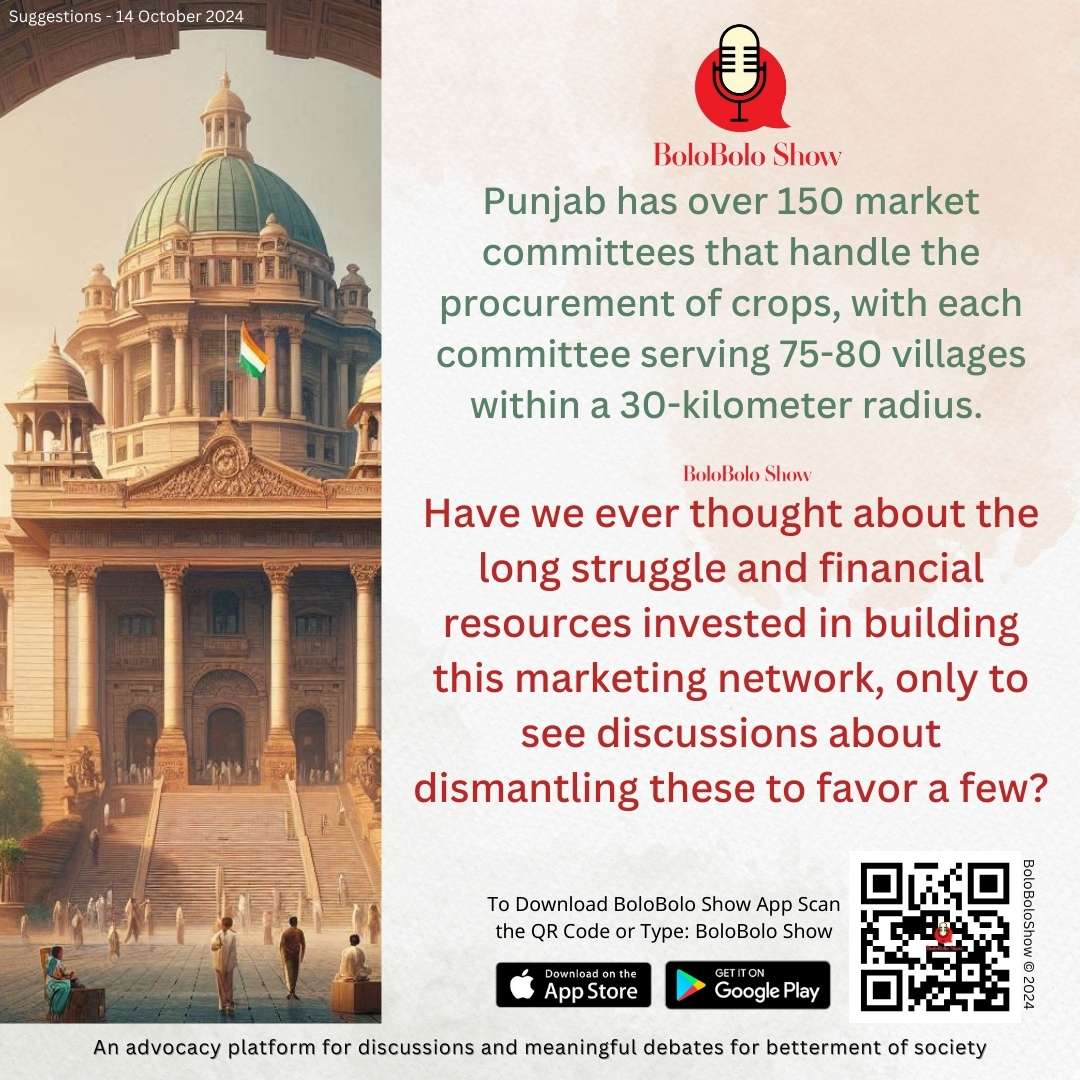
Punjab has over 150 market committees that handle the procurement of crops, with each committee serving 75-80 villages within a 30-kilometer radius.
Suggestions - SLAH
Have we ever thought about the long struggle and financial resources invested in building this marketing network, only to see discussions about dismantling these to favor a few?
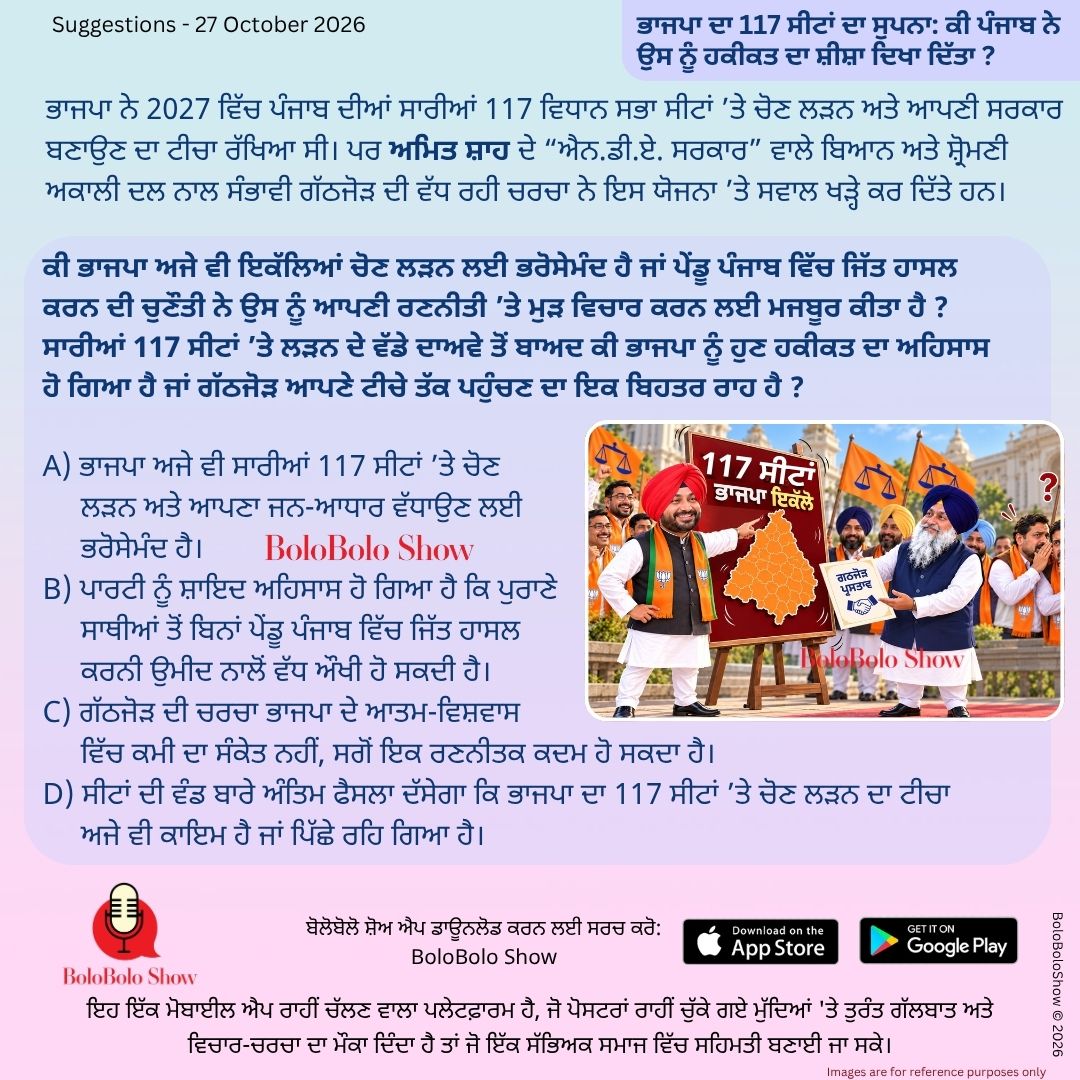
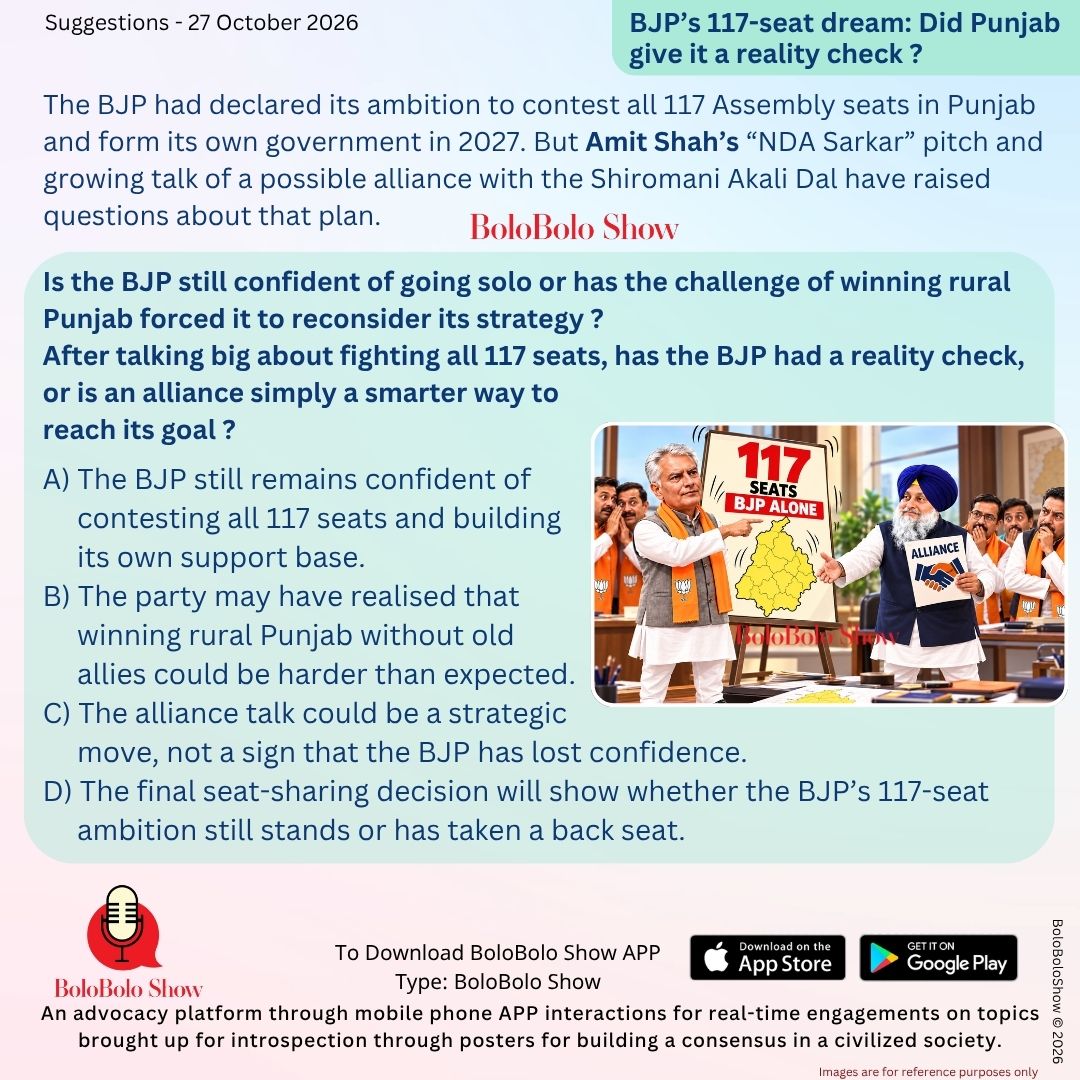
The BJP had declared its ambition to contest all 117 Assembly seats in Punjab and form its own government in 2027. But Amit Shah’s “NDA Sarkar” pitch and growing talk of a possible alliance with the Shiromani Akali Dal have raised questions about that plan. Is the BJP still confident of going solo or has the challenge of winning rural Punjab forced it to reconsider its strategy ? After talking big about fighting all 117 seats, has the BJP had a reality check, or is an alliance simply a smarter way to reach its goal ?
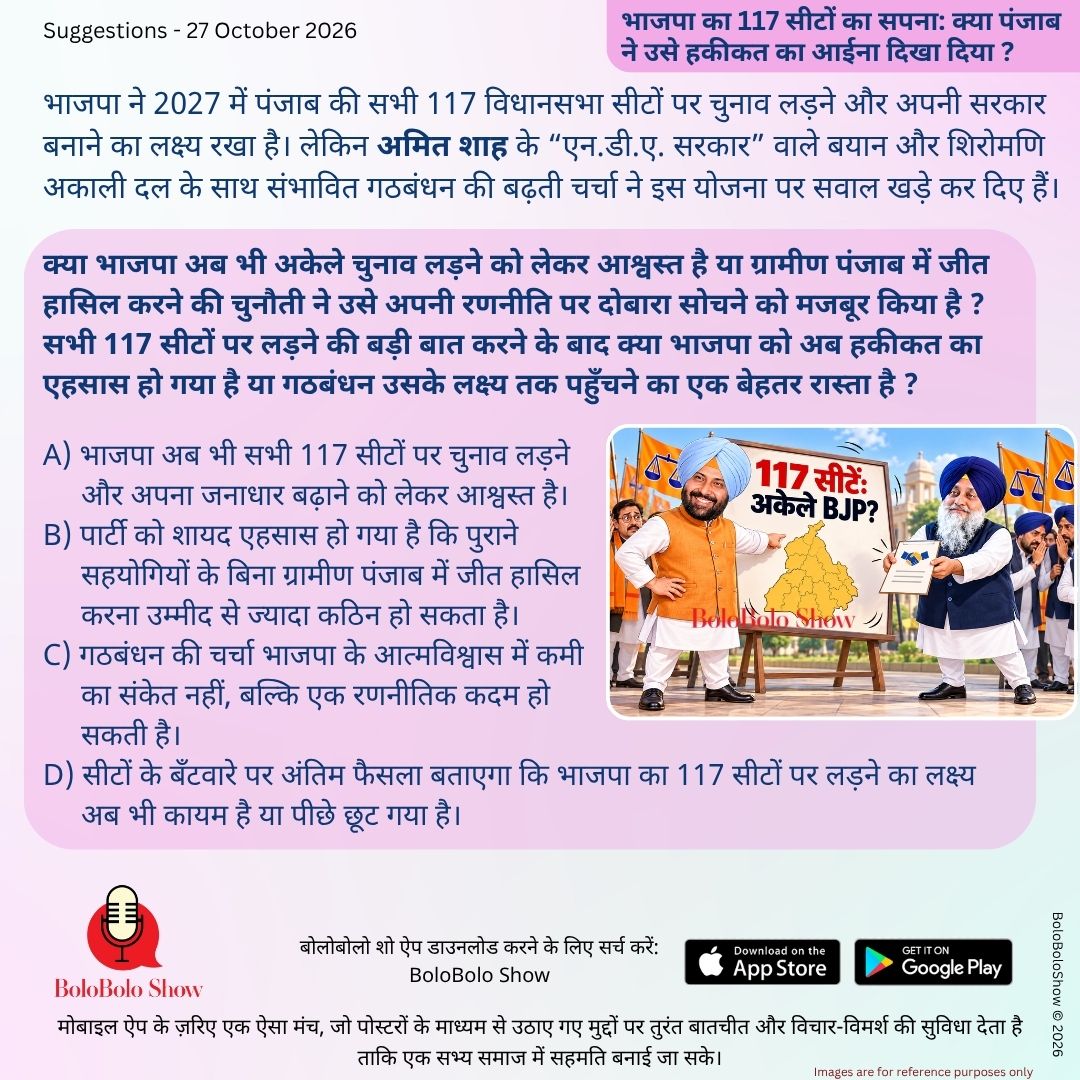
भाजपा ने 2027 में पंजाब की सभी 117 विधानसभा सीटों पर चुनाव लड़ने और अपनी सरकार बनाने का लक्ष्य रखा है। लेकिन अमित शाह के “एन.डी.ए. सरकार” वाले बयान और शिरोमणि अकाली दल के साथ संभावित गठबंधन की बढ़ती चर्चा ने इस योजना पर सवाल खड़े कर दिए हैं। क्या भाजपा अब भी अकेले चुनाव लड़ने को लेकर आश्वस्त है या ग्रामीण पंजाब में जीत हासिल करने की चुनौती ने उसे अपनी रणनीति पर दोबारा सोचने को मजबूर किया है ? सभी 117 सीटों पर लड़ने की बड़ी बात करने के बाद क्या भाजपा को अब हकीकत का एहसास हो गया है या गठबंधन उसके लक्ष्य तक पहुँचने का एक बेहतर रास्ता है ?
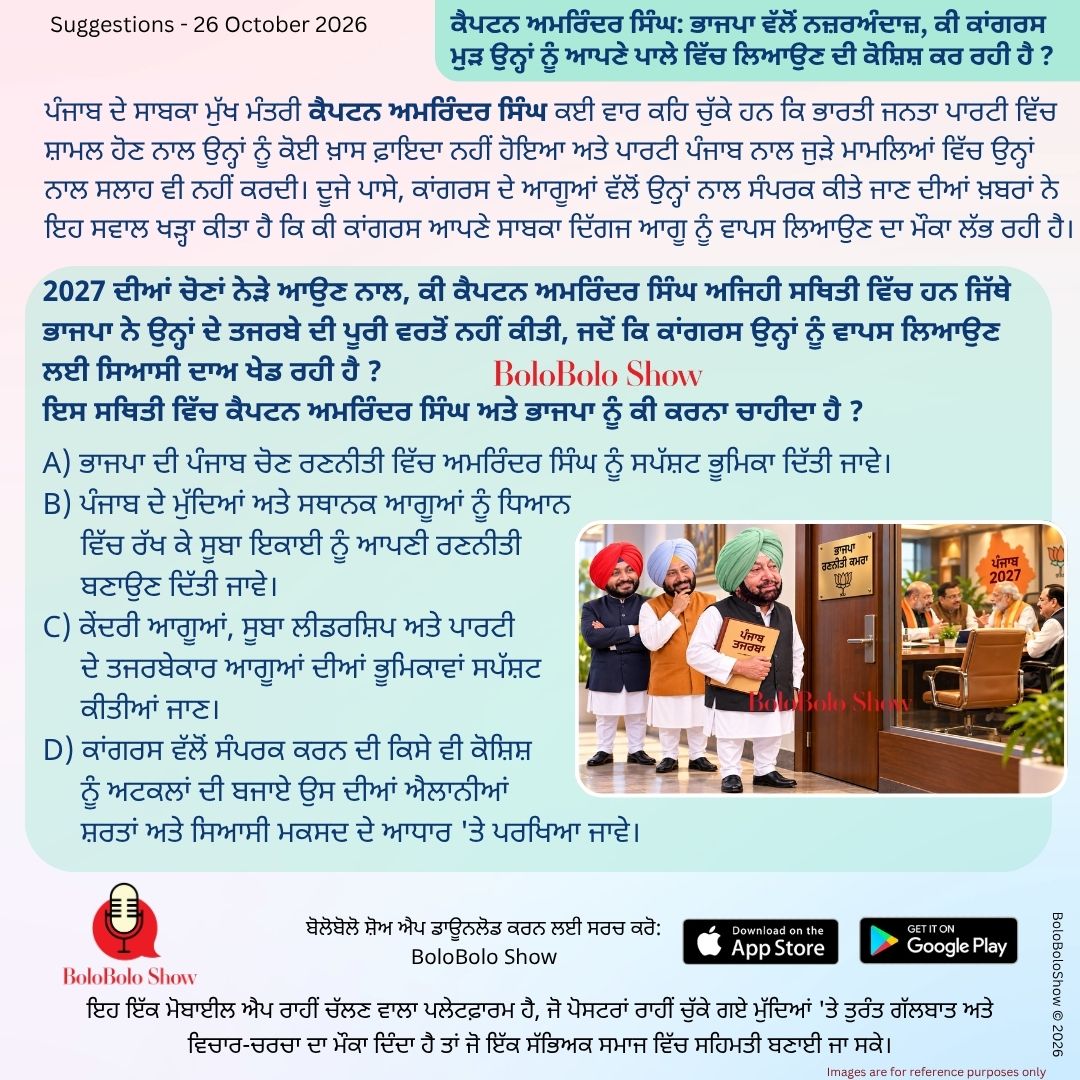
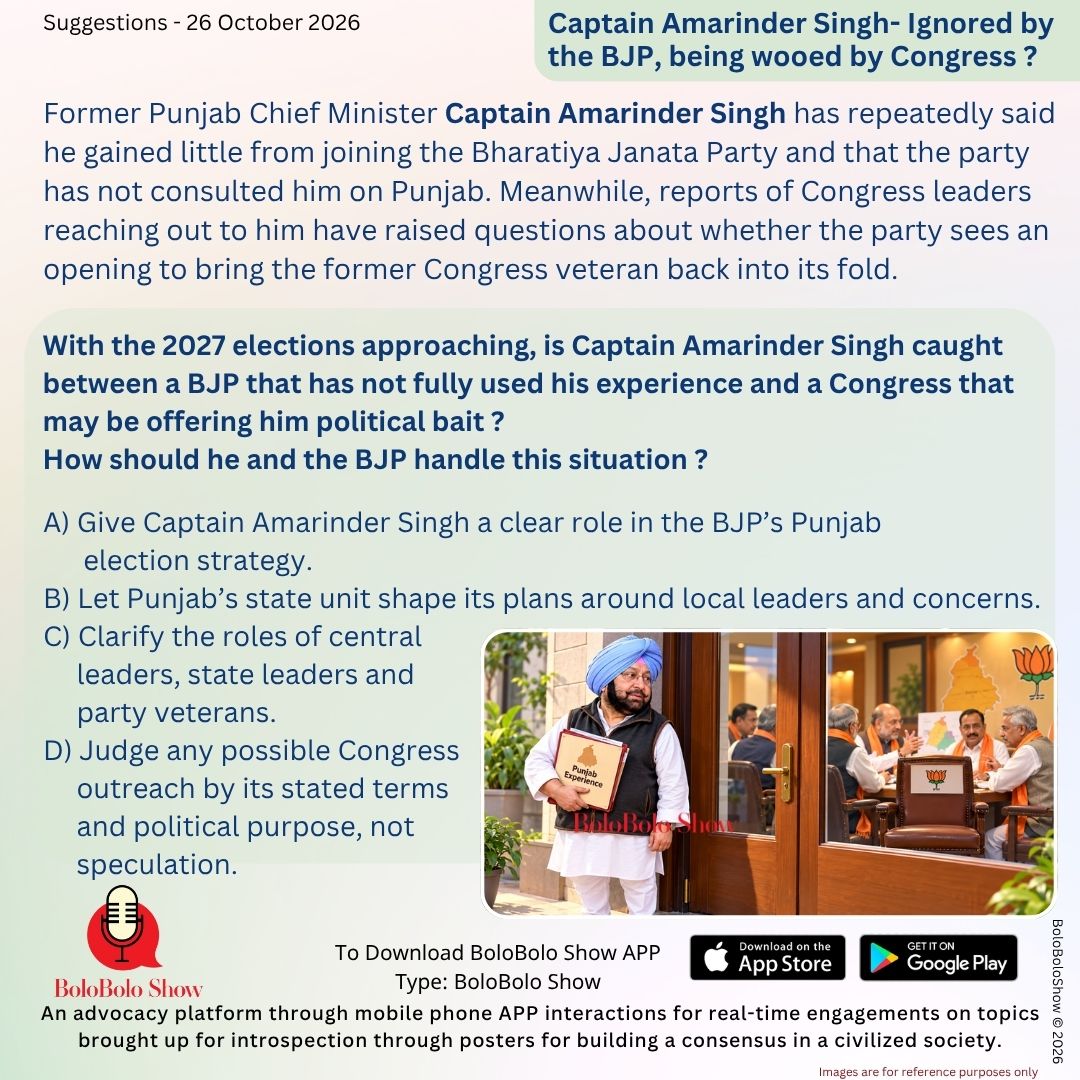
Former Punjab Chief Minister Captain Amarinder Singh has repeatedly said he gained little from joining the Bharatiya Janata Party and that the party has not consulted him on Punjab. Meanwhile, reports of Congress leaders reaching out to him have raised questions about whether the party sees an opening to bring the former Congress veteran back into its fold. With the 2027 elections approaching, is Captain Amarinder Singh caught between a BJP that has not fully used his experience and a Congress that may be offering him political bait ? How should he and the BJP handle this situation ?