Do you like processed food, or prefer fresh, locally sourced farm-to-table food?
Polling
To share your thoughts...
⟶ Go to the home page of the BoloBolo Show app on your Android or iPhone. ⟶ Click on the microphone button icon on the bottom bar. ⟶ Then record your thoughts in a clear voice.
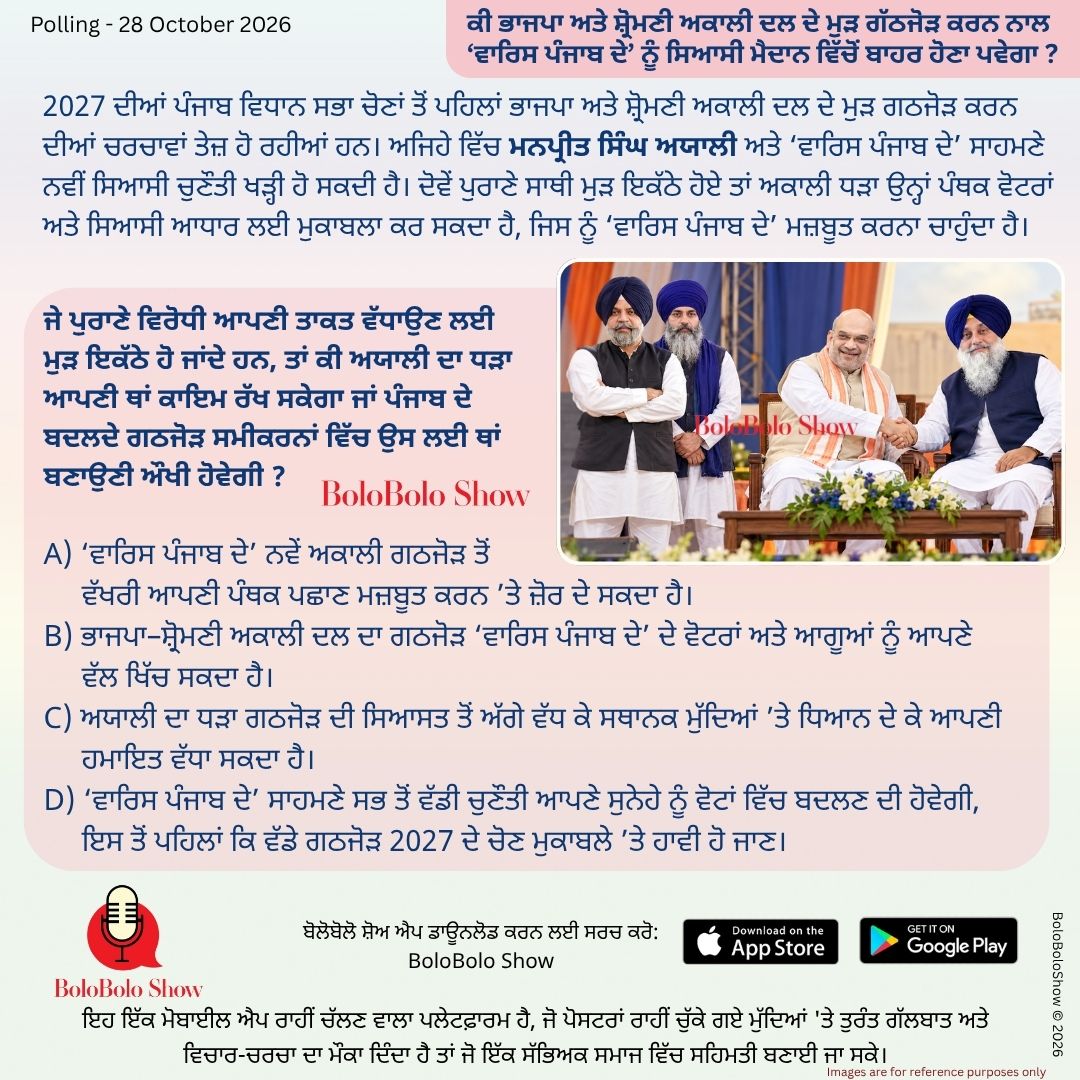
Manpreet Singh Ayali and ‘Waris Punjab De’ face a new political challenge as talks of a BJP–Shiromani Akali Dal reunion gather pace ahead of the 2027 elections. A reunited Akali camp could compete for the same Panthic voters and political ground that ‘Waris Punjab De’ hopes to build on. If old rivals reunite to strengthen their position, can Ayali’s camp hold its ground or will it struggle to find space in Punjab’s changing alliance maths ?
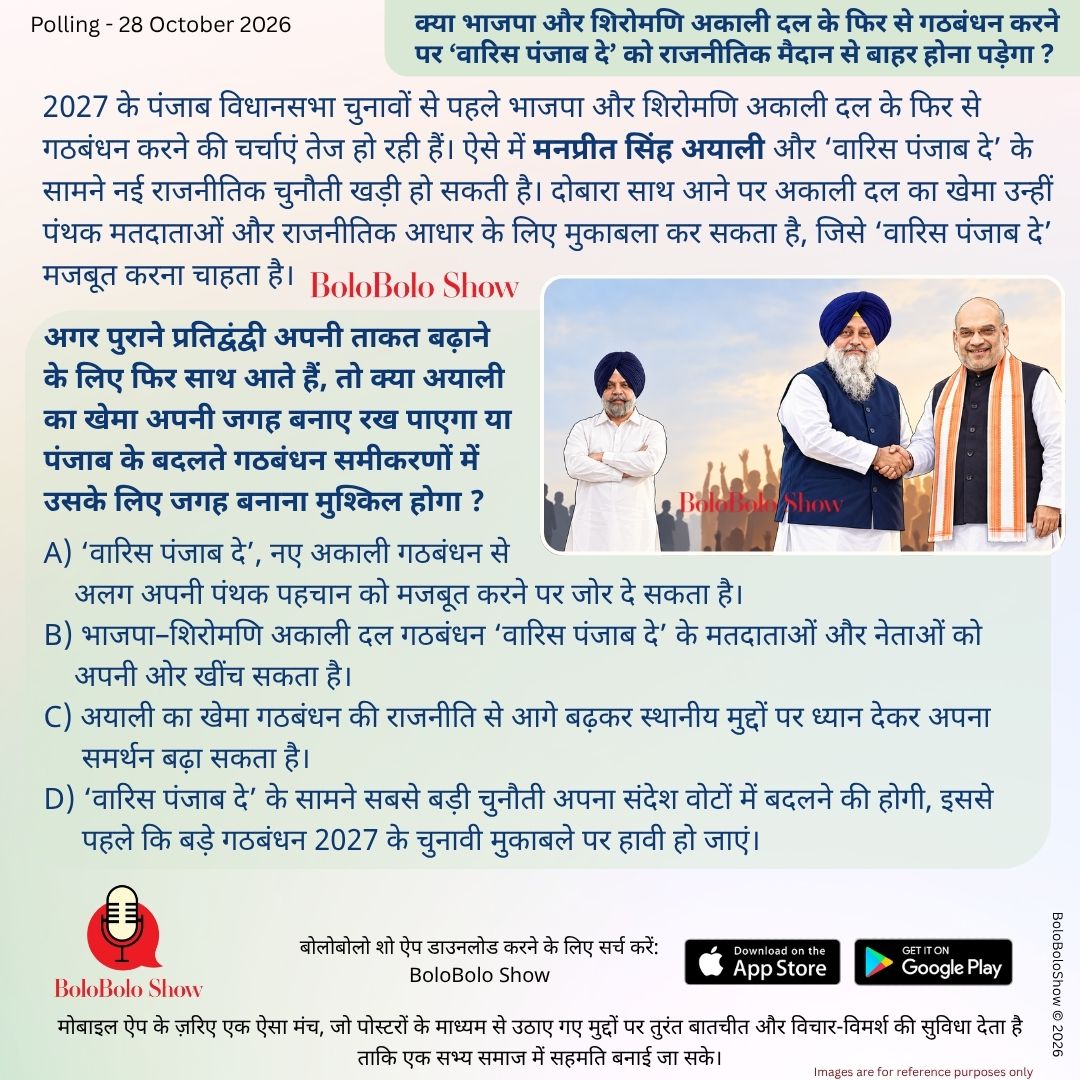
2027 के पंजाब विधानसभा चुनावों से पहले भाजपा और शिरोमणि अकाली दल के फिर से गठबंधन करने की चर्चाएं तेज हो रही हैं। ऐसे में मनप्रीत सिंह अयाली और ‘वारिस पंजाब दे’ के सामने नई राजनीतिक चुनौती खड़ी हो सकती है। दोबारा साथ आने पर अकाली दल का खेमा उन्हीं पंथक मतदाताओं और राजनीतिक आधार के लिए मुकाबला कर सकता है, जिसे ‘वारिस पंजाब दे’ मजबूत करना चाहता है। अगर पुराने प्रतिद्वंद्वी अपनी ताकत बढ़ाने के लिए फिर साथ आते हैं, तो क्या अयाली का खेमा अपनी जगह बनाए रख पाएगा या पंजाब के बदलते गठबंधन समीकरणों में उसके लिए जगह बनाना मुश्किल होगा ?
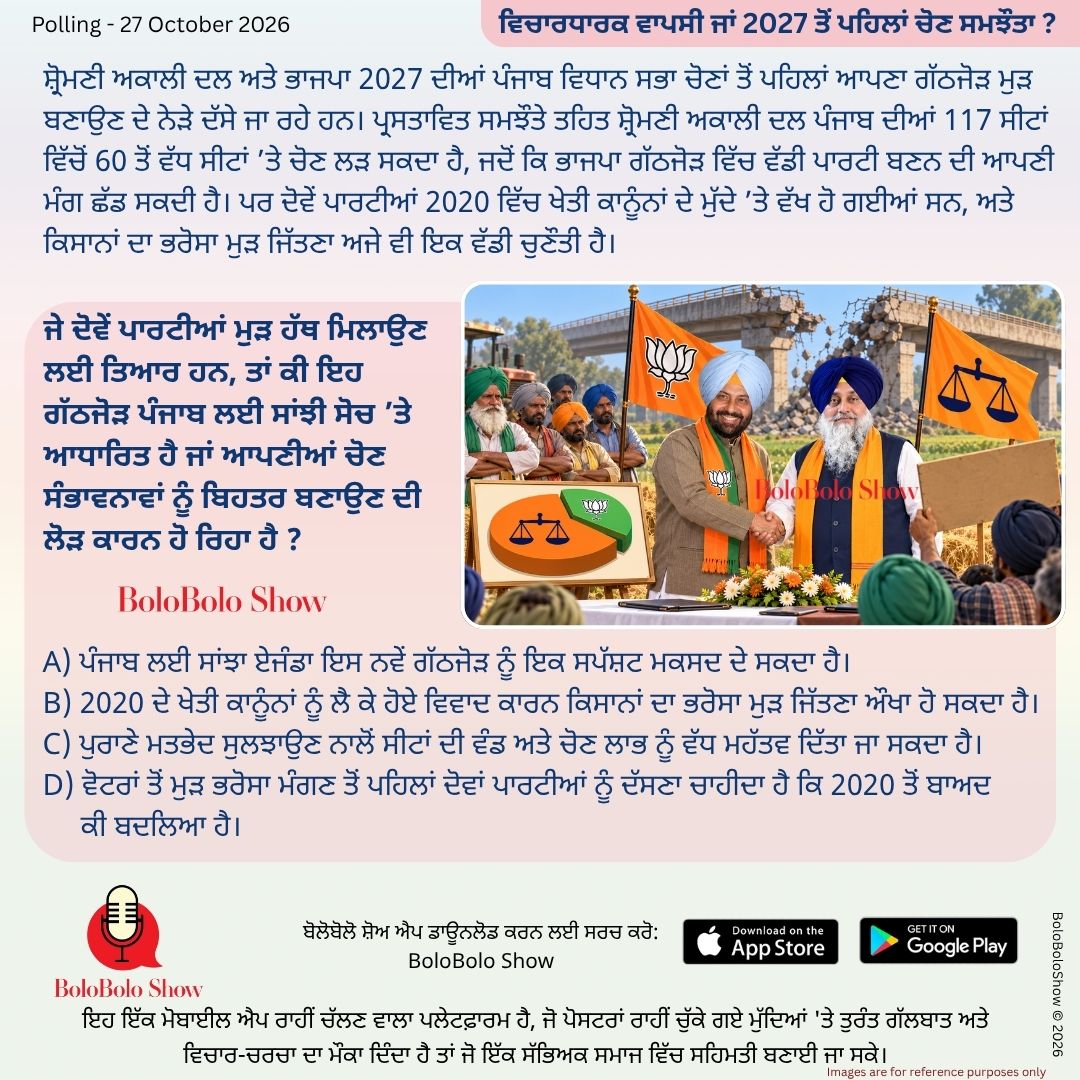
The Shiromani Akali Dal and the BJP are reportedly close to renewing their alliance ahead of the 2027 Punjab Assembly elections. The proposed deal could see the Shiromani Akali Dal contest more than 60 of Punjab’s 117 seats, with the BJP giving up its demand to be the senior partner. But the two parties split in 2020 over the farm laws, and rebuilding trust among farmers remains a major challenge. If both the parties are ready to join hands again, is this reunion driven by a shared vision for Punjab or by the need to improve their electoral prospects ?