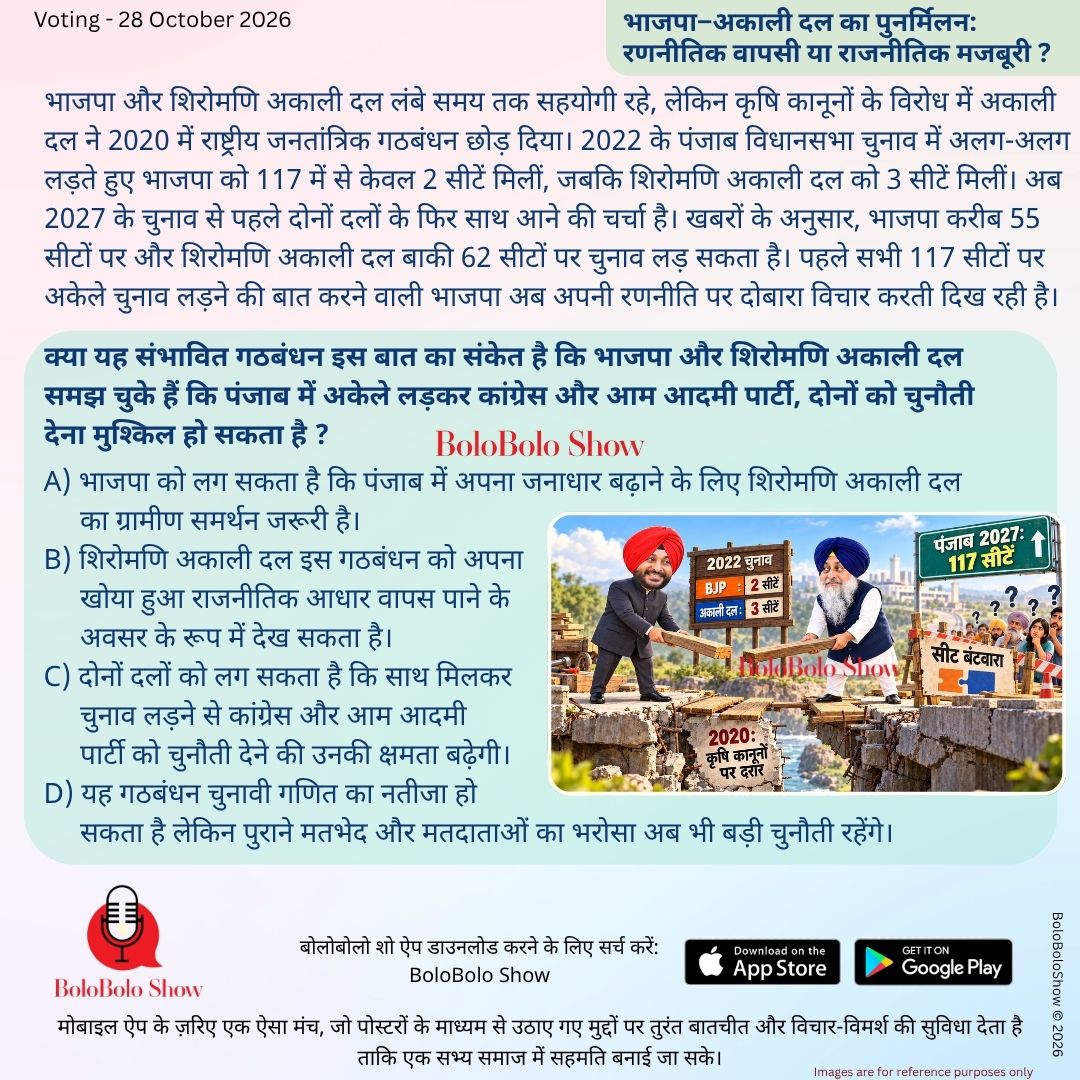
The BJP and the Shiromani Akali Dal were long-time allies until the Akalis quit the National Democratic Alliance in 2020 over the farm laws. In the 2022 Punjab Assembly elections, contesting separately, the BJP won just 2 of 117 seats, while the Akali Dal won 3. Now, ahead of the 2027 elections, reports suggest the two parties may reunite, with the BJP contesting around 55 seats and the Akalis the remaining 62. After once planning to contest all 117 seats alone, the BJP appears to be reconsidering its strategy. Does this possible reunion signal that the BJP and the Shiromani Akali Dal realise they may struggle to challenge both Congress and the Aam Aadmi Party on their own in Punjab ?
भाजपा और शिरोमणि अकाली दल लंबे समय तक सहयोगी रहे, लेकिन कृषि कानूनों के विरोध में अकाली दल ने 2020 में राष्ट्रीय जनतांत्रिक गठबंधन छोड़ दिया। 2022 के पंजाब विधानसभा चुनाव में अलग-अलग लड़ते हुए भाजपा को 117 में से केवल 2 सीटें मिलीं, जबकि शिरोमणि अकाली दल को 3 सीटें मिलीं। अब 2027 के चुनाव से पहले दोनों दलों के फिर साथ आने की चर्चा है। खबरों के अनुसार, भाजपा करीब 55 सीटों पर और शिरोमणि अकाली दल बाकी 62 सीटों पर चुनाव लड़ सकता है। पहले सभी 117 सीटों पर अकेले चुनाव लड़ने की बात करने वाली भाजपा अब अपनी रणनीति पर दोबारा विचार करती दिख रही है। क्या यह संभावित गठबंधन इस बात का संकेत है कि भाजपा और शिरोमणि अकाली दल समझ चुके हैं कि पंजाब में अकेले लड़कर कांग्रेस और आम आदमी पार्टी, दोनों को चुनौती देना मुश्किल हो सकता है ?
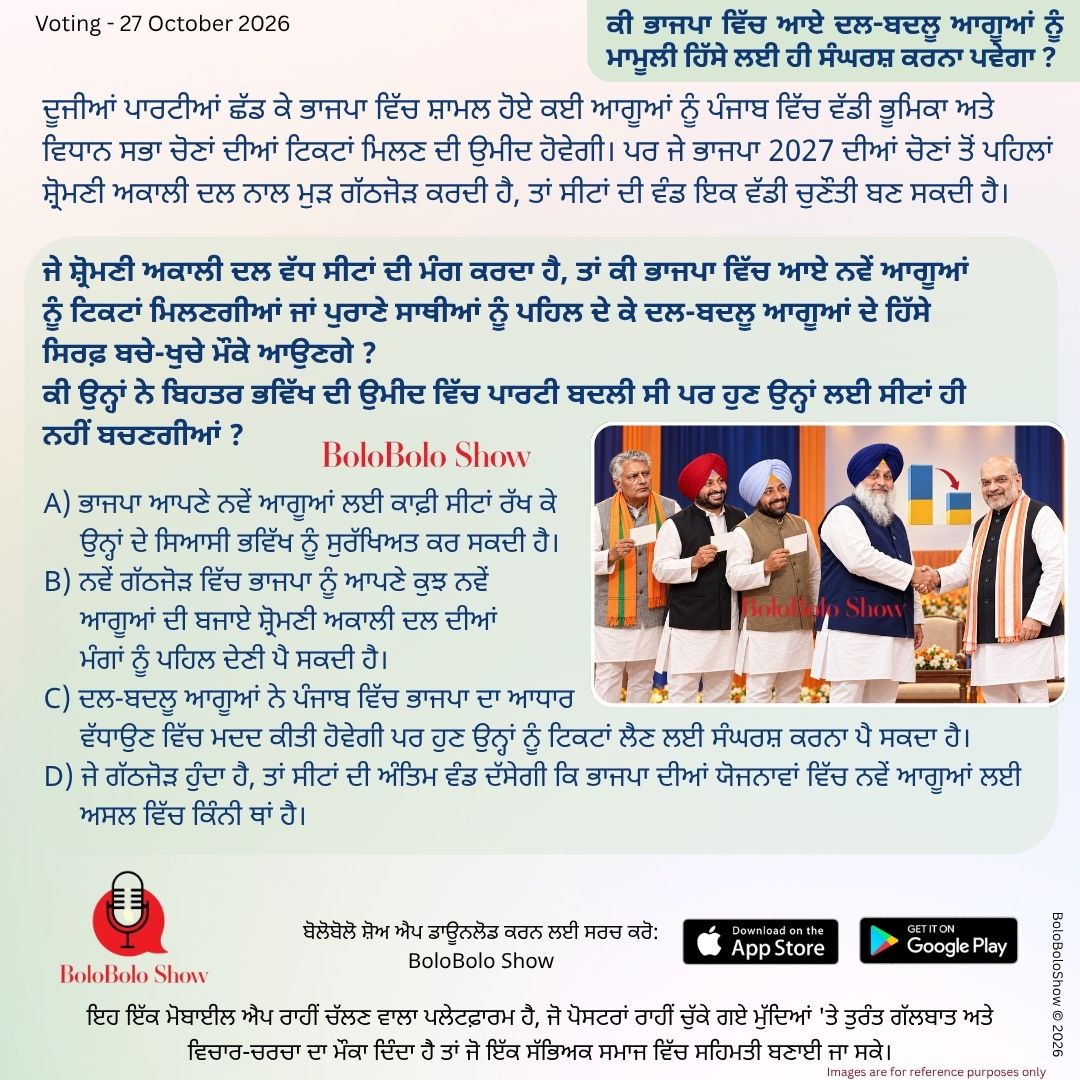
Several leaders who left rival parties to join the BJP may have hoped for bigger roles and Assembly tickets in Punjab. But if the BJP renews its alliance with the Shiromani Akali Dal ahead of the 2027 elections, seat-sharing could become a tough test. With the Shiromani Akali Dal seeking a major share of seats, will the BJP’s newcomers get the tickets they were promised or will old allies take priority while turncoats are left with crumbs ? Did they switch sides for a bigger future, only to find the seats already taken ?