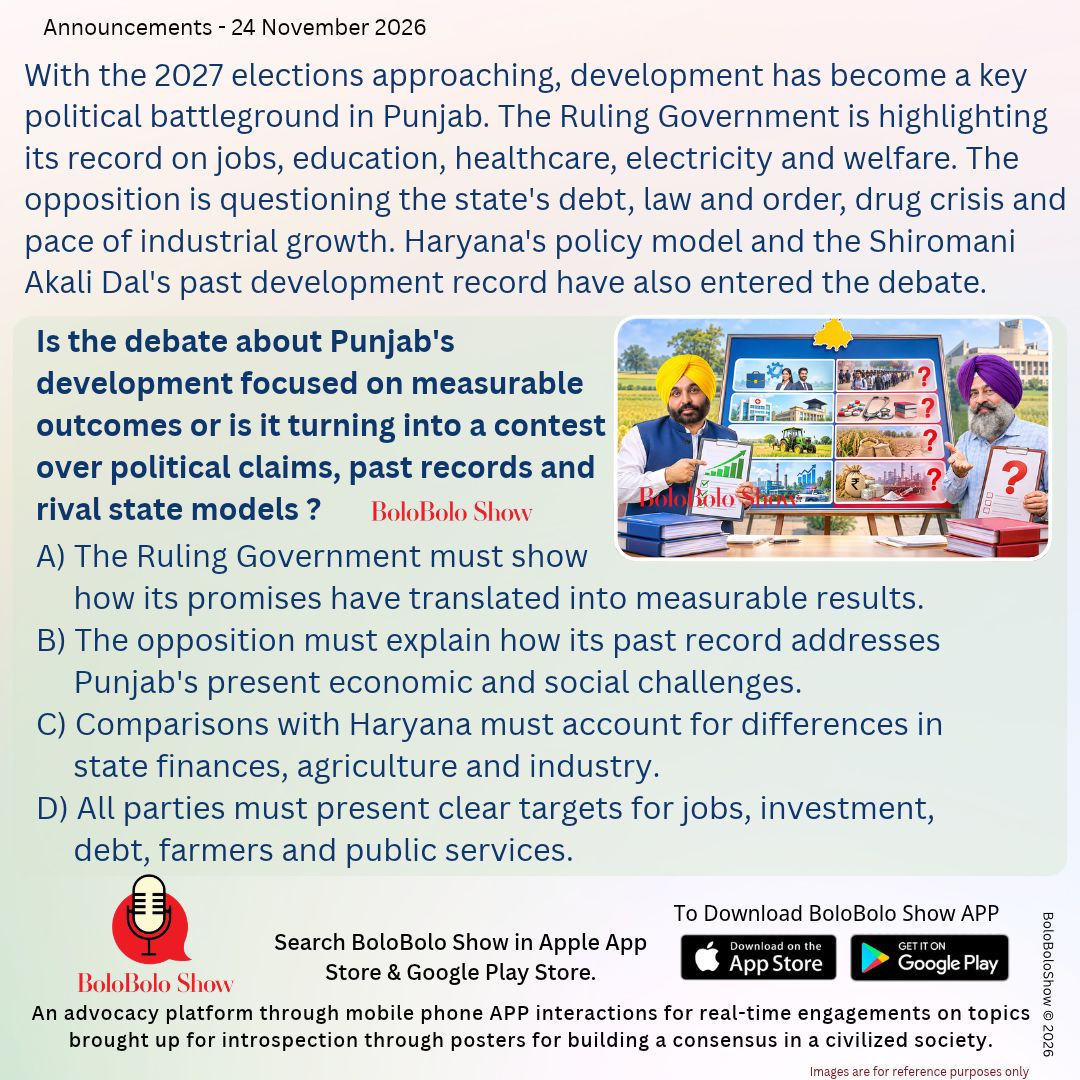
A) The Ruling Government must show how its promises have translated into measurable results. B) The opposition must explain how its past record addresses Punjab's present economic and social challenges. C) Comparisons with Haryana must account for differences in state finances, agriculture and industry. D) All parties must present clear targets for jobs, investment, debt, farmers and public services.
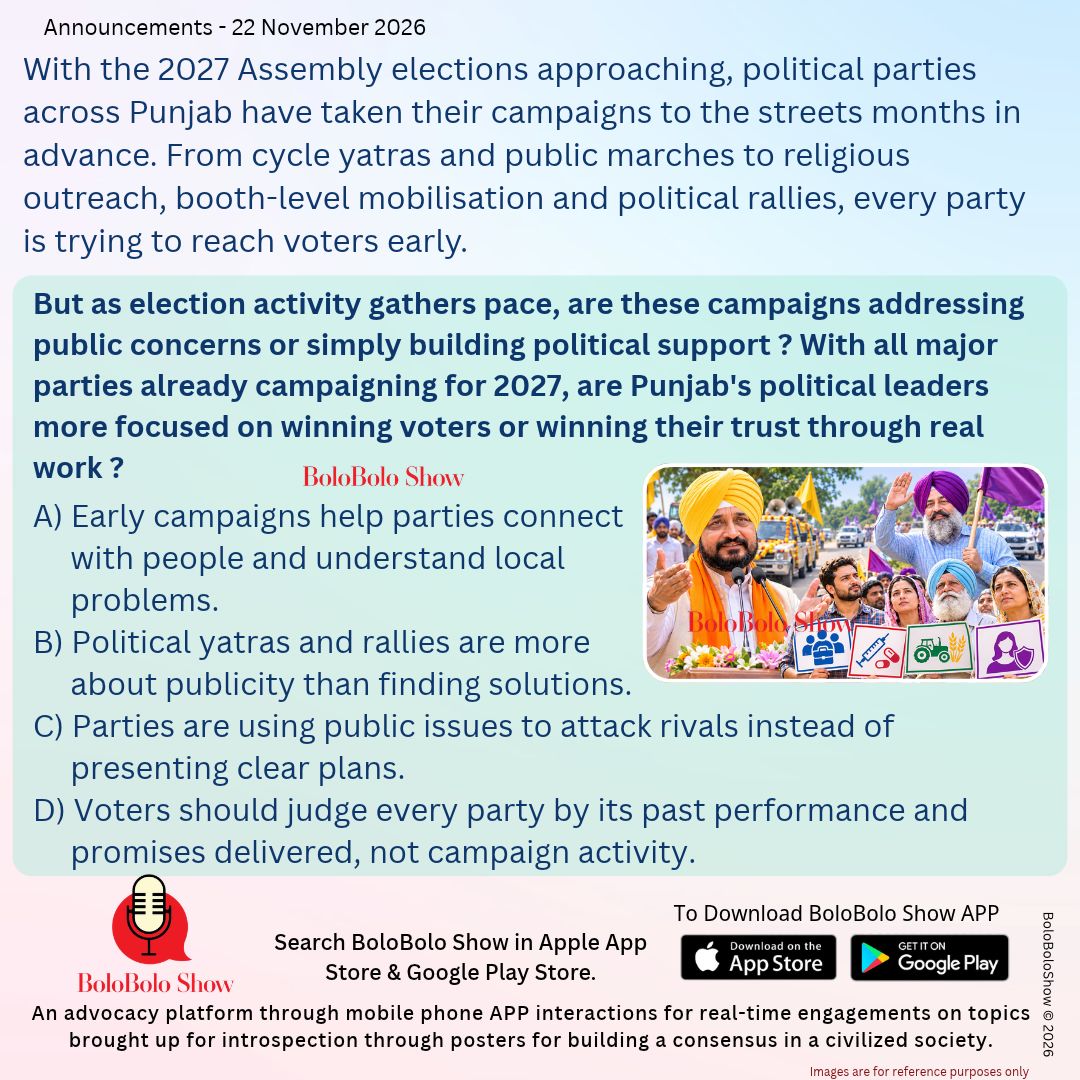
A) Early campaigns help parties connect with people and understand local problems. B) Political yatras and rallies are more about publicity than finding solutions. C) Parties are using public issues to attack rivals instead of presenting clear plans. D) Voters should judge every party by its past performance and promises delivered, not campaign activity.
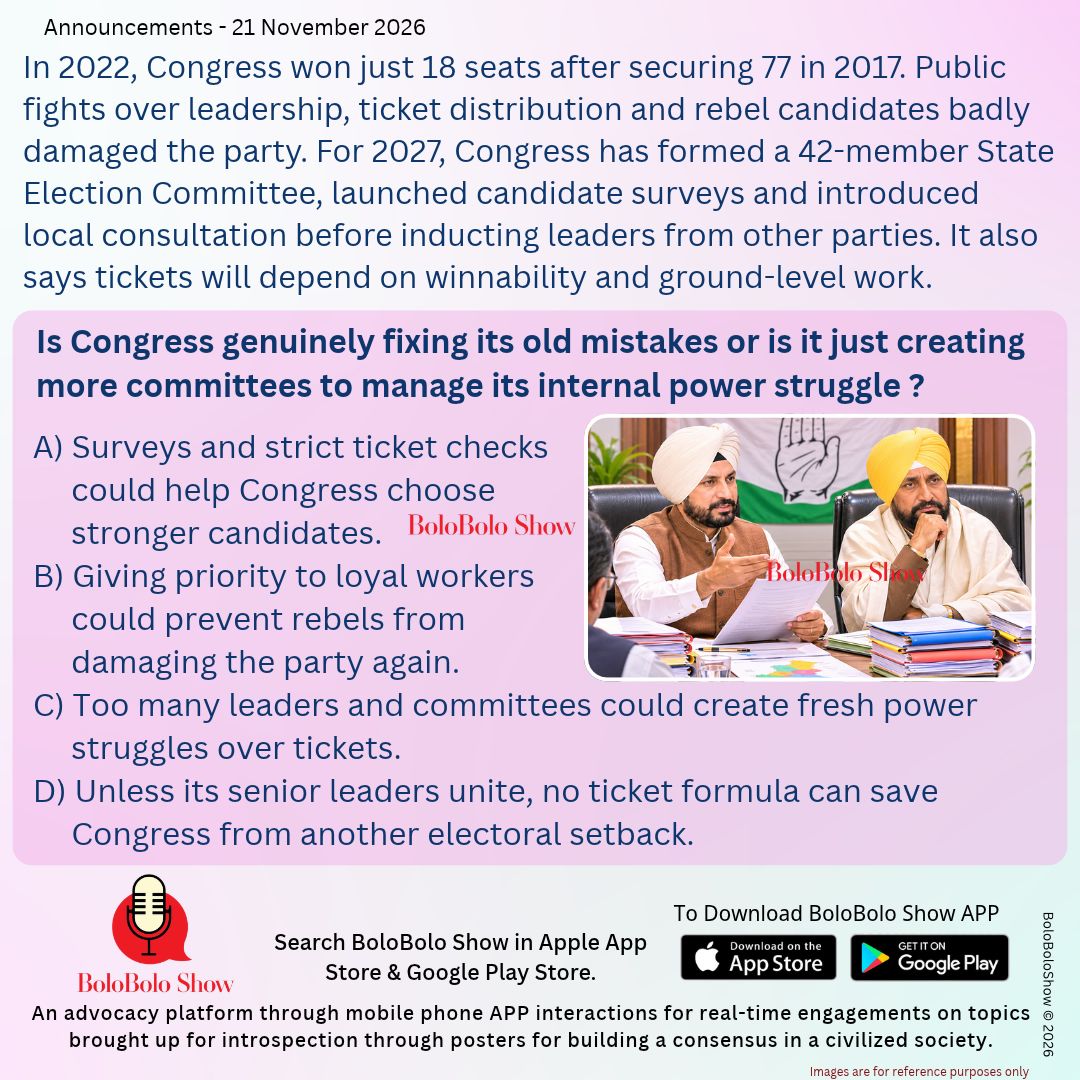
A) Surveys and strict ticket checks could help Congress choose stronger candidates. B) Giving priority to loyal workers could prevent rebels from damaging the party again. C) Too many leaders and committees could create fresh power struggles over tickets. D) Unless its senior leaders unite, no ticket formula can save Congress from another electoral setback.
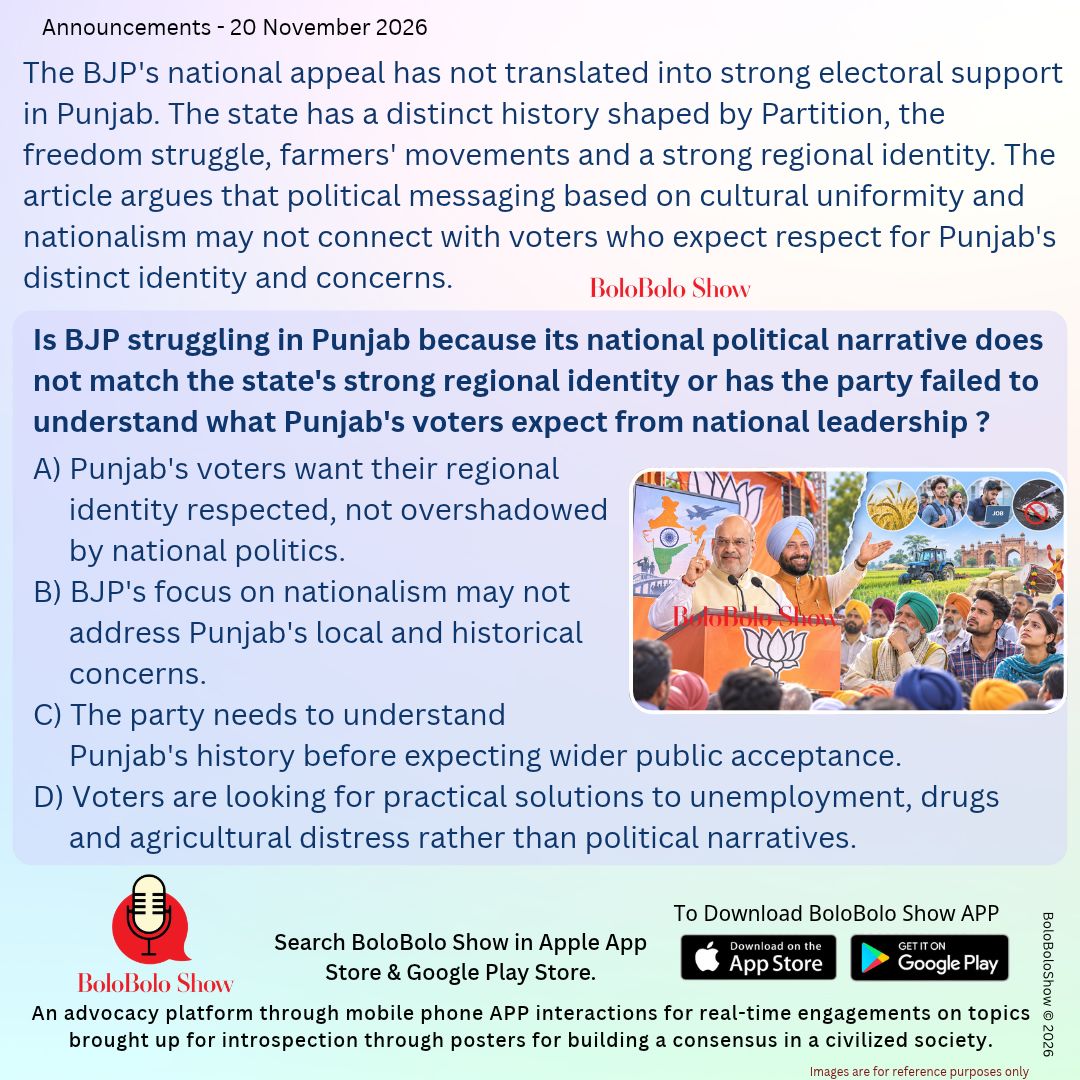
A) Punjab's voters want their regional identity respected, not overshadowed by national politics. B) BJP's focus on nationalism may not address Punjab's local and historical concerns. C) The party needs to understand Punjab's history before expecting wider public acceptance. D) Voters are looking for practical solutions to unemployment, drugs and agricultural distress rather than political narratives.
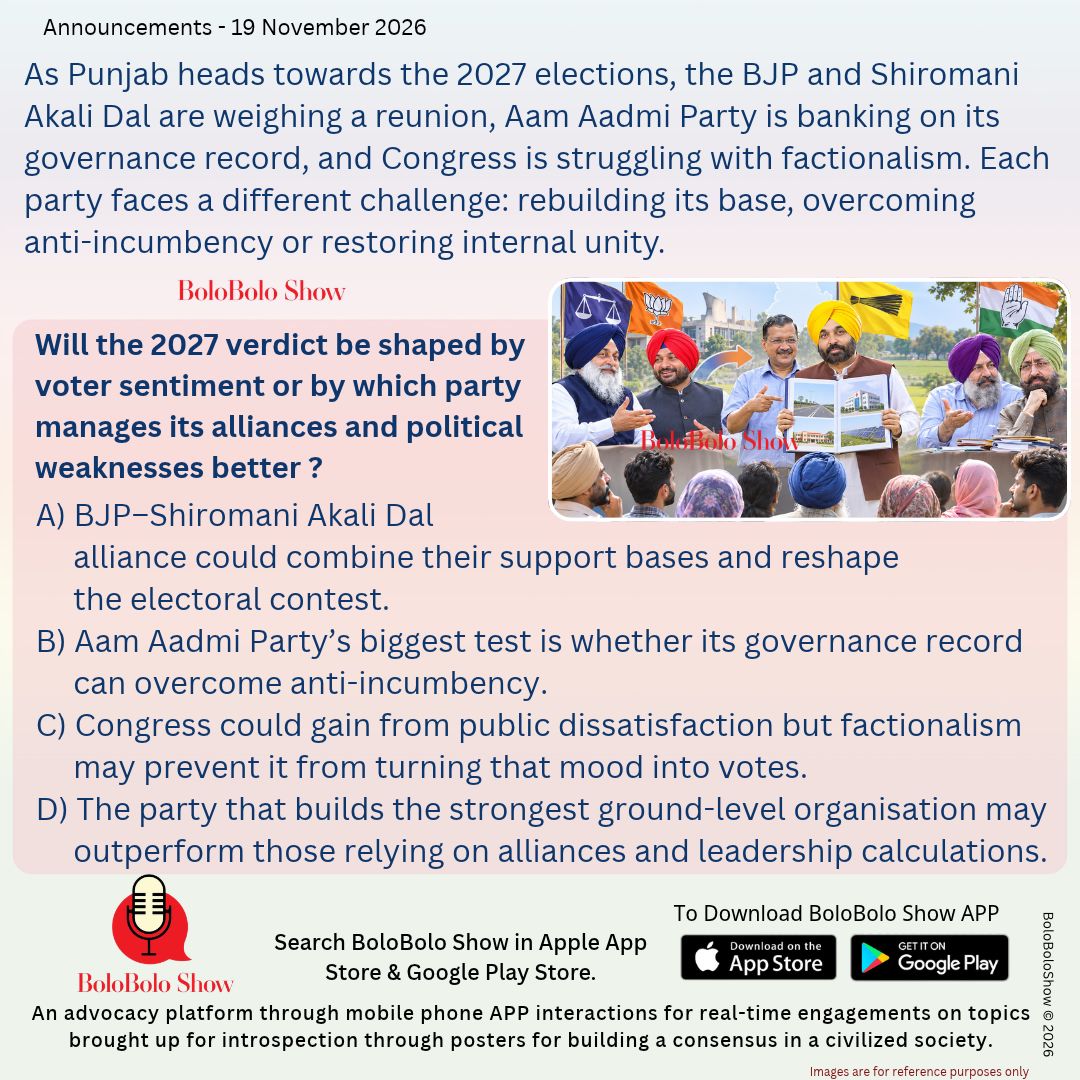
A) BJP–Shiromani Akali Dal alliance could combine their support bases and reshape the electoral contest. B) Aam Aadmi Party’s biggest test is whether its governance record can overcome anti-incumbency. C) Congress could gain from public dissatisfaction but factionalism may prevent it from turning that mood into votes. D) The party that builds the strongest ground-level organisation may outperform those relying on alliances and leadership calculations.